In a landmark military ruling, U.S. Army Major Nidal Malik Hasan has been sentenced to death for the 2009 Fort Hood shooting that claimed 13 lives and wounded more than 30. Despite clear warnings ignored by the Army and the FBI, justice now advances with an unprecedented execution poised to restore accountability.

On November 5, 2009, Fort Hood witnessed an unimaginable tragedy as Major Hasan unleashed targeted gunfire, killing 13 soldiers and civilians. The attack shattered the largest active-duty installation in the United States, marking the deadliest military shooting in modern American history.
Hasan, a U.S.-born Army psychiatrist, betrayed the trust vested in him, turning his medical expertise and military status into instruments of mass murder. His rampage was not a sudden outburst but a calculated strike, methodically planned and horrifyingly executed.
Behind this catastrophe lies a troubling story of systemic failures. Over the course of nearly a year before the attack, Hasan sent 18 emails to a known extremist cleric, questioning the legitimacy of killing U.S. military personnel. These communications were intercepted and reviewed by the FBI—yet their alarm bells went unheeded.
Internal divisions and poor communication sabotaged timely intervention. Separate FBI offices handled Hassan and the extremist cleric’s files in silos, failing to piece together the ominous pattern. Concurrently, military officials overlooked critical warnings about Hasan’s extremist leanings and erratic professional conduct.
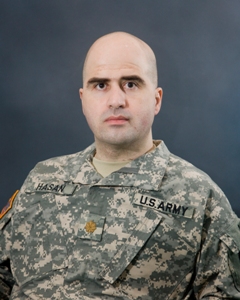
Born in Virginia in 1970 to Palestinian immigrant parents, Hasan’s early life reflected the American dream. But contact with extremist influences and personal losses deeply shifted his worldview. His growing radicalization went unaddressed despite repeated signs and formal reprimands within military psychiatric circles.
The Army paradoxically praised and censured Hasan, presenting conflicting evaluations. Even after a 2007 presentation advocating religious exemption for Muslim soldiers in combat zones, which challenged military cohesion, no decisive corrective measures were taken.
By 2009, Hasan had amassed weapons and thousands of rounds of ammunition, practicing for precise execution. Despite deployment orders to Afghanistan—the very conflict zones he opposed—he remained stationed stateside, preparing for his deadly attack.
On that fateful day, Hasan openly declared his intentions before opening fire, shouting “Allahu Akbar.” His deliberate targeting of uniformed soldiers, who were unarmed per standard processing center policy, underscored the cold calculation behind the 𝒶𝓈𝓈𝒶𝓊𝓁𝓉.

Survivors recount his methodical reloads and chilling composure amid chaos. The wounded vividly recall crawling to safety while colleagues bravely confronted Hasan, some exchanging fire. Their heroism punctuated a devastating scene of loss and confusion.
Legal proceedings unveiled the depth of Hasan’s intent and isolation. He dismissed appointed civilian counsel, choosing to represent himself and asserting allegiance to jihadist ideology. Despite warnings from his defense team, he pursued a strategy that ultimately sealed his fate.
A military jury convicted Hasan on 45 counts, unanimously sentencing him to death in 2013. Stripped of rank and benefits, he languished in solitary confinement, repeatedly affirming his actions as religiously justified, showing no remorse.
Appeals and legal challenges extended for over a decade, but in 2023 the U.S. Court of Appeals for the Armed Forces upheld the sentence. The Supreme Court’s denial of the final petition in 2025 closed all judicial avenues.
Secretary of Defense Pete Hegseth has now formally requested presidential approval for Hasan’s execution. Such a move would be the first U.S. military execution since 1961, signaling a decisive moment in military justice and national security.
Victims’ families and survivors demand not only punishment but acknowledgment. Many call for the attack’s reclassification as terrorism, a status long withheld that denied survivors combat-related benefits and honors like the Purple Heart.
The military’s classification of the shooting as “workplace violence” remains a bitter point, reflecting broader challenges in confronting insider threats fueled by radicalization. This case reveals the lethal consequences of institutional blind spots.
Officials have reprimanded nine supervisors for lapses surrounding Hasan, but the deeper failure lies in fragmented intelligence sharing and inadequate assessment frameworks. Each piece of warning was overlooked until irreversible carnage unfolded.
The Fort Hood attack serves as a grim reminder: trust placed in protectors can be weaponized if vigilance falters. Hasan’s trajectory from decorated psychiatrist to mass murderer traces a harrowing path of radicalization amidst system neglect.
This episode exposes flaws in counterterrorism measures, mental health oversight, and military culture. It dema
nds urgent reforms to avoid repeating such tragedy, ensuring no threat hides behind badges and credentials again.
Now, as the military prepares for the first execution in over six decades, America confronts a paradox of justice delayed but not denied. The scars on Fort Hood and the families left behind demand reckoning beyond legal verdicts—restoration of faith in defense institutions.
The imminent execution is not just a sentence; it is a statement against internal vulnerabilities exploited by extremist ideology. It challenges military and intelligence communities to learn, act decisively, and prioritize comprehensive threat detection.
The relentless pursuit of accountability after 16 years underscores a commitment to victims and the principle that no one, regardless of position, is above justice. Hasan’s case will resonate as a historic caution and closure.
As the nation awaits the final presidential decision, survivors’ testimonies and public dialogue intensify around justice, prevention, and the price paid when warnings are ignored. Hasan’s intended martyrdom has become a stark warning etched into military history.
This story reveals how complex intersections of identity, ideology, and institutional failure culminated in tragedy. It also offers a call to vigilance, coordination, and transparency essential to safeguarding American lives and values.
The horror of Fort Hood demands that lessons be internalized swiftly. Hasan’s path warns what emerges when individual despair marries extremist influence unchallenged by the very systems sworn to protect.
Reexamining this case is critical—not only to honor the fallen but to fortify defenses against future internal threats. The military’s resolve is tested; moving forward requires humility, systemic overhaul, and relentless scrutiny.
With Hasan’s execution pending approval, the military stands at a crossroads: affirming that justice on American soil is unflinching, while recognizing it must never again falter in discerning threats from within.
For all affected, this moment is both an end and a beginning—a desperate plea for vigilance, accountability, and vigilance against the silent erosion of trust that can lead to devastation.
The Fort Hood shooting remains a pivotal chapter on how radicalization can blur lines of loyalty and duty, underlining the necessity for a united front in defense institutions and intelligence agencies.
Justice demands swift finality, but the broader imperative is institutional awakening—a resolve to act decisively before potential threats manifest into unspeakable tragedy.
This case will continue to fuel critical discussions on military security, mental health, religious extremism, and intelligence integration. It is a stark reminder that piecing together every threat fragment is vital in safeguarding America’s future.
As September 24, 2025, nears—the projected date for execution approval—the nation braces for closure on a haunting episode that reshaped military protocols and 𝓮𝔁𝓹𝓸𝓼𝓮𝓭 unsettling vulnerabilities at the heart of U.S. defense.

The legacy of Major Nidal Malik Hasan is a somber testament to what happens when signals are missed and when trust is exploited. It urges reform and vigilance, to honor those who lost their lives and protect those who serve.
The passage of over 16 years between the attack and sentencing highlights the complexity of military justice but also the urgency in responding to extremist threats within ranks before catastrophe strikes.
Time and again, the Fort Hood case has challenged stakeholders to reconcile security, justice, and civil liberties under the shadow of terrorism and insider threats, shaping national security policies to this day.
As the first U.S. military execution in over half a century approaches, it raises profound questions about justice, healing, and the ongoing fight to prevent radicalization within armed forces.
Survivors’ voices echo across the years, demanding recognition and reform. Their pain underscores the human cost of systemic oversight lapses and the vital need for comprehensive threat assessment mechanisms.
This unfolding chapter compels the United States military and intelligence community to confront uncomfortable truths and redouble efforts to defend not only the nation—but the integrity of those who protect it.
The execution of Nidal Malik Hasan will resonate beyond the walls of Fort Leavenworth, marking a historic moment and reinforcing the imperative of vigilance in safeguarding America’s military institutions against internal threats.