The four astronauts of the Artemis II mission have safely returned to Earth, splashing down in the Pacific Ocean just hours ago, but the controversy they leave in their wake is anything but settled. For the first time in over half a century, a crew has orbited the Moon, reigniting a fierce debate that has simmered since the days of Apollo. While the world celebrated this monumental achievement, a vocal minority is already dismissing it as another elaborate hoax, a narrative that has proven more resilient than the vacuum of space itself.
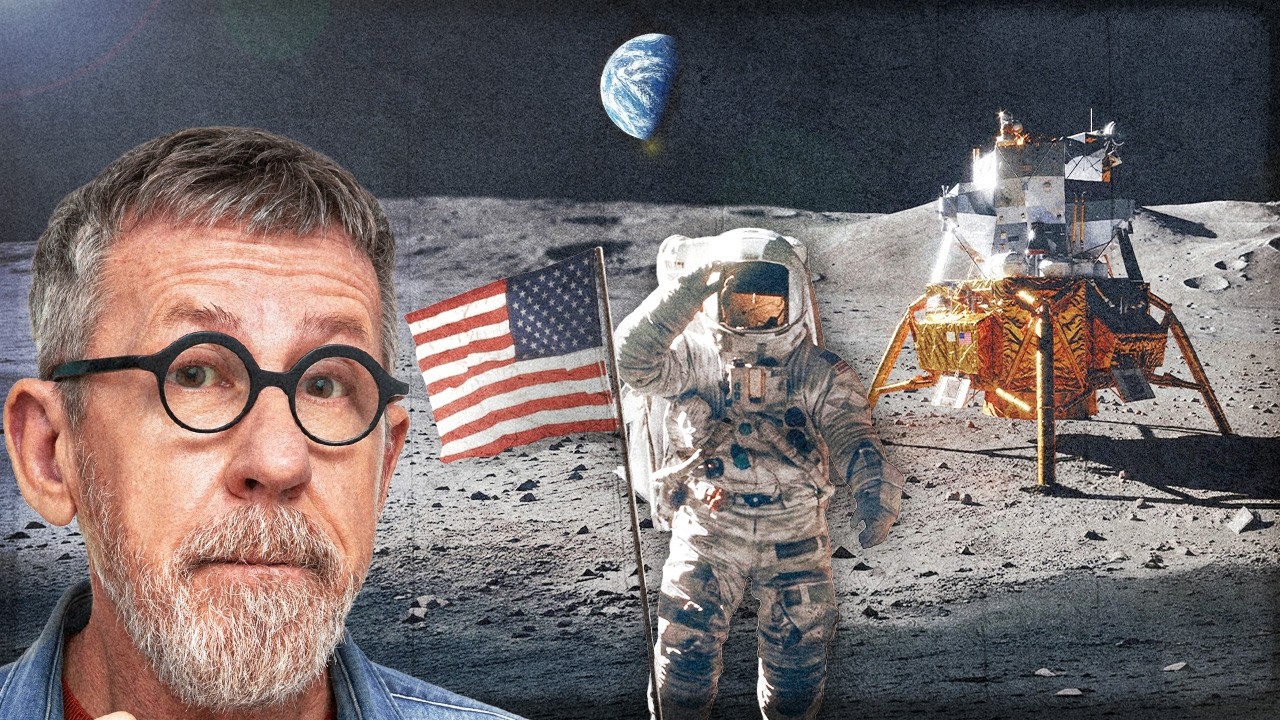
The return of Commander Reid Wiseman, Pilot Victor Glover, and Mission Specialists Christina Koch and Jeremy Hansen marks a historic milestone for NASA and the global space community. Their journey, which began with a thunderous launch from Kennedy Space Center, took them farther from Earth than any humans have traveled since 1972. The images they beamed back, showing the desolate beauty of the lunar surface and the fragile blue marble of Earth hanging in the blackness, were meant to inspire a new generation. Yet, for some, these images are not proof of achievement but evidence of deception.
This skepticism is not new. It has deep roots, stretching back to the very moment Neil Armstrong took his first step onto the lunar surface in July 1969. The seeds of doubt were planted even before the Apollo 11 mission had concluded. Within a decade, a full-blown theory had taken hold, one that insists the entire Apollo program was a multi-billion dollar fraud perpetrated by the United States government to win the Space Race against the Soviet Union. This theory, known as the Moon Hoax, has proven to be one of the most persistent and widespread conspiracy theories in modern history.
The incident that brought this simmering tension to a boil occurred in Beverly Hills, California, on September 9, 2002. Buzz Aldrin, the second man to walk on the Moon, was confronted by a man named Bart Sibrel, a filmmaker and self-proclaimed investigator who has dedicated years to proving the Moon landings were faked. Sibrel, holding a Bible, demanded that Aldrin swear on it that he had truly walked on the Moon. The encounter, which was caught on camera, escalated quickly. Aldrin, a man known for his calm demeanor, lost his composure. After being called a liar and a thief, the 72-year-old astronaut punched Sibrel in the face, a moment that became a global sensation.
The incident was a stark illustration of the deep emotional chasm between those who accept the official narrative and those who reject it. For the skeptics, Aldrin’s reaction was not a sign of righteous indignation but a desperate act of a man protecting a lie. For the believers, it was the understandable frustration of a hero being hounded by a fanatic. The punch did not end the debate; it only amplified it. The question remains: why do millions of people, decades after the fact, continue to believe that one of humanity’s greatest achievements was a fabrication?
The modern Moon Hoax theory can be traced back to a 1976 book titled “We Never Went to the Moon: America’s Thirty Billion Dollar Swindle” by Bill Kaysing. Kaysing was not a scientist or an astronaut. He was a former technical writer for a company that contracted with NASA. His central argument was simple and powerful: the technology of the 1960s was simply not advanced enough to send men to the Moon and back safely. He argued that the Van Allen radiation belts, the extreme temperatures, and the lack of a reliable guidance system made the mission impossible. Therefore, he concluded, the entire thing must have been staged in a secret studio, likely by the legendary filmmaker Stanley Kubrick.
Kaysing’s book found a small but dedicated audience. For years, the theory remained on the fringes of public discourse. But the arrival of the internet in the late 1990s changed everything. The web became a massive amplifier for the Moon Hoax. Suddenly, anyone could publish their own analysis, zoom in on NASA photos, and share their findings with a global audience. Every pixel became a potential clue. Every shadow was a sign of a studio light. The theory moved from obscure pamphlets to mainstream forums, gaining traction with a public increasingly distrustful of authority.
The irony is that NASA itself inadvertently fueled the fire. The agency released thousands of high-resolution images and hours of video footage from the Apollo missions, making them freely available to the public. This open access, intended to share the wonder of space exploration, was instead used as raw material for conspiracy theorists. They could now scrutinize every detail, frame by frame. The very transparency intended to build trust was used to undermine it. The flood of data created a perfect environment for cherry-picking anomalies and presenting them as proof of a cover-up.
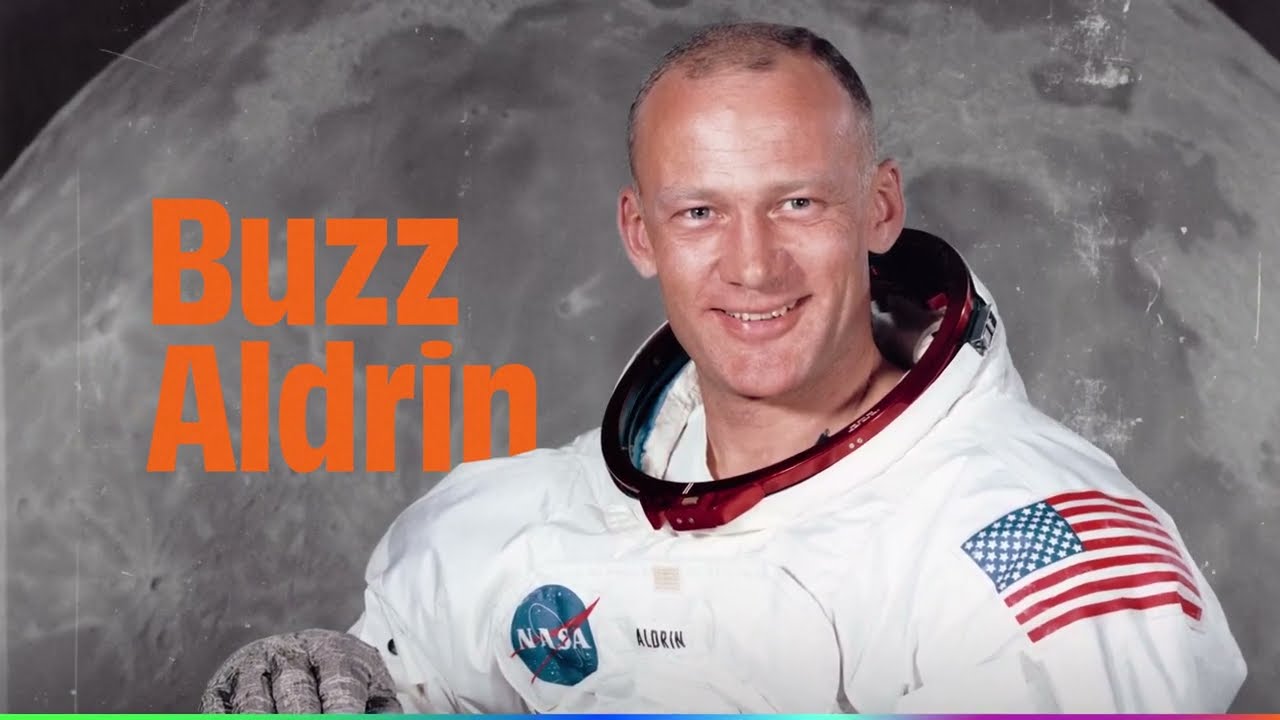
One of the most iconic images from the Apollo 11 mission shows Buzz Aldrin standing next to the American flag. To the untrained eye, it is a perfect picture of triumph. To the Moon Hoax believer, it is a smoking gun. The flag appears to ripple and wave, as if caught in a breeze. On Earth, this would be normal. On the Moon, which has no atmosphere and therefore no wind, it should be impossible. This single image has been used countless times as the primary piece of evidence for the hoax. The argument is simple: if the flag is waving, it must have been filmed on a soundstage with air conditioning.
NASA’s explanation is equally simple and grounded in engineering. The flag was not a simple piece of cloth. It was a specially designed nylon banner with a horizontal metal rod sewn into the top hem to keep it extended. Without this rod, the flag would have hung limply against the pole. The ripples seen in the image are not caused by wind. They are the result of the flag being tightly packed and folded during the journey to the Moon. The fabric, reinforced with aluminum, retained these creases and folds after being deployed. The flag was not waving; it was simply holding the shape it had been stored in for days.
Another favorite argument of the skeptics involves the shadows in the lunar photos. In the same iconic image, the shadow of Aldrin and the shadow of the flag appear to fall in different directions. On Earth, with a single light source like the sun, all shadows should be parallel. The discrepancy, they argue, proves that multiple light sources were used, such as studio spotlights. This is a classic example of how a lack of context can lead to a false conclusion. The photo in question was taken on a sloped surface. The terrain of the Moon is not perfectly flat, and even slight inclines can cause shadows to appear to diverge.
Furthermore, what some people identify as the flag’s shadow is actually the shadow of a nearby piece of equipment, the Solar Wind Collector. This device, a sheet of aluminum foil used to capture particles from the sun, was deployed a short distance from the flag. Its shadow, falling across the uneven ground, creates the illusion of a second, misaligned shadow. When the scene is viewed from a different angle, the truth becomes clear. The shadows are perfectly consistent with a single light source. This is a classic case of confirmation bias, where a person sees what they want to see and ignores the contradictory evidence.
The footprints left on the lunar surface are another battleground. Skeptics point out that the boots the astronauts wore during launch and in the command module appear to have relatively smooth soles. Yet the footprints on the Moon show deep, sharp ridges and tread marks. How, they ask, could a smooth boot leave such a detailed impression? The answer lies in the specialized equipment used for the Moon walk. The astronauts did not wear their launch boots on the surface. They wore a separate pair of overshoes, known as the Lunar Extravehicular Visor Assembly boots, which were designed specifically for walking on the regolith.
These overshoes had deep, ribbed soles to provide traction in the low-gravity, dusty environment. The fine, powdery lunar soil, or regolith, is incredibly cohesive and can hold a sharp impression for millions of years. The footprints are not a mystery; they are a perfect match for the equipment used. The skeptics’ argument relies on a false premise, comparing the wrong set of boots to the wrong set of footprints. It is a simple error, but one that is repeated endlessly in online forums as a definitive proof of fraud.
Perhaps the most persistent argument is the absence of stars in the lunar sky photographs. The Moon has virtually no atmosphere, so the sky should be black and filled with stars. Yet in every photo taken by the Apollo astronauts, the sky is an empty, starless void. For conspiracy theorists, this is the ultimate proof. They argue that a studio backdrop could not realistically reproduce the full star field, so NASA simply left it black. This argument, while intuitively appealing, demonstrates a fundamental misunderstanding of photography. The stars are there, but the camera cannot see them.
The surface of the Moon is brilliantly lit by the sun. The regolith is highly reflective. To capture a properly exposed image of the astronauts and the lunar module, the cameras had to be set with a very fast shutter speed and a small aperture. This setting is ideal for capturing bright objects but completely inadequate for capturing the faint light of distant stars. The same effect occurs on Earth. If you take a photo of a city skyline at night, you will not see the stars. The camera is simply not sensitive enough to capture both the bright foreground and the dim background simultaneously. The astronauts’ eyes, however, could see the stars perfectly.
The persistence of these theories is not just about the evidence. It is about psychology. The human brain is wired to seek patterns and coherence. Once a person adopts a belief, the brain actively seeks out information that confirms it and ignores or dismisses information that contradicts it. This is the confirmation bias. If you believe the Moon landings were faked, you will find endless “proof” online. You will see the waving flag, the strange shadows, the missing stars. You will ignore the explanations because they do not fit your narrative. You are not evaluating evidence; you are curating it.
Social media algorithms have supercharged this process. Platforms like YouTube, Facebook, and TikTok are designed to keep users engaged. If you watch one video about the Moon Hoax, the algorithm will immediately suggest more. It will lead you deeper into the rabbit hole. It will show you videos about flat Earth, chemtrails, and reptilian overlords. You are trapped in an information bubble where every piece of content confirms your worldview and nothing challenges it. The algorithm does not care about truth; it cares about your attention. And nothing holds attention like a good conspiracy.
The erosion of trust in institutions is another critical factor. The Moon Hoax theory thrives in an environment where people are skeptical of government, science, and the media. The 2003 invasion of Iraq, justified by the false claim of weapons of mass destruction, is a prime example. If the government lied about that, the reasoning goes, why would they not lie about the Moon? This is a logical fallacy, but it is a powerful one. The brain creates a bridge between two unrelated events. Once trust is broken in one area, it is difficult to restore in any area. Every official story becomes suspect.
There is also a powerful psychological reward in being a “truth-seeker.” Believing in a conspiracy theory gives a person a sense of superiority. They have seen through the lies. They know the real story. They are part of a small, enlightened group that understands the true nature of reality. This feeling is deeply satisfying to the ego. It creates a sense of community and purpose. It is far more exciting to believe in a vast, hidden conspiracy than to accept the mundane truth that a few men in metal cans flew to a rock and came back. The narrative is more compelling.
The Artemis II mission, with its diverse crew and modern technology, was supposed to put these doubts to rest. The astronauts returned with terabytes of data, high-definition video, and firsthand accounts. They have described the profound experience of seeing the Moon up close, of feeling the pull of its gravity, of looking back at Earth. Yet, for the true believers, this is just more evidence of the cover-up. They will argue that the new footage is CGI, that the astronauts are actors, that the whole thing is a continuation of the original lie. The goalposts will always move.
The incident with Buzz Aldrin in 2002 remains a powerful symbol of this conflict. It shows the deep frustration of those who have actually achieved the impossible, only to be called liars. It also shows the unwavering conviction of those who believe the lie. The punch did not change anyone’s mind. It only solidified the positions of both sides. For the skeptics, it was proof of a guilty conscience. For the supporters, it was proof of a hero pushed too far. The debate is not about evidence. It is about identity. It is about who you trust and what you want to believe.
As the Artemis II crew settles back into life on Earth, they will face a strange new reality. They are heroes to billions, but they are frauds to millions. They have seen the Moon with their own eyes, but they will be asked to prove it. They will be confronted by people who insist that the photos are fake, that the videos are staged, that the entire mission is a hoax. They will have to learn to live with a shadow of doubt that no amount of evidence can dispel. The hardest part of going to the Moon, it seems, is not the journey itself, but convincing everyone that you actually went.
The scientific community remains united in its acceptance of the Apollo and Artemis missions. The evidence is overwhelming. Rock samples brought back from the Moon have been analyzed by scientists around the world, including those from the Soviet Union, America’s rival at the time. The samples are unique and cannot be replicated. Retroreflectors placed on the lunar surface by the Apollo astronauts are still used today by observatories on Earth to measure the distance to the Moon with laser precision. The missions are verified by independent tracking stations in multiple countries. The hoax theory requires ignoring all of this.
Yet, the theory persists. It persists because it serves a psychological need. It persists because it is easier to believe in a simple lie than a complex truth. It persists because the internet has created an echo chamber where doubt is amplified and certainty is silenced. The Artemis II mission will not end the Moon Hoax. It will simply provide new material for the theorists. They will dissect the new images, find new anomalies, and weave new narratives. The story of the Moon landing is no longer just about science and exploration. It is about belief, identity, and the human need to find meaning in a chaotic world.
The four astronauts are now home. They have completed their mission. But the real mission, the mission to convince a skeptical public that humanity can achieve the impossible, is far from over. The battle for the truth of the Moon is being fought not in space, but in the minds of millions of people. It is a battle against bias, against algorithms, and against the seductive power of a good story. And as the Artemis II crew has learned, sometimes the most difficult frontier to conquer is not the vastness of space, but the stubbornness of the human heart.