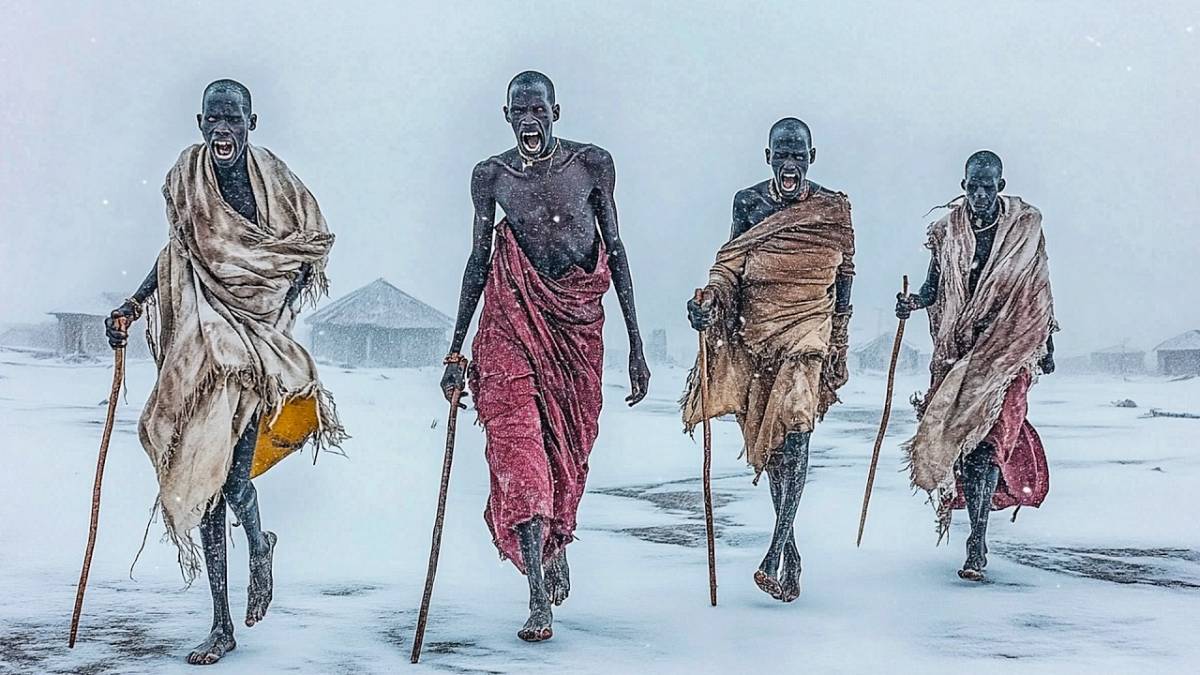
The world you think you know is a fragile veneer, and beneath it, a reality far more brutal and mysterious than any fiction has been hiding in plain sight. A new, comprehensive investigation into the most isolated and enigmatic human societies on Earth has revealed a tapestry of violence, survival, and genetic marvels that has left the scientific community grappling with profound unease. These are not relics of a forgotten past, but living, breathing cultures that continue to challenge the very definition of humanity, operating under laws and logics that the modern world can barely comprehend.
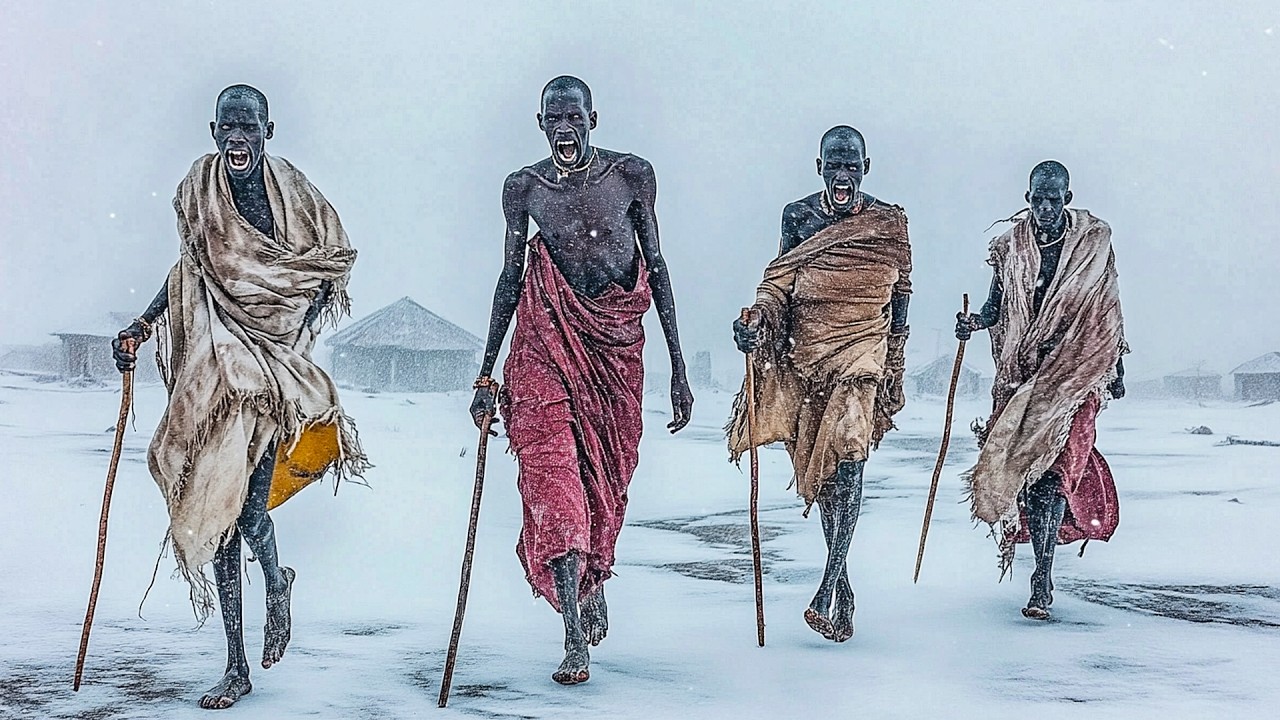 The revelations begin in the dense, mist-shrouded mountains of Nagaland, a forgotten nation straddling the border of India and Myanmar. Among the Naga people, a man who reached old age without taking another human life was not simply an outcast, but a permanent child. He could not marry, his voice carried no weight in community decisions, he bore no tattoos of rank, and he had no path forward in society. The entire social structure of the Naga, encompassing over forty distinct warrior clans, was built upon a single, brutally simple requirement: the taking of a human head. This was not a symbolic gesture or a ritual reenactment, but a literal act of severing a head from a living body and carrying it home as proof of a man’s worth. The skulls of murdered enemies were not trophies in the modern sense, but active members of the community, fed regularly, spoken to before major decisions, and treated as oracles whose counsel the living genuinely relied upon. When British colonizers pushed into Naga territory in the 19th century, they discovered a formidable intelligence network where women and children moved freely through British lines, feeding real-time information on troop movements to their warriors. The Anglo-Naga Wars dragged on for decades, producing more British casualties per square mile than almost any other frontier campaign across Asia. Officers who had fought in Africa and the Middle East described the Naga as the most ferocious warriors they had ever encountered. Yet, beneath the warrior glory lay a machinery of coercion that destroyed young men who had no stomach for killing. A boy who reached adulthood without a head was not simply disadvantaged; he was publicly and permanently humiliated by a system designed to make killing feel like the only rational choice. When communities suffered crop failures or disease outbreaks, raids were sometimes directed not at traditional enemies, but at weaker neighboring Naga clans who had done nothing to deserve it. The system demanded heads to function, and if a just war did not exist, an unjust one was manufactured. When the British formally banned headhunting in the early 20th century, colonial authorities began receiving reports that disturbed them enough to make a deliberate decision to look away. The raids had not stopped, but the heads were hidden rather than displayed. The British maintained the fiction that their ban had worked because reopening the confrontation was more expensive than pretending the problem was solved. The 20th century changed nothing essential, as the Naga independence movement continued to use torture, forced taxation, and public executions, proving that the culture that celebrated the taking of heads never stopped, it just stopped calling it headhunting.
Moving to the extreme northeastern tip of Russia, the story of the Chukchi people presents a different, yet equally chilling, form of defiance. Before Russian soldiers ever reached a Chukchi settlement in the 18th century, the families inside had already decided what they would do when the soldiers arrived. The men would kill the women and children first, then they would kill themselves. This was not a last desperate act of panic, but a calm, pre-agreed plan made weeks or months before any attack. Russian soldiers documented arriving at settlements to find dead bodies arranged quietly in the silence of a decision made long before they got there. Those soldiers reported that nothing in their entire military experience broke their will the way those scenes did, not battle, not starvation, not the biting cold. Walking into a room full of people who had chosen death over Russian captivity destroyed something in them that combat never had. Chukotka, where winter temperatures drop to minus 50 degrees and the polar night swallows the sun for months, is a place where the Chukchi not only survived for thousands of years, but built a society so tough that when Russian Cossacks arrived in the 17th century to collect fur tribute, the Chukchi simply refused. They waged active guerrilla warfare against the Russian Empire for nearly 150 years without breaking. They poisoned trade goods deliberately and systematically, supplying diseased animal hides to Cossack traders with such calculated regularity that Russian military commanders wrote formal dispatches identifying it as organized biological warfare centuries before the concept had a name. They vanished into frozen terrain that killed pursuing soldiers within hours. The Russian Empire formally surrendered, abandoning conquest entirely and offering autonomy and trade agreements, making the Chukchi one of the only indigenous peoples in all of Siberia the Russian Empire never fully conquered. Then the Soviet Union arrived and did something the Cossacks never thought to try. Instead of fighting the Chukchi, it took their children away. Soviet programs forcibly removed Chukchi children from their families and placed them in state boarding schools where speaking their language was a punishable offense. What was stripped from those children was not just culture, but survival knowledge, how to read the weather before a storm kills you, how to navigate sea ice without falling through, how to build a yaranga capable of keeping a family alive at minus 50 degrees. When those children came home, they could not pass on this essential knowledge because the chain had been deliberately and permanently cut. Today, the suicide rate among Chukchi men between 15 and 35 is among the highest recorded for any demographic group in Russia, a crisis of despair that scientists still struggle to fully explain.

In the Pacific, the cargo cults of Melanesia offer a deeply disturbing mirror to the modern world. American soldiers who watched these cults wrote in their diaries that the experience was more deeply disturbing than anything they had encountered in actual combat. What disturbed them was not the bamboo aircraft or the wooden headphones, but the slow, nauseating realization that everything they were watching looked exactly like what they themselves did every single day. For thousands of years, the people of Vanuatu and Papua New Guinea lived with no knowledge of the industrialized world, their societies built around ancestor veneration and a belief that performing the right ceremonies correctly produced results. Then the Second World War arrived and shattered every framework they had. American and Japanese military forces descended with ships, aircraft, and warehouses packed with manufactured goods in quantities so enormous the islanders had no existing concept to contain them. None of these goods were made on the island, they arrived from somewhere else, always from the sky or the sea, always after specific rituals were performed. Military personnel marched in formations, raised flags, spoke into metal boxes, and within days enormous aircraft descended loaded with more cargo. The pattern was clear, these were ceremonies for summoning goods from powerful beings in another world, and the ceremonies worked every single time. The islanders absorbed this by fitting it into the framework they already had, concluding that white soldiers had discovered the correct rituals for communicating with beings who controlled material abundance. When the war ended and the bases were dismantled overnight, the islanders built bamboo copies of aircraft and placed them in jungle clearings, cleared landing strips and lit fires along the edges at night to imitate runway lights, and sat in wooden towers wearing headphones carved from wood speaking into bamboo microphones, performing every ritual detail they had watched produce results. On the island of Tanna in Vanuatu, a movement centered on a figure called John Frum emerged and never disappeared, with followers holding formal marches every February 15th for decades, carrying bamboo rifles and drilling in formation, waiting for a return they believe is genuinely coming. When the promised cargo repeatedly failed to arrive, the movements did not collapse, they identified the reason the same way every time, someone in the community was spiritually contaminated and blocking the delivery, a process that almost always ended with violence directed at whoever was most vulnerable. The faith that began as genuine spiritual hope became a machine for generating internal enemies and justifying their destruction.

The Central Intelligence Agency recruited Tibetan warriors, trained them in the mountains of Colorado, equipped them with weapons and radios, dropped them back onto the Tibetan Plateau, and gave them explicit assurances that American support would continue for as long as they kept fighting. Then in 1972, when President Nixon normalized relations with China, the CIA terminated the operation overnight without warning and without any acknowledgement that these men had ever existed. The Khampa, from the eastern Tibetan region of Kham, were warriors who had never been fully controlled by any outside authority. When China invaded Tibet in 1951, it was the Khampa who organized the first serious armed resistance, forming a guerrilla army that fought the People’s Liberation Army at altitudes where the human body begins to break down from oxygen deprivation alone. The Chinese response was aimed precisely at what made the Khampa who they were, demolishing monasteries that had stood for centuries and publicly executing monks or dragging them to labor camps. The traditional horse fairs where Khampa warriors demonstrated trick riding and horseback shooting as proof of military readiness were banned for decades, and when they were eventually permitted again, they had been redesigned as tourist performances for Chinese domestic visitors. The same skills ancestors used to prepare for war were now performed as entertainment for citizens of the country that had destroyed everything those skills were built to protect. The fighters who escaped to Nepal and India after the resistance collapsed found money through drug trafficking along Himalayan routes, while the Tibetan government in exile quietly distanced itself from these men publicly while continuing to use their existence as a political symbol. The men who had believed a promise made in Colorado were used twice, abandoned twice, and left to become criminals or disappear.
The revolution that secured the Kuna people of Panama their freedom began with the Kuna publicly executing other Kuna people who had cooperated with the Panamanian government. They were identified, tried by the community, and killed openly as a message about what absolute solidarity required. The world knows the Kuna primarily through their mola textiles, which have built them an international reputation as a peaceful, artistically gifted people. That reputation has served as a very effective shield against scrutiny of what life inside Kuna society has actually demanded. The Kuna live on the San Blas Islands, where their understanding of the world is built on the belief that every illness, every accident, and every social conflict results from a specific spiritual imbalance that must be corrected. The people responsible for diagnosing and treating these imbalances are called the Naila, a role no one chooses. Children who show specific signs in early childhood, such as unusual dreams or unexplained seizures, are identified as candidates and then subjected to years of isolation, extreme fasting, and ceremonies involving powerful hallucinogenic plants. The Kuna openly acknowledge these ceremonies are psychologically dangerous and sometimes fatal, with children who die during the process understood as taken by the spirit world. In 1925, the Panamanian government banned traditional Kuna dress and rituals, and the Kuna launched a violent rebellion that forced Panama to recognize their territory as semi-autonomous. Today, outsiders cannot purchase land on Kuna Islands, and tourism is tightly controlled. But that same framework of cultural protection has been used in documented cases to justify the violent expulsion of mixed-race individuals born on Kuna territory, people whose ancestry did not meet community standards were removed from the only home they had ever known. At the center of Kuna social life sits the Naila, whose authority cannot be questioned. When the Naila identifies a person as the source of spiritual contamination, that identification is final, with no appeal possible. In a system built that way, the most dangerous person in the community is never the outsider, but the one person whose judgment can never be challenged.

In the Omo River Valley of Ethiopia, a 13-year-old girl sits down and lets someone push a sharp wooden peg through her lower lip, and that is just the beginning. Over the following months and years, progressively larger wooden discs replace the original peg, stretching the flesh further each time until her lower lip holds a clay plate up to 20 centimeters across. The pain is not incidental to the process, the pain is the point. The larger the plate she endures, the higher the price her family receives in cattle when she is sold into marriage. Her suffering has a precise market value. The Surma and Mursi people have lived in the Omo River Valley for thousands of years in near complete isolation, producing cultures of extraordinary intensity. Ritual scarification marks both men and women, with cuts opened in the skin into which ash or plant juice is rubbed to raise permanent scars, each pattern recording clan membership, enemies killed, and personal history. The body is used as a living document written entirely in controlled pain. The primary male initiation ritual, the Donga, involves dozens of warriors fighting each other with long wooden poles in bouts that produce serious injuries and regular deaths. The winner earns the right to choose any unmarried girl from the village as his own, with the girl having no formal mechanism to refuse. Decades of regional civil wars flooded the Omo Valley with Kalashnikov rifles, and the effect was catastrophic, with cattle raids that once produced a handful of deaths now regularly killing dozens in a single night. Girls who try to refuse the lip plate face dramatically reduced marriage prospects and a lifetime of community marginalization. Women who develop serious infections from lip plate procedures do not seek outside medical treatment because doing so is understood as a rejection of community values. Children die from vaccine-preventable diseases because refusing outside medicine is a point of cultural principle. The Ethiopian government has documented the resulting mortality rates and chosen to do nothing because intervention would trigger a political confrontation it has consistently decided is not worth having.
Two governments buried the truth about what happened to Michael Rockefeller for more than 50 years, and they buried it deliberately because the truth was too politically inconvenient to tell. When the 23-year-old son of American millionaire and future vice president Nelson Rockefeller disappeared in the remote swamp forests of southwestern New Guinea in 1961, Dutch colonial authorities told the Rockefeller family within days that Michael had almost certainly been killed and eaten by Asmat warriors. Then those same authorities helped construct the official story that he had simply drowned. The Asmat people had lived completely sealed off from the outside world until the mid-20th century, building one of the most sophisticated wood carving traditions anywhere in the world alongside a cosmology in which every non-elderly death was understood as murder by enemy sorcery. In the Asmat universe, there were no accidents and no natural illnesses. Every death created a debt the community was spiritually obligated to repay with a killing of its own. When an enemy was killed, his body was consumed not out of hatred, but out of precise spiritual logic, eating him absorbed his strength, his skull was kept as a sleeping pillow so his wisdom could pass into the living through dreams, and his name was given to a newborn to fill the gap his death had created. Journalist Carl Hoffman spent years investigating Michael Rockefeller’s disappearance and interviewed Asmat elders with direct knowledge of the events, concluding that Michael Rockefeller swam ashore after his boat capsized and reached a village whose warriors had recently watched their own men shot dead by Dutch colonial police. The Dutch had created a blood debt inside the Asmat spiritual accounting system, and Michael Rockefeller arrived on the beach as the first available payment. After the disappearance, missionaries entered the region in greater numbers and used Michael Rockefeller’s death as a conversion tool, telling communities his spirit would haunt them permanently unless they accepted Christianity, turning the Asmats’ own spiritual beliefs into a weapon to destroy those same beliefs from the inside.

When missionaries descended into the Baliem Valley of Papua New Guinea by helicopter in the 1960s, the Yali people watching from the ground were absolutely certain that spirits had arrived from the sky. They had never seen a white person, never seen a flying machine, and never encountered metal in any form. Surrounded by mountains rising more than 4,000 meters that had sealed them from the outside world for 60,000 years, the Yali had been living in the Stone Age at the precise moment the rest of humanity was preparing to go to the moon. The Yali were savage and permanent warriors who practiced cannibalism not to absorb an enemy’s strength, but for complete and total erasure. Eating an enemy destroyed him entirely, prevented his spirit from surviving death and returning to seek revenge, and eliminated him from existence in every sense that mattered. British explorer Benedict Allen first lived among the Yali in the 1980s and wrote a book documenting their world. When Allen returned in 2017 to film a documentary, he vanished for three weeks, triggering worldwide media panic about whether he had been killed and eaten. Allen was eventually found alive on a remote abandoned airstrip, trapped not by hostile warriors, but by a full intertribal war that had erupted across the surrounding region. What disturbed Allen more than the danger was what he found when he looked around. The specific Yali community he had documented in the 1980s had been largely converted to Christianity by missionaries who had been drawn to the region in significant numbers directly because of the attention his book had generated. The act of writing about their world had functioned as a map that guided the forces most likely to destroy that world straight to their door. The road eventually built into the Baliem Valley brought the first processed food to Yali communities in the early 2000s, and the first documented case of type 2 diabetes in the valley appeared three years after Coca-Cola arrived. A disease that had never existed among these people in 60,000 years of history materialized within three years of first contact with refined sugar.
What science found inside the Inuit body should unsettle everything you think you know about what human evolution is actually capable of producing. The traditional Inuit diet is almost 100 percent meat and fat, seal, walrus, whale, and reindeer with almost zero vegetables or fruit across an entire lifetime. By every established principle of Western medicine, this diet should produce catastrophic heart disease and early death. But among Inuit following the traditional diet, it produces some of the lowest rates of cardiovascular disease ever recorded anywhere in the world. For decades, Western scientists looked at that fact and had no explanation for it. When they finally found the answer, it forced a fundamental rethinking of what 25,000 years of Arctic survival had quietly done to the human body. Mutations in two specific genes found almost exclusively in Inuit populations allow their bodies to process fatty acids with an efficiency no other human population on Earth possesses. Their circulatory systems maintain blood flow to the hands and feet at temperatures that cause functional failure in other people within minutes. Their bodies generate measurably more heat at rest. They are not simply people who adapted culturally to the Arctic, they are people whose bodies were rebuilt by the Arctic at the genetic level across thousands of generations of unrelenting pressure. But the same genetic specialization that makes the Inuit body a masterpiece of cold weather engineering made it catastrophically vulnerable to specific things European contact introduced. The metabolic systems built to process seal fat and whale blubber with extraordinary efficiency had no capacity to handle alcohol or refined sugar, both of which arrived through European trade and settlement. The biological perfection that had protected Inuit bodies for thousands of years became a biological trap the moment outsiders arrived with the specific substances it had never needed to defend against. The Canadian and American governments forcibly relocated dozens of Inuit communities throughout the 20th century, moving entire communities to areas so stripped of traditional food sources that people starved. Communities that had maintained extraordinary metabolic health for thousands of years developed obesity, diabetes, and heart disease within a single generation, not from genetic weakness, but from being ripped out of the only environment their genetics were built to function in.

Finally, the Sentinelese have been alone on their island for 60,000 years, and they have killed every single person who has ever tried to change that. When the ancestors of the Sentinelese first arrived on North Sentinel Island in the Andaman Sea, modern humans had not yet entered Europe. The pyramids would not be built for another 55,000 years. Every civilization described anywhere in this entire countdown is recent history by comparison. And across all of those 60,000 years, through every empire, every plague, every war, and every technological revolution that reshaped the rest of humanity, the Sentinelese stayed exactly where they were and killed anyone who came close. We know nothing about them, not their name for themselves, not their language, not their beliefs or social structure. Population estimates range from 50 to 400 people depending on which researcher is guessing. The Sentinelese are a complete blank in the entire human record, and they have made themselves that blank deliberately and violently for longer than most civilizations have existed. In the 19th century, shipwrecked Indian traders who washed onto the island were shot with arrows. In the 1970s, National Geographic researchers were driven back by volleys of spears. In 2006, two fishermen whose boat drifted onto the island while they slept were killed and their bodies buried in the sand. When the 2004 tsunami devastated the entire Andaman Island region and the Indian government sent a helicopter to check for survivors, the Sentinelese shot arrows at it. In 2018, a 26-year-old American missionary named John Allen Chau paid local fishermen to bring him illegally to the island, convinced God had called him to bring Christianity to the Sentinelese. The fishermen brought him to shallow water and watched from a safe distance as Chau waded ashore and was shot at immediately. He retreated to the boat, but the next morning, Chau went back, and the fishermen watched from the boat as he was shot and killed on the beach, his body dragged along the sand and buried. After Chau’s death, multiple American missionary organizations described him publicly as a martyr, and the people who had killed an illegal intruder on their own land became aggressors in the missionary narrative. Several organizations announced that his death had strengthened their determination to reach the Sentinelese, using the murder of a man who had violated their island as justification to send more people to violate their island. But the reason the Sentinelese kill-on-site policy is not savagery is sitting in the historical record for anyone willing to read it. The Great Andamanese numbered 5,000 people when the British established a penal colony in the islands in 1858. By 1900, they numbered fewer than 25. The Onge dropped from 600 to approximately 100. Every Andaman tribe that accepted outside contact was effectively destroyed by it. The Sentinelese watched this happen to their neighbors across the water, and their arrows are not savagery, they are the only rational conclusion available to a people who have seen exactly what happens when you let the outside world get close. These are not ancient stories, they are happening right now, today, on the same planet you woke up on this morning. Cultures built on pain, betrayal, survival, and defiance are being swallowed quietly by a world that calls itself civilized, and the most disturbing truth of everything you just heard is that the cruelty did not come only from the outside, in almost every single case, the most devastating damage came from within.
Source: YouTube