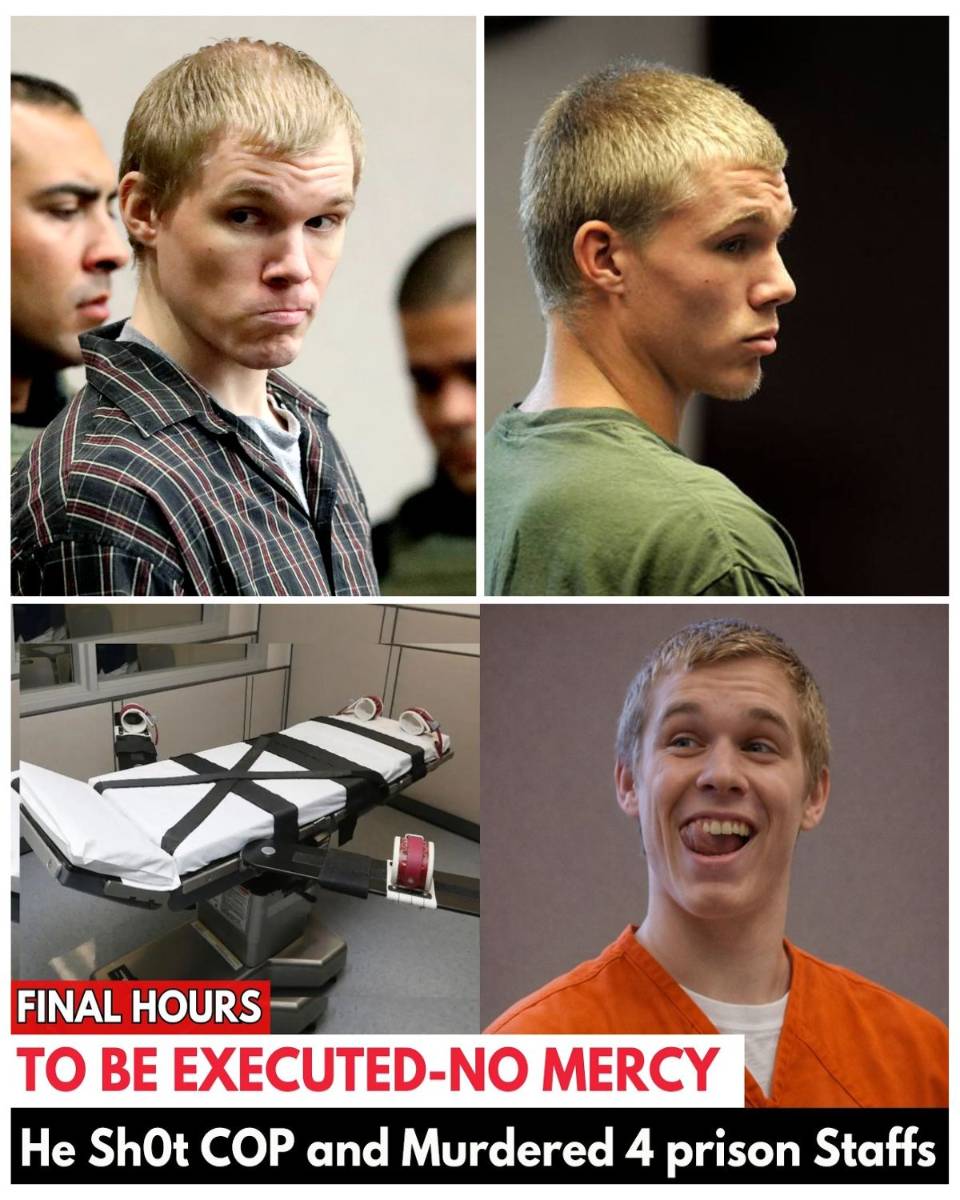
The state of North Carolina is preparing to execute Mikel Edward Brady II, the mastermind behind the deadliest prison escape attempt in the state’s history, a cold-blooded slaughter that left four correctional employees dead on October 12, 2017. Brady, now 36, sits on death row at the federal supermax facility ADX Florence in Colorado, awaiting a lethal injection that has been delayed by legal battles and a state moratorium on executions that has stood since 2006. His conviction and death sentence, delivered by a jury in just 52 minutes of deliberation, represent the culmination of a case that exposed catastrophic failures within the prison system and the unyielding violence of a man who admitted he valued his own freedom over the lives of his victims.
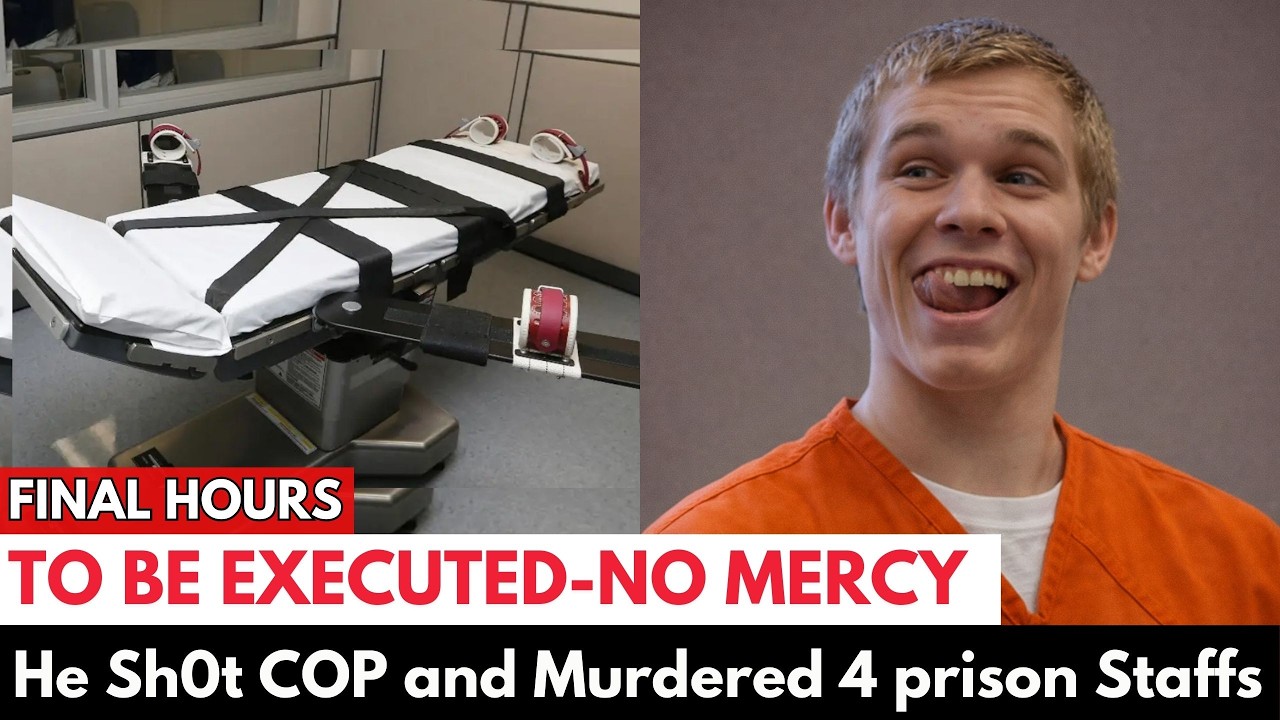 The attack unfolded with military precision inside the Pasquotank Correctional Institution in Elizabeth City, a medium-security facility housing nearly 730 inmates. Brady, serving a 24-year sentence for shooting a state trooper in the face, had spent three months studying the routines of guards, mapping the layout of the prison, and selecting the exact day based on staffing patterns. He used his job in the prison’s sewing plant to stockpile weapons, including hammers, scissors, screwdrivers, and makeshift spears crafted from broom handles and metal shelving. He sewed four backpacks from factory materials, packing them with food and clothing for the escape. He recruited three other inmates, telling them there were only two ways this could end: they would escape or they would die trying.
On the afternoon of October 12, 2017, Brady set a fire in the sewing plant’s stock room as a diversion. The smoke triggered alarms, drawing officers away from the escape route. The first to die was Justin Smith, a 35-year-old correctional officer and the only guard assigned to supervise 30 inmates in the sewing plant. Smith was stabbed 67 times, his throat cut, his radio taken so he could not call for help. The second victim was Veronica Darden, a 50-year-old correctional enterprises manager who had trained the inmates and trusted them with tools. She was stabbed repeatedly with half a pair of scissors and beaten, her keys stolen because the plan included using her car as a getaway vehicle.

The carnage continued on the loading dock, where the inmates encountered Wendy Shannon, a 49-year-old correctional officer who was not even assigned to the sewing plant. She was struck in the head repeatedly with a hammer, suffering catastrophic injuries that left her clinging to life for 18 days before she died. Jeffrey How, a 31-year-old maintenance mechanic, stepped out of his office near the loading dock and walked into the middle of the attack. He was unarmed and untrained for confrontation, his job to fix things, not to fight. Brady beat him with a hammer until he stopped moving. How died 22 days later, leaving behind a fiancée and a three-year-old daughter.
None of the four inmates made it past the prison fence. They were captured in the yard, pulled off the razor wire, and taken into custody. The entire escape attempt lasted less than two hours. In the aftermath, the prison was placed on lockdown, the sewing plant was permanently closed, and Governor Roy Cooper ordered a comprehensive review of safety measures across the state’s prison system. The investigation revealed that Brady had been assigned to work in the sewing plant despite his violent history, that he had access to tools that became weapons, and that a single correctional officer was responsible for overseeing 30 inmates. The ratio was a critical failure, one that critics said made the attack inevitable.

Brady was tried in Dare County in 2019, two years after the murders. He took the stand in a stunning move, testifying calmly and without emotion for two hours. He described his abusive upbringing in Vermont, his father’s violent death, and his long criminal record, which included stealing 209 sticks of dynamite at age 18 and shooting a state trooper in the face at age 23. He walked the jury through the escape plan in meticulous detail, admitting he had a hand in each of the four deaths. When the prosecutor asked him whether he chose escape over the lives of the victims, he answered yes. The jury deliberated for 52 minutes and sentenced him to death on all four counts.
The trial of Brady’s co-conspirators followed a similar path. Wisez Buckman was convicted in 2023 and sentenced to death for three of the murders and life without parole for the fourth. Jonathan Monk was convicted in March 2025 and sentenced to death on all four counts. Seth Frasier pleaded guilty in September 2025, receiving four consecutive life sentences without parole plus an additional 93 to 116 years. All three of the death row inmates have been transferred to ADX Florence, the highest security federal prison in the United States, where they are housed alongside terrorists and gang leaders. The transfers were made to protect them from potential retaliation by prison staff.
The families of the victims have been left to grapple with a justice system that has delivered verdicts but no closure. North Carolina has not carried out an execution since 2006, and the state’s death penalty remains effectively frozen due to legal challenges over racial bias and lethal injection protocols. More than 140 inmates sit on the state’s death row, none with a scheduled execution date. For the families of Justin Smith, Veronica Darden, Wendy Shannon, and Jeffrey How, the wait for justice continues, a painful reminder that the system designed to punish the worst crimes has been unable to follow through.

Brady’s execution, if it ever happens, will mark the end of a case that exposed the darkest corners of the American prison system. It will also raise questions that have no easy answers. How did a man with a record of more than 30 crimes, including a home invasion where he beat a woman with a baseball bat and cut her with a knife, end up in a work program with access to weapons? How did a single officer end up responsible for 30 inmates? How did a maintenance mechanic end up in the path of four killers? The answers are buried in the failures of a system that was supposed to keep everyone safe, the guards, the staff, and even the inmates themselves.
The story of Mikel Brady is not just a story of violence. It is a story of a boy born to a teenage mother and an abusive father in a small Vermont town, a boy who was in counseling by age seven, who lost his father to a stabbing at age 12, who was stealing dynamite by age 18, and who shot a state trooper in the face by age 23. It is a story of a system that failed to contain him, that gave him second chances he did not deserve, and that placed him in a position to kill again. And it is a story of four people who went to work one day and never came home, their lives cut short by a man who told the jury he knew the difference between right and wrong but chose his freedom over their lives anyway.
The execution of Mikel Brady will not bring back Justin Smith, Veronica Darden, Wendy Shannon, or Jeffrey How. It will not heal the wounds of their families or restore the trust that was shattered on October 12, 2017. But it will mark the end of a chapter in North Carolina’s history, a chapter defined by violence, failure, and the unyielding pursuit of justice. The state is preparing to carry out that sentence, but the question of when remains unanswered. For now, Brady sits in a cell in Colorado, waiting for a date that may never come, while the families of his victims wait for a closure that may never arrive.