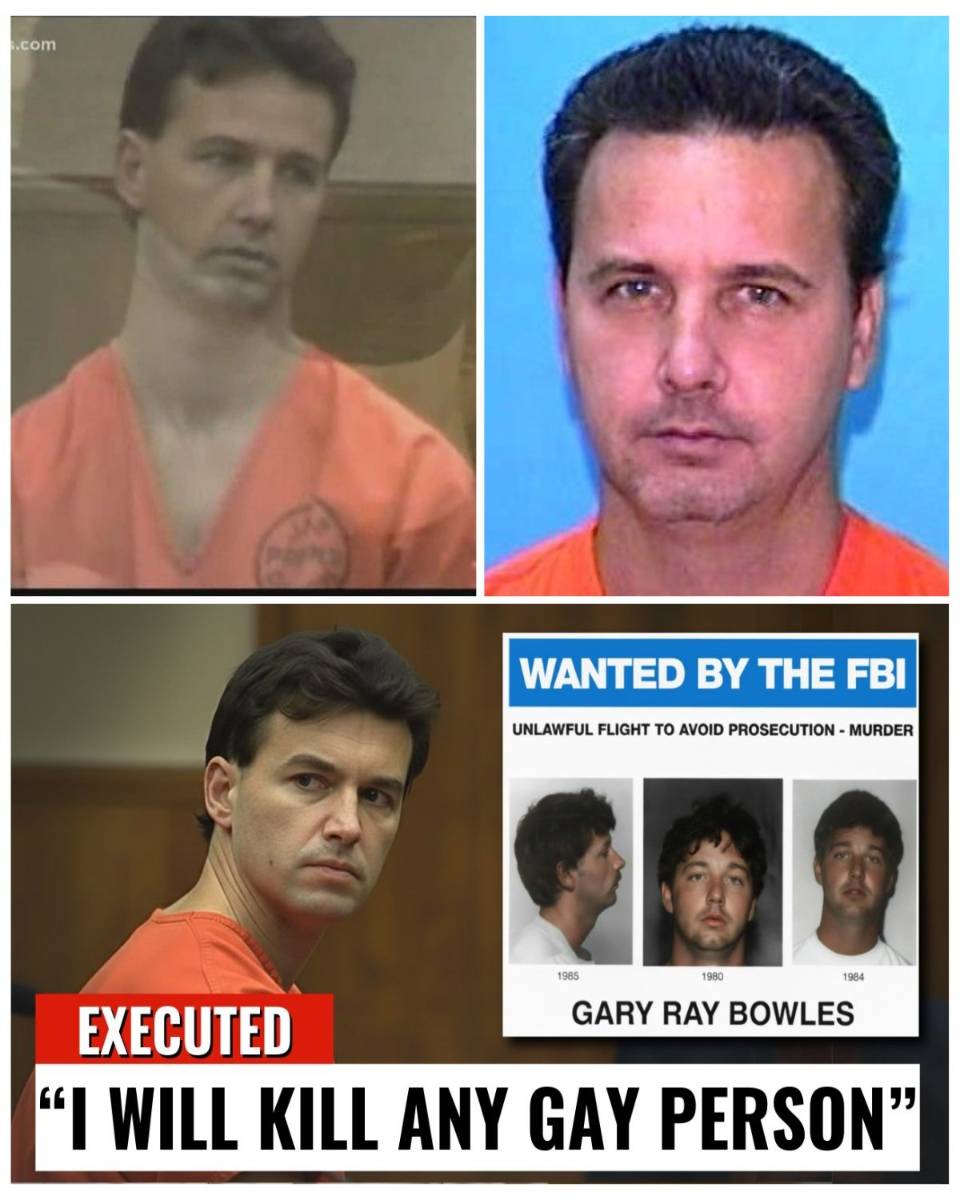
Florida Executes Serial Killer Gary Ray Bowles for String of Brutal Murders
 Florida executed serial killer Gary Ray Bowles early Thursday, ending the life of a man who terrorized gay men across multiple states with a chilling spree of violence. Bowles, 57, was put to death by lethal injection after decades on death row, his final meal a simple trio of cheeseburgers, fries, and bacon. In a handwritten note, he expressed remorse, apologizing for the pain inflicted on victims’ families, marking a grim close to one of America’s most notorious cases.
Bowles’ story began in a troubled Virginia childhood, marked by 𝓪𝓫𝓾𝓼𝓮 and abandonment that shaped his descent into darkness. Born in 1962, he endured beatings from a violent stepfather, leading to his expulsion from home at age 13. Left homeless, he turned to hustling, selling himself to older men while committing petty crimes to survive. This early trauma fueled a rage that exploded years later.
By 1994, Bowles had transformed into a predator, targeting gay men with calculated cruelty. His first confirmed victim was John Hardy Roberts, 59, in Daytona Beach. Bowles gained trust through deception, then beat and strangled him, shoving objects into his mouth as a macabre signature. He fled, using stolen credit cards to evade capture, leaving a trail of horror.
The killing continued across state lines, with Bowles striking in Maryland next. There, he murdered David Allen German, 39, in a brutal attack inside his apartment. Strangulation and that same disturbing ritual followed, as Bowles ransacked the scene for valuables. Police found the body quickly, but leads were scarce, allowing Bowles to slip away and head south.
 In Georgia, Milton Bradley, a 72-year-old World War II veteran, became the next target. Bowles met him at a bar and offered a ride, only to unleash savagery near a golf course. He beat and strangled Bradley, forcing leaves and dirt down his throat. The veteran’s body was discovered the next day, heightening fears of a roaming killer.
Bowles didn’t stop there, claiming Alverson Carter Jr., 47, in Atlanta just days later. Stabbing and strangulation marked this crime, with a towel jammed into the victim’s throat. Authorities soon connected the dots, recognizing a pattern of murders along Interstate 95. The FBI launched a manhunt, labeling Bowles one of the nation’s most wanted.
Back in Florida, Bowles killed Albert Morris, 37, in a trailer after a heated argument. He bludgeoned and shot Morris, then strangled him, stealing his car and belongings. This murder drew federal attention, linking it to the earlier cases. By November 1994, Bowles struck again, murdering Walter Hinton, 42, in Jacksonville Beach with a 40-pound rock.
The attack on Hinton was especially vicious, with repeated blows to the head and final strangulation. Bowles’ arrogance cracked when media exposure led to his identification. At a job center, he confessed to police, admitting to six murders in chilling detail. “I just snapped,“ he told investigators, revealing a monster unleashed by past betrayals.

Trials followed swiftly. In 1996, Bowles was convicted for Hinton’s murder, with jurors recommending death. Appeals delayed justice, but in 1999, a new jury upheld the sentence. He received life terms for other killings, spending 25 years on death row as lawyers fought to save him.
Governor Ron DeSantis signed Bowles’ death warrant in 2019, scheduling execution for August 22. That morning, Bowles remained calm, requesting no visitors or spiritual guidance. His final meal arrived as ordered: three cheeseburgers, fries, and bacon, a stark contrast to the lives he destroyed.
In his last written words, Bowles wrote, “I am very sorry for all the pain and suffering I have caused. I hope my death brings you some relief.“ This apology clashed with earlier boasts of wanting to 𝓀𝒾𝓁𝓁 more. As lethal drugs flowed, witnesses noted his stoic demeanor, ending a chapter of terror.
 Bowles’ execution marks the 99th in Florida since 1976, underscoring debates over capital punishment. His victims, all gay men, highlight the hate-fueled nature of his crimes, a reminder of vulnerabilities in society. Justice, though late, offers closure, but the scars linger for families left behind.
This case exposes the fragility of life and the long arm of the law. From a abused child to a confessed killer, Bowles’ path warns of how untreated trauma can spiral into nightmare. As investigations continue into unresolved aspects, his story demands reflection on prevention and protection.
The urgency of this execution reverberates, urging vigilance against similar threats. Bowles’ confessions paint a portrait of escalating rage, a man who blamed others for his failures. Now, with his death, the focus shifts to healing and remembering the innocent lives lost.
In the wake of this event, communities rally for awareness, emphasizing support for at-risk groups. Bowles’ spree, spanning states and years, shows how one individual’s unchecked fury can devastate many. This breaking news serves as a stark call to action, ensuring such horrors don’t repeat.