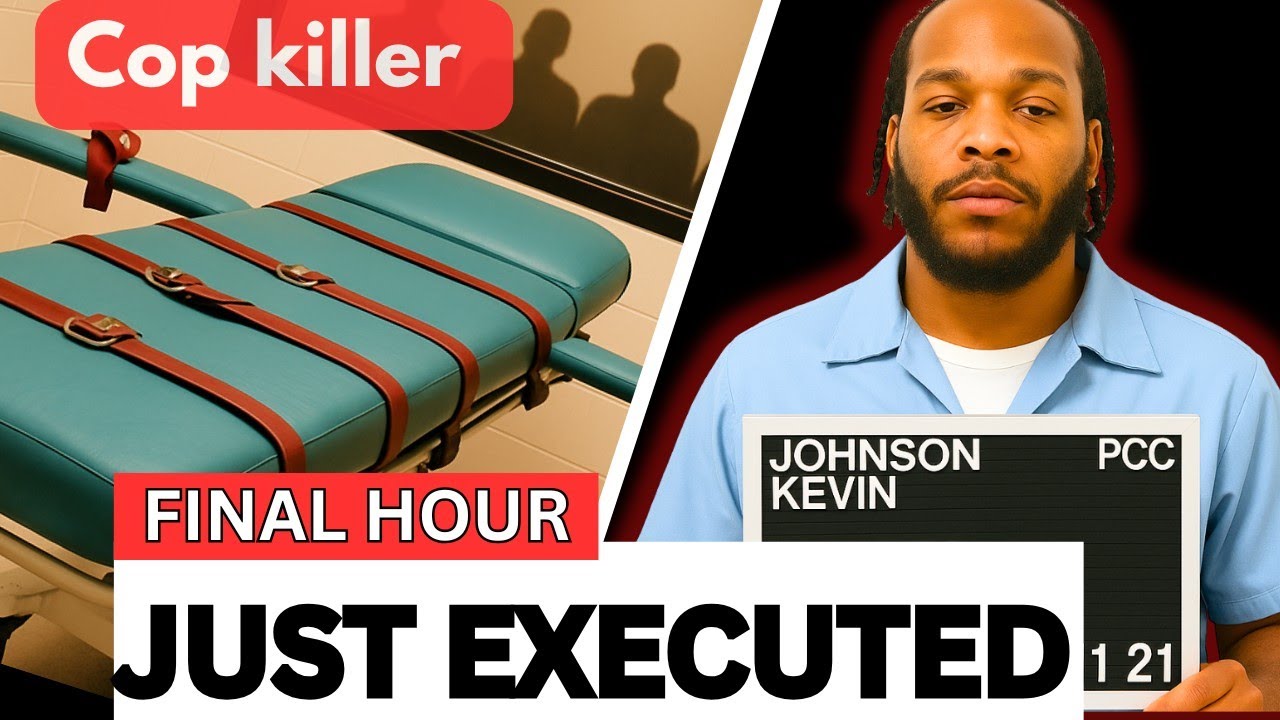
Kevin Johnson Jr. was executed in Missouri on November 29th, 2022, for the 2005 murder of Sergeant William McInty. His death marks the end of a controversial case that divided communities over justice, grief, and the complexities of loss, encapsulating a tragic narrative spanning nearly two decades.
On July 5th, 2005, a devastating chain of events unfolded in the Kirkwood neighborhood. Johnson’s half-brother, Joseph “Bam Bam” Long, collapsed and died from a congenital heart condition. Witnesses say police officers, including Sergeant McInty, failed to provide immediate aid, sparking fury in Johnson.
Hours later, grief and rage converged. Johnson saw Sergeant McInty responding to a minor fireworks complaint unrelated to Bam Bam’s death. In a profound emotional breakdown, Johnson opened fire, shooting McInty seven times—first through the windshield, then finishing the wounded officer on the street.
The slaying of Sergeant McInty, a 20-year veteran and father of three, rocked the tight-knit Mechum Park community, igniting a massive manhunt. Johnson surrendered peacefully the next day but faced first-degree murder charges that came with the death penalty in Missouri, a state known for its harsh sentences for killing law enforcement officers.
Throughout his trial and 17 years on death row, Johnson maintained a complex narrative: a grieving brother breaking under unbearable loss versus the prosecution’s portrayal of a calculated cop killer. The jury convicted him of murder, but could not decide on the death sentence. The judge imposed it regardless, intensifying controversy.
Civil rights groups and legal experts loudly criticized the case, alleging racial bias and prosecutorial misconduct. They argued Johnson’s sentencing was influenced more by the victim’s police status and Johnson’s race than by pure facts. Appeals and motions highlighting systemic flaws repeatedly failed, sealing Johnson’s grim fate.
Missouri’s Governor Mike Parson denied clemency, calling Johnson’s crime horrific and emphatically moving forward with the execution. Protesters gathered outside the prison, demanding justice and mercy, their chants underscoring the case’s stark racial and emotional divisions. Supporters insisted the system had failed Johnson and his family.
Johnson’s final hours were marked by solemn acceptance. He requested a standard prison meal with no extravagance—peanut butter and jelly sandwich, scrambled eggs, cereal, and milk. His last words reflected regret and love, apologizing for his actions and expressing affection for his daughter, family, and supporters.
Denied a final farewell in the execution chamber, his 19-year-old daughter could not witness his last moments, a poignant denial that underscored the cold finality of the state’s decision. Johnson died by lethal injection at 7:40 p.m., closing a heartbreaking chapter that raised profound questions about justice and mercy.
This case is a stark reflection of a harsh justice system entangled with deep societal wounds—grief that erupted in violence, a family fractured by history, and a criminal justice system unyielding in its resolve. Officer McInty’s life ended tragically, but so too did the fragile life of Kevin Johnson Jr.

As dusk fell on that winter day, candles flickered outside the prison gates. Some called for justice, others for reform, but all were haunted by a truth seldom admitted: justice does not always wear a blindfold. The execution was not just a legal act but a reflection of pain, loss, and fractured society.
Johnson’s story compels a critical examination of the cycles of trauma, the failings of institutional care, and the heavy price exacted by grief warped into violence. It asks whether true justice was served or if this was vengeance masquerading as righteousness—a question left lingering in the cold Missouri night.
Sergeant William McInty’s family mourns a beloved husband, father, and officer fallen in the line of duty. Meanwhile, Kevin Johnson leaves behind a legacy of sorrow and unresolved conflict. His final message urged truth and strength from his daughter—words echoing long after the gurney was wheeled away.

This is the urgent and painful saga of a man broken by loss, a community torn by tragedy, and a justice system grappling with its most profound challenges. The execution of Kevin Johnson Jr. stands as a somber milestone in the ongoing debate over law, race, and mercy in America today.