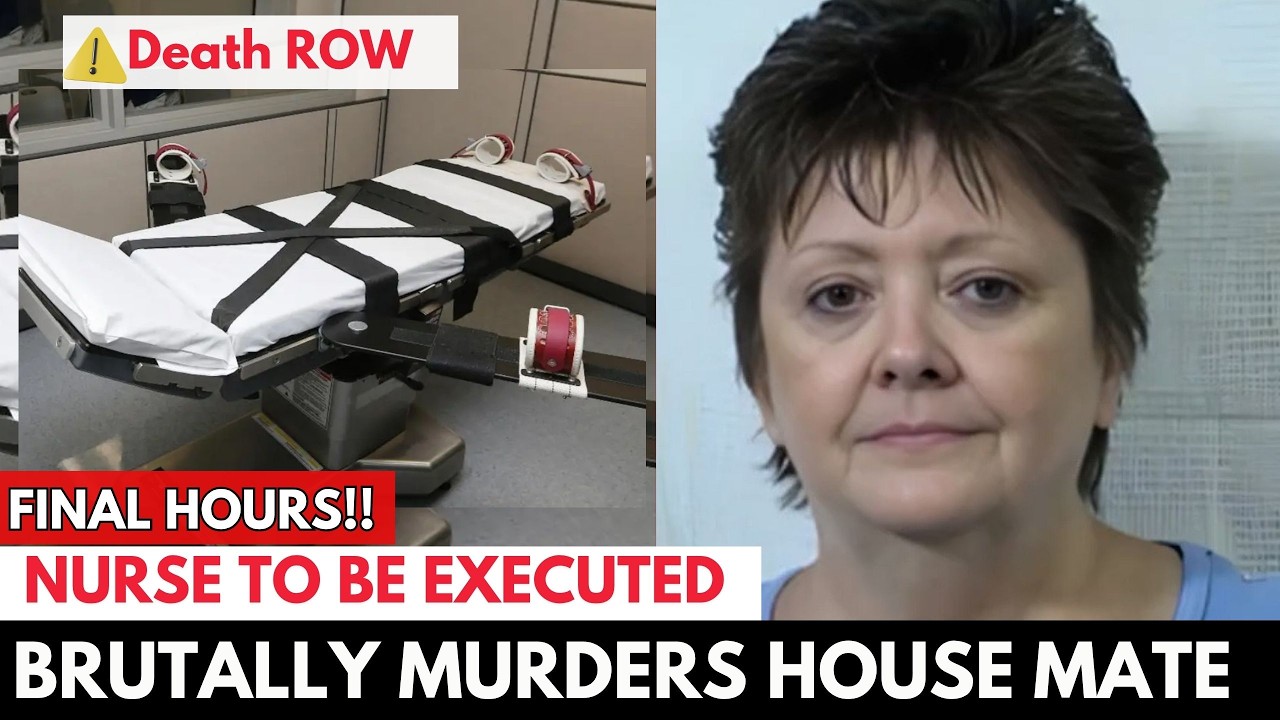
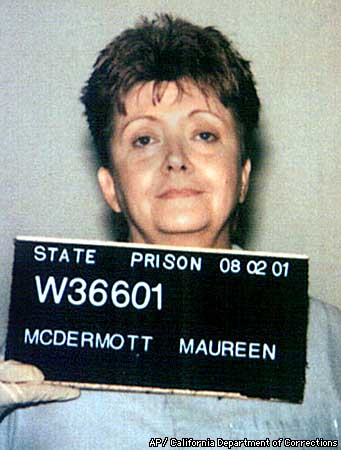
The woman who spent nearly four decades on California’s death row for orchestrating the brutal murder of her housemate for a $100,000 life insurance payout now faces an uncertain future, her sentence intact but the state’s execution machinery frozen by a governor’s moratorium. Marine McDermott, now in her late 70s, was convicted in 1990 of first-degree murder with special circumstances for the April 28, 1985, stabbing death of Steven Eldridge, a 27-year-old landscaper who trusted her as a friend and co-owner of a modest Van Nuys home. The case, which produced one of the most detailed records of premeditated murder for hire in California history, has wound through every level of the judicial system, with appeals exhausted and a federal court acknowledging a constitutional violation but declining to intervene. McDermott, a respected registered nurse at Los Angeles County-USC Medical Center, was sentenced to death at age 42, her voice cracking as the judge confirmed the penalty, but she has never been executed. Governor Gavin Newsom’s 2019 executive order halting executions for as long as he remains in office has left her in a legal limbo, housed in the general population at the Central California Women’s Facility in Chowchilla, where she was the first death row inmate when the facility opened in 1991.
The killing of Steven Eldridge was not a spontaneous act of violence but the culmination of a calculated plan that McDermott had been refining for months, according to trial testimony and court records. She and Eldridge had purchased the house together in 1984 as joint tenants, a practical arrangement that soon soured as Eldridge complained about the condition of the property and McDermott’s pets. By early 1985, Eldridge was talking about selling his interest, a move that threatened McDermott’s financial stability. She was drowning in debt, working two jobs as a nurse and a private caregiver, and the gap between what she earned and what she owed had become a fixed feature of her life. In December 1984, both she and Eldridge took out life insurance policies worth $100,000 each, naming each other as sole beneficiaries, a standard mortgage-related arrangement that Eldridge saw as routine. McDermott saw it differently. She began discussing with Jimmy Luna, an orderly at the hospital where she worked, the possibility of killing Eldridge to collect the payout, offering Luna $50,000 for the job.
Luna, who had previously carried out a violent attack on another caregiver at McDermott’s direction, agreed to the plan, and the two began rehearsing the murder over several weeks. McDermott instructed Luna to stage the killing to look like a hate crime targeting a gay man, believing that police would not investigate such a crime as thoroughly. She suggested carving slurs into the body or cutting off anatomy to reinforce the impression. Luna made three attempts to kill Eldridge in February and March 1985, each time freezing at the critical moment, unable to follow through. After the third failure, McDermott called Luna and told him they would have to try again and that he could not fail this time. She told him to find help. Luna recruited Marvin Lee and his younger brother Dondell Lee, offering them money to assist. On March 21, 1985, the three men forced their way into the house, attacked Eldridge with a knife and a bedpost, but Eldridge fought back, escaped through the front door in his underwear, and survived. A neighbor called police, and Eldridge was treated at a hospital for his injuries. He had no idea who had attacked him or why.
McDermott called Luna the morning after the attack, her voice flat and direct, telling him they would have to do it again and that this time he should not fail. She began planning the second attempt with greater precision, leaving nothing to chance. She told Luna to enter the house through a front bedroom window that she would leave open, eliminating the need for a knock at the door. She instructed him to tie her up and cut her, not severely but visibly, on her breast and inner thigh, to make her appear to be a robbery victim. She told him to wait for Eldridge to return from a dinner engagement on the evening of April 28, 1985. On that night, Luna, Marvin Lee, and Dondell Lee entered the house through the open window. Luna cut McDermott as agreed, and she asked him how the injury on her face looked, having hit her head on a table to add credibility to her cover story. The three men waited. Eldridge came home at around 10:40 p.m., stepping into the dark house. Dondell Lee was standing in the entrance holding a rifle that belonged to McDermott. Marvin Lee wrapped his arm around Eldridge’s neck and dragged him down the hallway, where Luna was waiting with a knife. Luna stabbed Eldridge 44 times, with 28 of those wounds each sufficient to cause death on their own. After the killing, Luna walked back to McDermott’s bedroom and found her on the floor in position, her injuries arranged, her story ready. As the men prepared to leave through the window, McDermott called out to remind them not to forget the instruction she had given about the body, the staging designed to make the scene read as a hate crime.
Police arrived that night and found the scene exactly as McDermott had arranged it. She told them her story, the shower, the intruders, the restraints, the waiting, the sounds of the attack. Her injuries were shallow and required no medical attention. Eldridge’s body lay in the hallway with 44 stab wounds. The disparity between the two sets of injuries did not escape investigators. They began looking at the financial arrangements, the insurance policies, the timing of their purchase. They interviewed McDermott’s colleagues and friends, and the name Jimmy Luna surfaced. In May 1985, police brought Luna in for questioning, released him, then arrested him on July 2, 1985, charging him with first-degree murder. Luna began to talk. He described the conversations with McDermott, the planning, the failed attempts, the night of the killing. In August 1985, McDermott was arrested in Pennsylvania, where she had traveled after the murder. She was arraigned on January 10, 1986, charged with attempted murder for the March 21 attack and first-degree murder with special circumstances for the April 28 killing. She pleaded not guilty and maintained her innocence.
The trial began in 1990, five years after Eldridge’s death. Prosecutor Katherine Mater built her case on the testimony of Luna, Marvin Lee, and Dondell Lee, all of whom had received immunity or reduced sentences in exchange for their cooperation. Luna pleaded guilty to first-degree murder and was sentenced to life without parole, avoiding the death penalty. Marvin and Dondell Lee were never charged with the murder. Mater opened by laying out the financial motive, the insurance policy, the joint ownership of the house, the debt that had driven McDermott to calculate the value of Eldridge’s death. She called Dwayne Bell to the stand, the caregiver McDermott had targeted in 1983 to secure a private nursing position. Bell described the attack Luna had carried out at McDermott’s direction, the slashing across his face, throat, and chest, the threatening phone calls that followed, and his eventual decision to leave the position he had held for five years. The testimony established a pattern, identify the obstacle, recruit Luna, direct the violence, stay at a distance, collect the benefit.
Luna testified for five weeks, eight days of which were consumed by cross-examination from McDermott’s attorney, Joe Ingber. Luna described every detail, the conversations, the planning, the failed attempts, the night of the killing. He described McDermott’s voice on the phone the morning after the March 21 attack, telling him they had to do it again. He described her instruction to cut her on her breast and inner thigh. He described her calling out from the bedroom as the men prepared to leave, reminding them not to forget the instruction about the body. Ingber argued that the prosecution’s case rested entirely on the testimony of men who had been rewarded for pointing at McDermott. He called five of Luna’s former co-workers who testified that Luna was a habitual liar. He called a pathologist who testified that the 44 stab wounds had been inflicted by two different weapons, not one, raising questions about the prosecution’s narrative. McDermott did not testify. The jury was instructed that her silence could not be held against her.
In her closing argument, Mater called McDermott a mutation of a human being, a wolf in sheep’s clothing, a traitor who had resigned from the human race. She compared her to a Nazi working in a crematorium by day and listening to Mozart by night. She quoted passages from the book of Exodus, citing verses that spoke of putting to death those who kill with malicious intent. The defense did not object to any of this language. The jury deliberated for three days and returned a verdict of guilty on all counts, finding the special circumstances of murder for financial gain and murder by lying in wait true. The penalty verdict was death. On June 8, 1990, Judge Alan B. Haber sentenced McDermott to death in San Quentin’s gas chamber. Her voice cracked as she maintained her innocence, and she called Mater a power-hungry woman with so little integrity.
McDermott was transferred to the Central California Women’s Facility in Chowchilla in December 1991, becoming the first death row inmate in the facility’s history. She was housed in a nine-cell unit, initially the only person in it. She told the Los Angeles Times in 1992 that waking up every morning to a cement wall was an unbearable future, that she sometimes thought the gas chamber was better than spending the rest of her life staring at those walls. The automatic appeal to the California Supreme Court was filed, and on August 12, 2002, the court unanimously upheld her conviction and sentence. Justice Joyce Kennard wrote that the prosecution’s removal of eight black jurors during jury selection was not racially motivated, accepting the prosecutor’s explanation that the strikes were based on the jurors’ expressed reservations about the death penalty. The United States Supreme Court denied review in 2003. Three state habeas petitions were denied in 2004, 2007, and 2008. A federal habeas petition was filed in 2005 and denied by District Court Judge David O. Carter in May 2018. McDermott appealed to the Ninth Circuit, which found a constitutional violation in the jury selection process, acknowledged it clearly, but declined to remedy it, leaving the conviction and sentence intact.
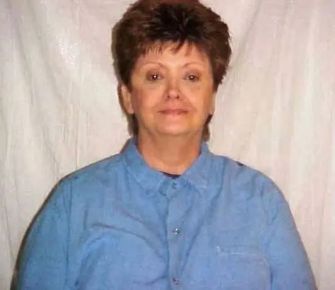
By March 2019, when Governor Newsom signed the executive order placing a moratorium on executions, every court available to McDermott had ruled against her. The moratorium did not commute her sentence, but it stopped the machinery of execution from moving. McDermott, then in her mid-70s, chose to leave the condemned unit and move into the general population at CCWF, where she had access to more programs and more human contact than she had known in decades. She suffered from chronic lung disease and degenerative joint and bone disease. She wanted to die peacefully, surrounded by the people she loved, rather than inside a facility that had been her home for more than three decades against her will. She had outlasted Jimmy Luna, who died of AIDS in prison before the appeals were finished. She had outlasted the judge who sentenced her. She had outlasted the private investigator who spent years trying to find something the trial had missed. The moratorium had kept her alive beyond the point where the law had anything left to offer her.
But moratoriums are political instruments, and politics change. Newsom’s order holds as long as he remains in office. A different governor could lift it. A different political climate could return California to active executions. If that happens, McDermott would be the first woman executed in the state since Elizabeth Anne Duncan was put to death in 1962, more than 60 years earlier. She would be at the front of the line, her sentence intact, her appeals exhausted, her fate resting on the decisions of elected officials and the shifting winds of public opinion. The question of when, or if, the state will carry out her execution remains unanswered, a legal and political uncertainty that has defined her existence for nearly four decades. The woman who was a trusted nurse, a compassionate colleague, and a calculating killer sits in a prison in the Central Valley, waiting to see whether the state will ever act on the judgment it handed down in 1990. The case of Marine McDermott is a study in the slow, grinding machinery of capital punishment, a system that can take a life in a moment but can take decades to decide whether to take it at all. The story is not over. It is simply paused, waiting for the next turn in a long and unresolved history.
Source: YouTube