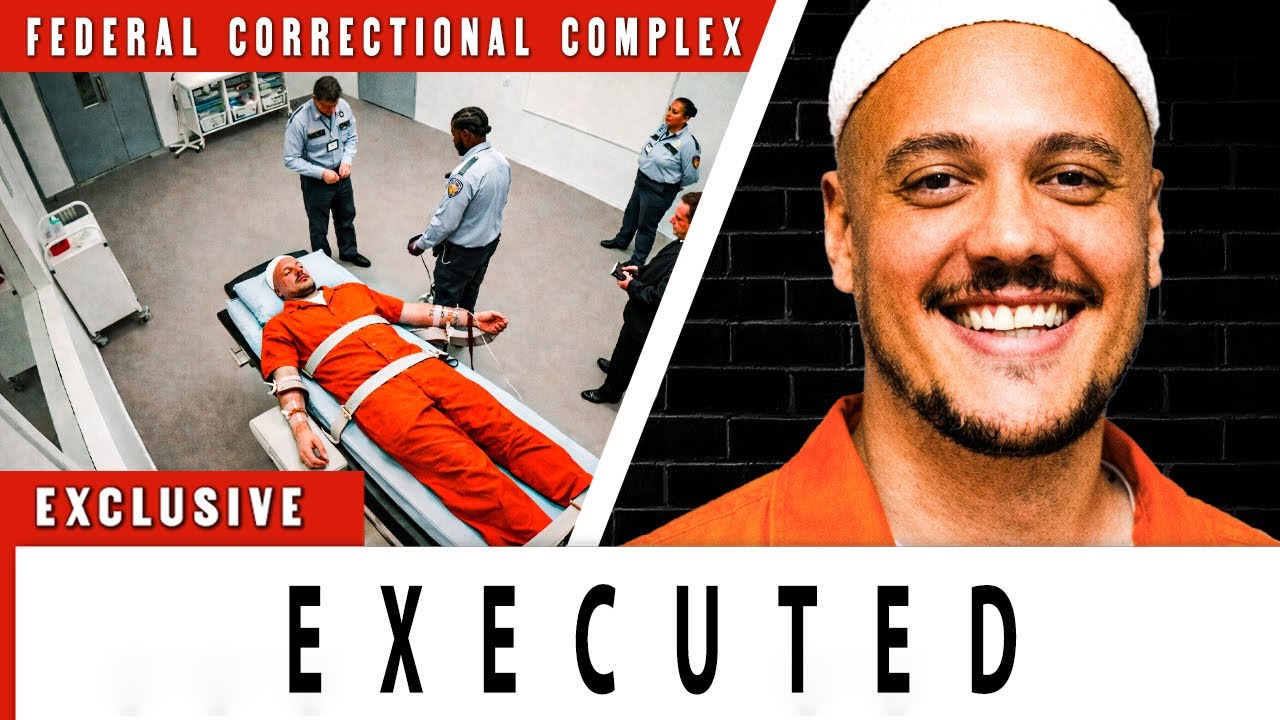
Christopher Vialva, a 40-year-old man who spent two decades on federal death row, was executed on September 24, 2020, at Terre Haute Federal Penitentiary. His final moments were marked by a prayer and an apology to the family of his victims, Todd and Stacie Bagley, whom he murdered in a brutal robbery gone wrong.
Vialva’s execution, the first of a Black man federally since the resumption of capital punishment, has reignited fierce debates about racial bias in the justice system. Critics argue that systemic failures led to his death, highlighting the troubling dynamics of his trial, where the jury was predominantly white, and the victims were white.
The horrific crime occurred in 1999 when Vialva, then just 19, led a group that carjacked the Bagleys after a church event near Fort Hood, Texas. The couple was forced into the trunk of their car, where Vialva shot Todd Bagley in the head and left Stacie to die from smoke inhalation after setting the vehicle ablaze.

Vialva’s troubled upbringing, marked by rejection and violence, has drawn attention to the effects of childhood trauma on behavior. His defense argued that his brain was not fully developed at the time of the crime, a claim that was ultimately dismissed by the courts.
In the years leading up to his execution, Vialva filed multiple appeals, claiming racial bias in jury selection and highlighting his mental health issues. Despite growing calls for clemency from activists and supporters who argued he had undergone significant personal transformation during his time in prison, the appeals were denied.
As the clock ticked down to his execution, Vialva requested a last meal, the details of which remain undisclosed. Witnesses inside the execution chamber described a tense atmosphere as he was strapped to the gurney. At 6:46 p.m., the lethal injection began, and Vialva took his final breaths, uttering a prayer and seeking forgiveness from the Bagley family.

Outside the prison, protests erupted as advocates condemned the execution, calling it a symbol of a flawed and biased justice system. The case has sparked renewed discussions about the death penalty’s role in society, especially concerning racial disparities and the treatment of juvenile offenders in the legal system.
Vialva’s story serves as a stark reminder of the complexities surrounding capital punishment, mental health, and the influence of race in judicial proceedings. As the nation grapples with these issues, the echoes of his final words linger, prompting critical questions about justice, mercy, and the potential for redemption.