NASHVILLE, Tenn. — The state of Tennessee executed Harold Wayne Nichols by lethal injection on Thursday morning, closing a 37-year legal saga that began with the brutal rape and murder of a 20-year-old college student in her own bedroom. Nichols, a 64-year-old U.S. Army veteran and serial rapist, was pronounced dead at 10:39 a.m. at Riverbend Maximum Security Institution after uttering final words of apology and spiritual readiness.
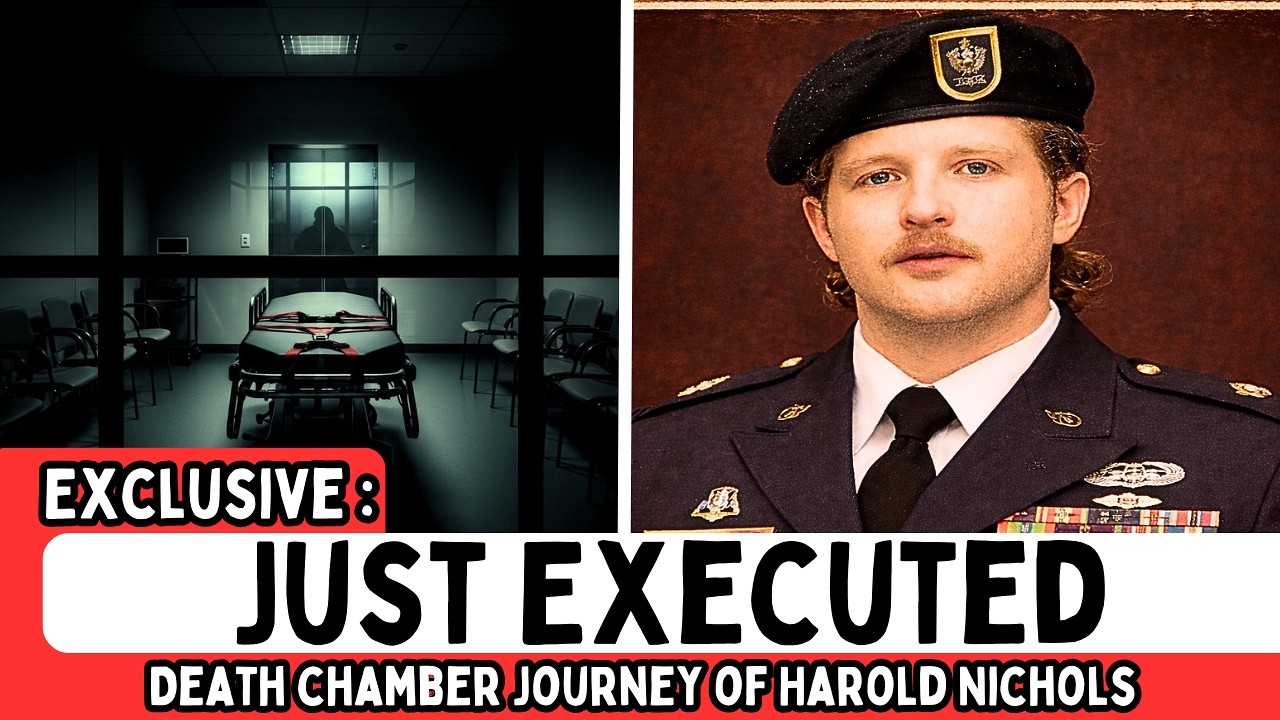
His death marks the tenth execution in Tennessee since the state resumed capital punishment in 2018. The sentence was carried out after Governor Bill Lee denied clemency and the U.S. Supreme Court declined to issue a stay, exhausting all final appeals. The execution proceeded under a new single-drug protocol using pentobarbital.
Nichols was convicted and sentenced to death in 1990 for the 1988 killing of Karen Elise Pulley, a student at Chattanooga State Community College. The crime was part of a 95-day spree of attacks that terrorized the Chattanooga area, with Nichols targeting women who were alone and vulnerable.
On the night of September 30, 1988, Nichols entered Pulley’s Brainerd apartment through a bathroom window while she slept. He armed himself with a piece of lumber found inside the home and bludgeoned her to death. An emergency medical technician who responded, a Vietnam War veteran, later told the family he had never witnessed a more horrific scene.
Karen Pulley died later that day from blunt force trauma to the head. She was described by her family as a bubbly, selfless young woman with a deep Christian faith, recently returned from Bible college, and studying to become a paralegal. Her parents, Chuck and Ann Pulley, died without seeing justice served.
The investigation into the so-called “red-headed stranger” attacks culminated in Nichols’s arrest on January 5, 1989, after an anonymous tip driven by personal jealousy. In a videotaped confession that proved pivotal at trial, Nichols detailed the assault on Pulley and disclosed where he had disposed of the weapon.

At his sentencing hearing, when asked by prosecutors if he would have continued his attacks had he not been arrested, Nichols answered “yes.” A jury deliberated for less than two hours before recommending the death penalty. Notably, six jurors later stated they voted for death, believing the state would never carry it out.
In a profound act of grace, Karen Pulley’s mother met with Nichols privately in a jury room after the verdict and told him she forgave him. She later visited him in prison and gave him a Bible inscribed with her daughter’s favorite verses, which he kept for 35 years.
Nichols’s path to death row was traced by defense teams to a profoundly abusive childhood. Federal records described a home dominated by a “vile” father, early exposure to sexual violence, and subsequent placement in a harsh church-run orphanage. His post-Army life was marked by a prior conviction for attempted sexual assault.
Despite a psychological evaluation after that earlier prison term, finding “nothing unusual,” Nichols was released. He later missed parole meetings and was arrested for prowling with a knife before the fatal attack on Pulley. DNA testing in 2005 definitively confirmed his biological connection to her murder.
In the decades since his conviction, Nichols’s case attracted unusual scrutiny. Two former Hamilton County prosecutors who worked the original case and six of the original trial jurors later expressed support for clemency or life without parole, citing his conduct and apparent rehabilitation in prison.

He worked as a maintenance orderly on death row, described by many as remorseful. A 2018 agreement between his defense and the district attorney’s office to resentence him to life was rejected by a judge. His execution was previously delayed by the pandemic and a state review of lethal injection protocols.
For his final meal, served Wednesday evening, Nichols requested beef brisket, coleslaw, a baked potato, onion rings, deviled eggs, cheese biscuits, and fruit tea. In the execution chamber, he was accompanied by spiritual adviser J.R. Davis. Together they recited the 23rd Psalm and the Lord’s Prayer.
When asked for a final statement, Nichols said, “To the people I’ve harmed, I’m sorry. To my family, know that I love you. I know where I’m going. I’m ready to go home.” The lethal drug was then administered.
The Pulley family held a private celebration of Karen’s life during the execution. Her brother-in-law, Jeff Monroe, addressed the press afterward, thanking law enforcement and state agencies. Karen’s sister, Lette Monroe, was not present.
Defense attorney Deborah Drew stated the execution “sent a message that redemption deserves no mercy.” Spiritual adviser Davis said he believed Nichols’s transformation was genuine. The case leaves a complex legacy, intertwining a horrific crime, a troubled childhood, decades of apparent remorse, and a final, state-administered punishment that arrived nearly four decades later.
Source: YouTube