Angola, Louisiana – Jesse Dean Hoffman Jr., convicted for the 1996 abduction, rape, and murder of a New Orleans advertising executive, was executed by nitrogen hypoxia at the Louisiana State Penitentiary on Tuesday evening. He was pronounced dead at 6:50 p.m., marking the state’s first execution in 15 years and the fifth nationwide using the controversial nitrogen gas method.
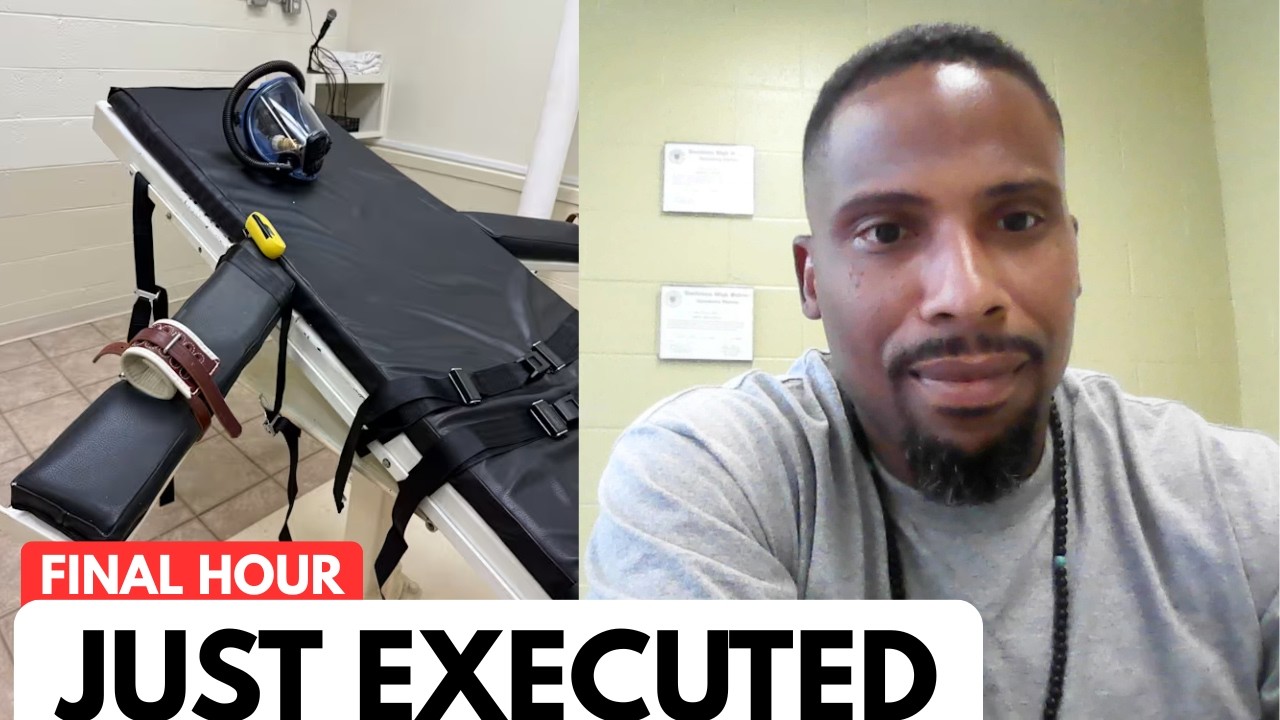
The execution proceeded after a narrow 5-4 U.S. Supreme Court decision rejected final appeals from his legal team. They had argued the method constituted cruel and unusual punishment and violated Hoffman’s religious freedoms as a practicing Buddhist. The high court’s ruling cleared the last legal obstacle.
Hoffman, 47, spent 26 years on death row for the killing of 28-year-old Mary “Molly” Elliott. On November 26, 1996, Hoffman, then an 18-year-old valet at a Sheraton parking garage, forced Elliott into her car at gunpoint. He made her withdraw money from an ATM before driving her to a remote area of St. Tammany Parish.
There, he raped and murdered her. The crime, described by prosecutors as calculated and brutal, led to a swift trial. Hoffman was found guilty of first-degree murder on September 11, 1998, and sentenced to death. He entered the Angola prison at age 19.
Over his decades of incarceration, Hoffman underwent a profound transformation that became central to his clemency campaign. He embraced Buddhism in 2002, becoming a spiritual leader among the prison population. His attorneys and supporters argued he was unrecognizable from the teenager who committed the crime.
“He was a father, a husband, and a man who showed extraordinary capacity for redemption,” said Cecilia Capo, his attorney. His son, Jesse Smith, pleaded publicly for his father’s life in the days leading up to the execution. These appeals for mercy were ultimately unsuccessful.

Louisiana had not carried out an execution since 2010 due to a nationwide shortage of lethal injection drugs. In 2024, Governor Jeff Landry signed legislation authorizing nitrogen hypoxia as an alternative. Hoffman was selected as the first inmate to face the new method.
In his final hours, Hoffman met with his Buddhist spiritual advisor, Reverend Raimoku Gregory Smith. According to a supporter who visited him, Hoffman was calm, speaking proudly of his son. He declined to request a final meal. When offered a final statement in the death chamber, he remained silent.
Witnesses described a difficult scene once the nitrogen gas began flowing at 6:21 p.m. Official accounts noted his breathing became uneven, his body shook, and his hands clenched. A prison medical official stated he did not believe Hoffman was conscious for long, calling him “clinically dead very quickly.”
The gas administration continued for 19 minutes, per protocol. State officials declared the execution “flawless.” Witness descriptions, however, contrasted with that assessment, noting visible physical distress. The method remains under intense debate, with only Alabama having previously used it.
Governor Jeff Landry issued a firm statement following the execution. “If you commit heinous acts of violence in this state, it will cost you your life, plain and simple,” he said. Attorney General Liz Murrill indicated this was likely the first of several executions this year.

For the family of Molly Elliott, the path to justice spanned nearly three decades. Some reports, including from Hoffman’s defense team, indicated that not all family members believed the execution would bring them peace. Grief, they suggested, is not always resolved by a state-sanctioned death.
The case forces a confrontation with enduring questions about redemption, punishment, and evolving methods of execution. Hoffman’s life ended as it began in the justice system: defined by a single night of violence in 1996. Molly Elliott’s life was stolen on that same night, her future erased.
More than 55 individuals remain on Louisiana’s death row. The resumption of executions signals a new, contentious chapter for the state’s criminal justice system. The legacy of this case will be debated in legal, ethical, and spiritual terms for years to come.
Hoffman’s final silence stands in stark contrast to the noise of the legal and public debate that surrounded his death. He offered no last words, no final meal, no explicit apology or defiance. He breathed, and then he did not.
Molly Elliott was 28. She had simply gone to retrieve her car after work. She never received a final statement or a last meal either. In the end, two lives were irrevocably ended by a sequence of violence that began in a parking garage and concluded inside a prison’s white-walled chamber.
Source: YouTube