The lunar surface is not a silent, dead world, but a chemically reactive and electrically charged environment actively hostile to human life, new research and decades of data reveal. This emerging understanding presents profound, potentially insurmountable challenges to plans for establishing a permanent human presence on our celestial neighbor.
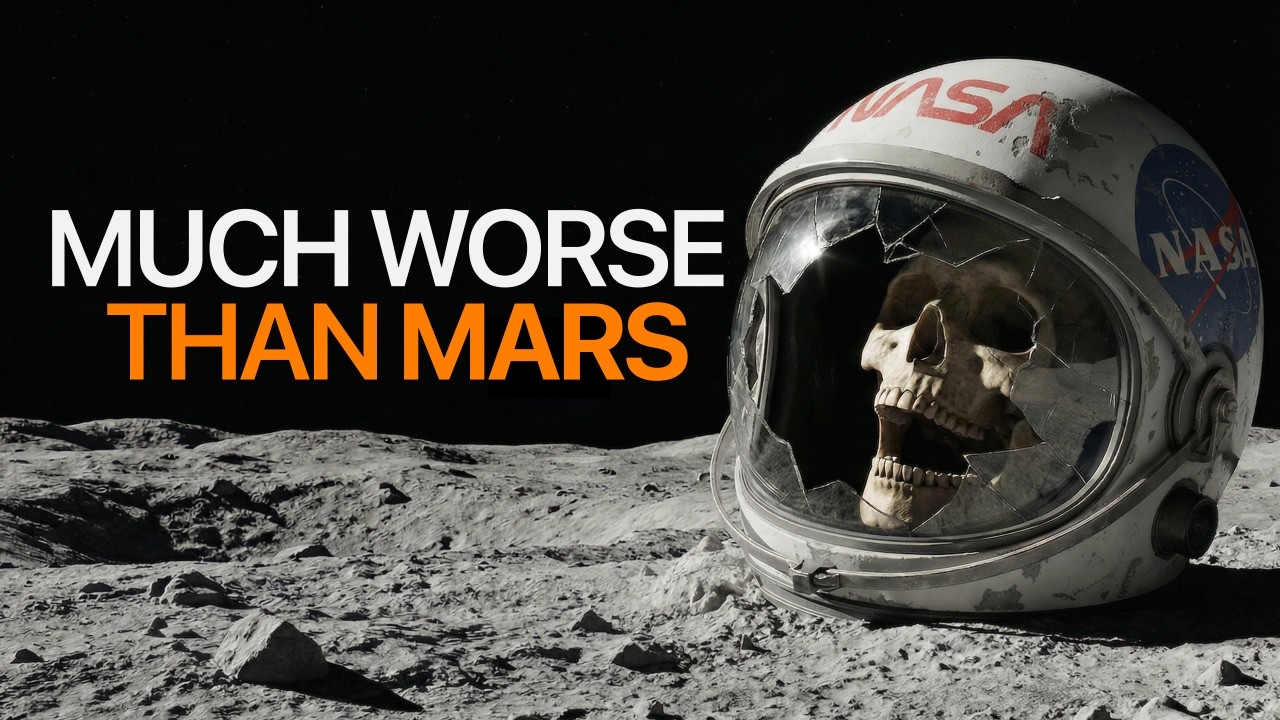
Every Apollo mission returned with the same urgent, gritty problem: lunar dust. This is not ordinary soil. Billions of years of micrometeorite bombardment have pulverized the rock into particles finer than talcum powder, each grain a jagged shard of glass.
The dust proved impossible to manage. It clung to spacesuits, scratched visors, jammed equipment, and infiltrated the lunar modules. Once inside, it hung in the air, refusing to settle in the weak gravity. Astronauts inhaled it, with Apollo 17’s Harrison Schmitt developing “lunar hay fever.”
The chemical danger became clear upon contact with the cabin’s moist, oxygen-rich air. The dust released a scent of burnt gunpowder, a sign of violent chemical reactions after eons in a vacuum. This reactivity poses a severe threat to human lungs.
Studies indicate the dust contains silicate compounds linked to silicosis, an incurable lung disease. Embedded nanoscale iron particles make it highly reactive. In the moon’s low gravity, these ultrafine particles penetrate deeper into the respiratory tract and linger.
NASA’s Lunar Atmosphere Dust Toxicity Assessment Group confirms the risk is significant and poorly understood. Prolonged exposure during longer Artemis missions, particularly in unexplored regions like shadowed polar craters, presents an unknown hazard.
The dust’s behavior borders on the supernatural. On the sunlit side, intense solar UV radiation electrically charges the surface, levitating the finest particles meters into the vacuum. This creates a persistent, hovering cloud of abrasive glass.

At the terminator between light and dark, researchers theorize horizontal electric fields could drive “lunar dust storms.” The powder is not inert; it is dynamically animated by the space environment, coating everything in its path.
Radiation presents a more immediate and lethal threat. Without a protective magnetic field or atmosphere, the moon bathes its surface in unfiltered galactic cosmic rays—high-energy atomic nuclei that shred DNA.
Shielding is paradoxically difficult. Cosmic rays striking thick habitat walls produce secondary showers of radiation inside, making some protection worse. Engineers consider this one of spaceflight’s hardest unsolved problems.
Solar particle events pose a catastrophic risk. These unpredictable solar eruptions could deliver a lethal radiation dose to an exposed astronaut in under a day. The Apollo crews narrowly avoided a major storm in 1972 between missions.
Thermal extremes defy earthly engineering. Surface temperatures swing 300 degrees Celsius between the 14-day lunar day and the 14-night. This relentless cycle fatigues metals, cracks seals, and destroys electronics.
A permanent base must endure thousands of these cycles without the buffering effect of an atmosphere. Every component faces destruction by the raw thermal hammering of space.
Seismic data shatters the myth of a geologically dead moon. As its interior cools, the moon is shrinking, fracturing its brittle global crust. This creates thrust faults called lobate scarps, some geologically young and active.

These faults generate shallow moonquakes. Unlike Earth’s brief tremors, seismic energy rings through the dry lunar crust for hours, producing sustained, gentle shaking that can trigger landslides.
A 2024 study tied a magnitude 5 moonquake to young faults in the lunar south pole—NASA’s chosen Artemis landing zone. One candidate site sits alarmingly close to an identified fault scarp.
Research in 2025 reanalyzed the Apollo 17 site, concluding that boulder falls were caused by moonquakes rather than impacts. The responsible fault remains active. Odds of a damaging quake near a fault over a decade of habitation are roughly 1 in 5,500.
The constant rain of micrometeorites completes the hostile picture. With no atmosphere to burn them up, particles strike at hypersonic speeds, sandblasting everything on the surface. Apollo suit boots showed significant abrasion damage in just days.
A permanent habitat would face this abrasive barrage continuously, with its integrity slowly, inevitably degraded. There is no natural reprieve from this eternal bombardment.
Together, these factors paint a stark portrait. The moon is a world shrouded in toxic, electrically-charged dust, bathed in deadly radiation, racked by hours-long quakes, and subjected to violent temperature swings and micrometeorite sandblasting.
The Apollo missions were brief visitations, too short for the full depth of these dangers to manifest. Returning for short stays is a monumental challenge. Establishing a lasting human foothold, however, may mean confronting an environment fundamentally engineered to repel life.
The moon’s quiet facade is a profound deception. It waits, not as a stepping stone, but as a silent guardian of profound perils, demanding a reckoning with the true cost of staying.
Source: YouTube