A series of landmark scientific experiments have yielded results that defy conventional explanation, challenging our understanding of human psychology, medical diagnosis, and the fundamental laws of the universe. From the unsettling obedience of medical professionals to the bizarre behavior of subatomic particles, these findings reveal gaps in our knowledge that continue to perplex experts decades later.
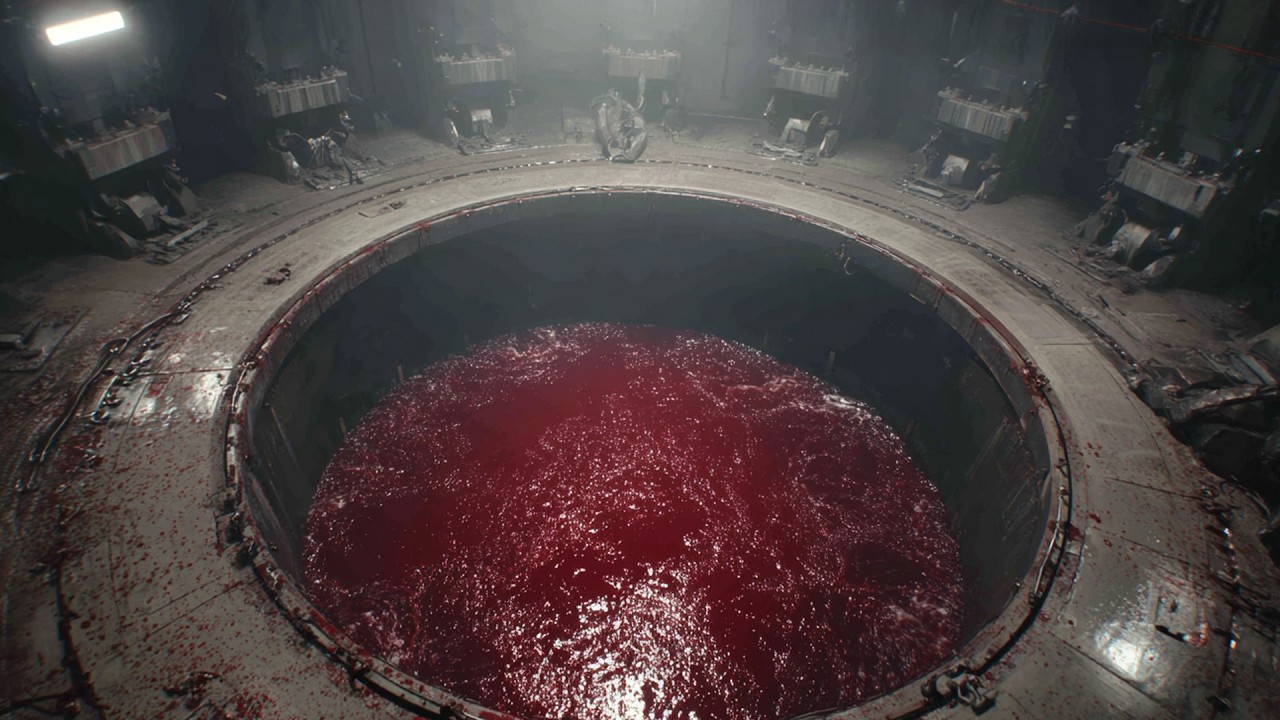
In a startling 1966 experiment, psychiatrist Charles K. Hoffling demonstrated the terrifying power of authority in a clinical setting. Posing as an unknown doctor, he phoned nurses on night shift and instructed them to administer an overdose of a fictitious drug called “Astroten” to a patient. Despite the order violating hospital protocol and the dose being double the clearly labeled maximum, 21 out of 22 nurses complied, some already moving toward the patient with the medication. The nurses later admitted they felt doubts, but proceeded because the instruction came from a perceived authority figure.
The diagnostic framework of psychiatry itself was called into question by psychologist David Rosenhan’s 1973 study, “On Being Sane in Insane Places.” Eight perfectly healthy individuals, including Rosenhan, gained admission to psychiatric hospitals across the U.S. by claiming to hear voices. Upon admission, they immediately ceased all simulated symptoms and behaved normally. Instead of being released, all were diagnosed with serious mental illnesses like schizophrenia and held for an average of 19 days, with one stay lasting 52 days. Their normal behaviors, like note-taking, were pathologized by staff as symptoms of their alleged conditions.
At the subatomic scale, the famous double-slit experiment presents a profound mystery central to quantum mechanics. When electrons are fired at a barrier with two slits without observation, they create an interference pattern, behaving as if they passed through both slits simultaneously, like a wave. The moment scientists place a detector to observe which slit an electron uses, the behavior changes; the electrons act like particles, forming two distinct lines. This suggests the act of measurement itself influences reality, a cornerstone of quantum theory that remains deeply counterintuitive.

A puzzling phenomenon known as the Mpemba effect, named for Tanzanian student Erasto Mpemba who observed it in the 1960s, contradicts basic thermodynamics. Under specific conditions, hot water can freeze faster than cold water. While the student was initially ridiculed, subsequent experiments confirmed the effect, though it does not occur consistently. Decades of research have failed to produce a single, universally accepted explanation for why a warmer system can sometimes reach a freezing point more quickly than a cooler one.
Particle physics is haunted by the “gallium anomaly,” a persistent discrepancy in neutrino detection. Two major experiments, using large tanks of gallium to capture neutrinos from the sun and radioactive sources, consistently detected 20-30% fewer particles than predicted by the robust Standard Model of particle physics. One leading hypothesis suggests neutrinos may be oscillating into a theorized “sterile neutrino,” a particle that does not interact with normal matter and thus evades detection, pointing to physics beyond our current models.
Further challenging the Standard Model are precise measurements of muons, heavier cousins of electrons, at Fermilab. When sent racing at near-light speed in a massive magnetic ring, their “wobble” or precession rate was found to be significantly faster than predicted. This tiny but statistically solid discrepancy strongly suggests muons are interacting with unknown forces or particles, potentially revealing a new frontier in our understanding of the universe’s fundamental building blocks.
Once dismissed as folklore, ball lightning was scientifically documented in 2012 by Chinese researchers who accidentally recorded a glowing, meter-wide sphere floating for seconds after a lightning strike. Spectrometer analysis revealed it contained silicon, iron, and calcium from soil, indicating the ground was vaporized into a strange, persistent plasma orb. Laboratory attempts to recreate the phenomenon have failed to produce long-lasting, stable versions, leaving its formation mechanism a mystery.
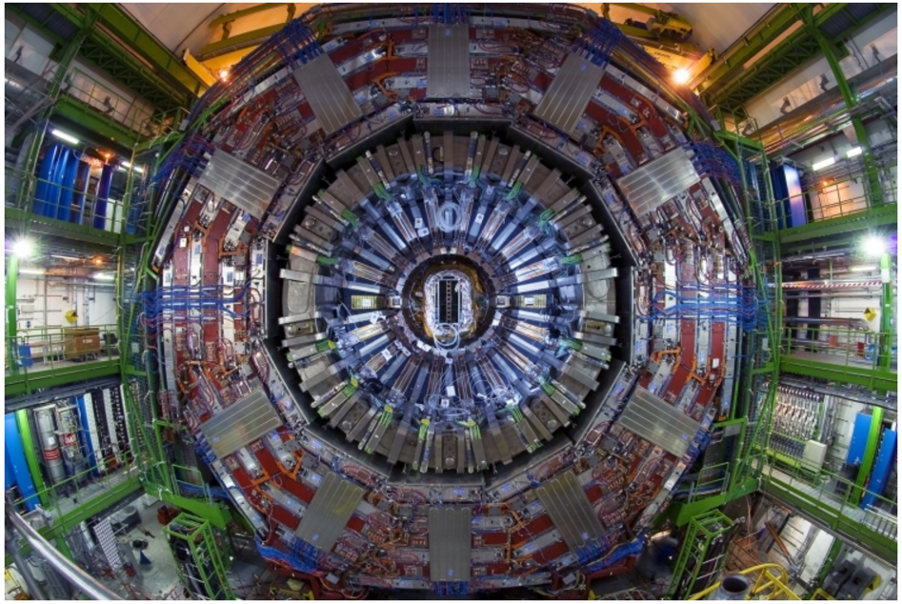
On the grandest scale, astrophysicists have observed a mysterious “dark flow.” Clusters of thousands of galaxies are drifting at immense speeds toward a specific region of space, a coordinated motion not explained by the uniform expansion of the universe. One radical theory posits the gravitational pull of a massive, unseen structure—perhaps even matter from another universe—beyond the observable cosmos is causing this colossal drift.
Closer to home, spacecraft performing gravity-assist flybys of Earth have exhibited an unexplained velocity boost. Since the 1990 Galileo mission, probes like NEAR and Rosetta have departed Earth, moving slightly faster than orbital mechanics predict. The anomaly, though minuscule, is consistent and persists despite rigorous efforts to attribute it to atmospheric drag, solar radiation pressure, or magnetic effects.
Similarly, the Pioneer anomaly plagued NASA for over 30 years. The Pioneer 10 and 11 probes, headed out of the solar system, experienced a tiny, constant deceleration toward the Sun. The most accepted explanation is the anisotropic radiation of heat from the spacecraft’s electronics, acting as a subtle brake. However, some scientists maintain the thermal explanation is insufficient, leaving a fragment of the puzzle unsolved.
These collective anomalies, from the hospital ward to the cosmic void, underscore a humbling truth: our models of human behavior and physical reality, however sophisticated, contain unresolved contradictions. They serve as powerful reminders that discovery often begins not with confirmation, but with a result that no one can explain, driving science forward into the unknown. The pursuit of answers to these mysteries continues to define the cutting edge of psychological and physical research.
Source: YouTube