The comfortable illusion of a dead, familiar moon has been shattered. For the first time in over half a century, human eyes have witnessed the lunar far side, and the observations from the Artemis II crew are forcing a profound and unsettling re-evaluation of our nearest celestial neighbor.
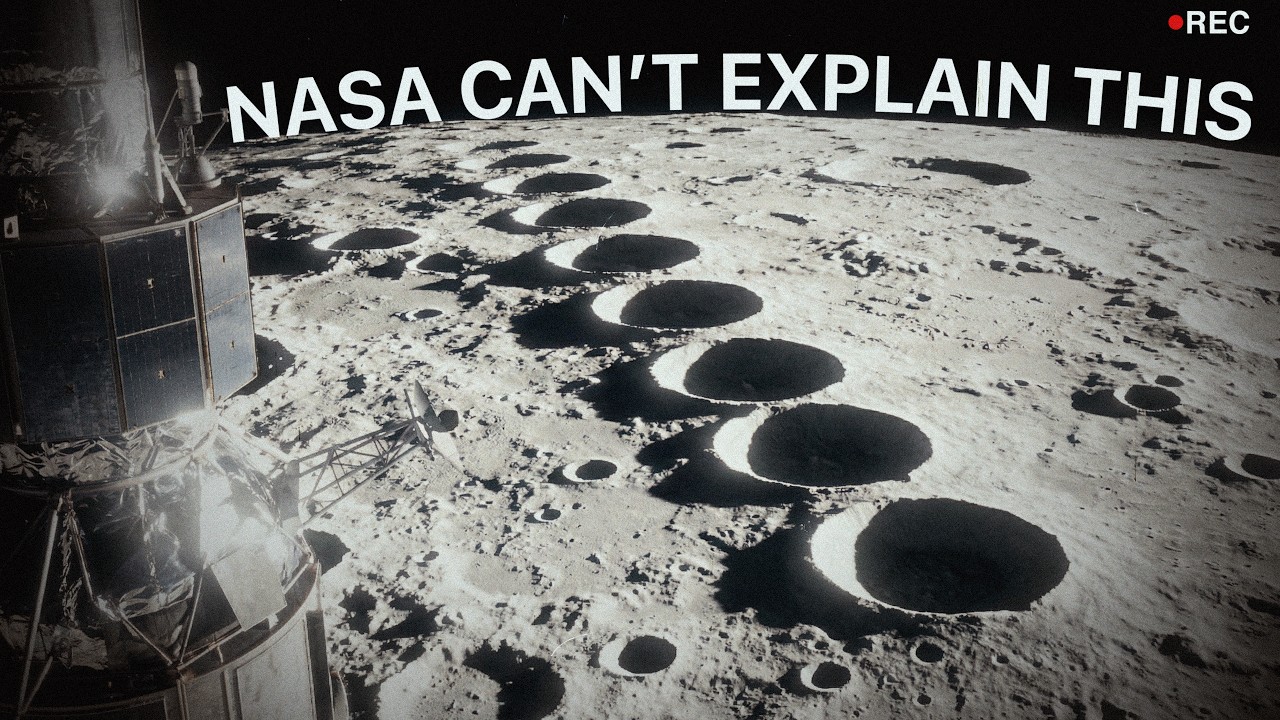
Astronauts Reed Wiseman, Victor Glover, Christina Koch, and Jeremy Hansen became the most isolated humans in history on April 6th, 2026. As their Orion spacecraft passed behind the moon, all communication with Earth vanished for 40 minutes. They were alone with a landscape of ancient violence, a vista so alien it defied immediate description.
“What we are seeing… humans probably have not evolved to see this,” was Pilot Victor Glover’s stunned transmission before the blackout. His words, relayed to a silent Mission Control, hinted at a reality far removed from the smooth, dark plains of the near side we see from Earth.
Emerging from the blackout, the crew delivered a cascade of revelations. The far side is a brutal, crater-choked expanse, its crust mysteriously thicker. They observed the eastern rim of the South Pole-Aitken basin, the solar system’s largest preserved impact crater. Beneath its floor, data suggests, lies a metallic mass weighing at least 2.18 quintillion kilograms.
“The terminator was full of magic,” Glover reported, describing the line between light and shadow where craters transformed into bottomless black pits. The crew noted subtle color variations—hints of brown, green, and blue—invisible to orbital cameras, pointing to complex mineralogy and a richer geological history.
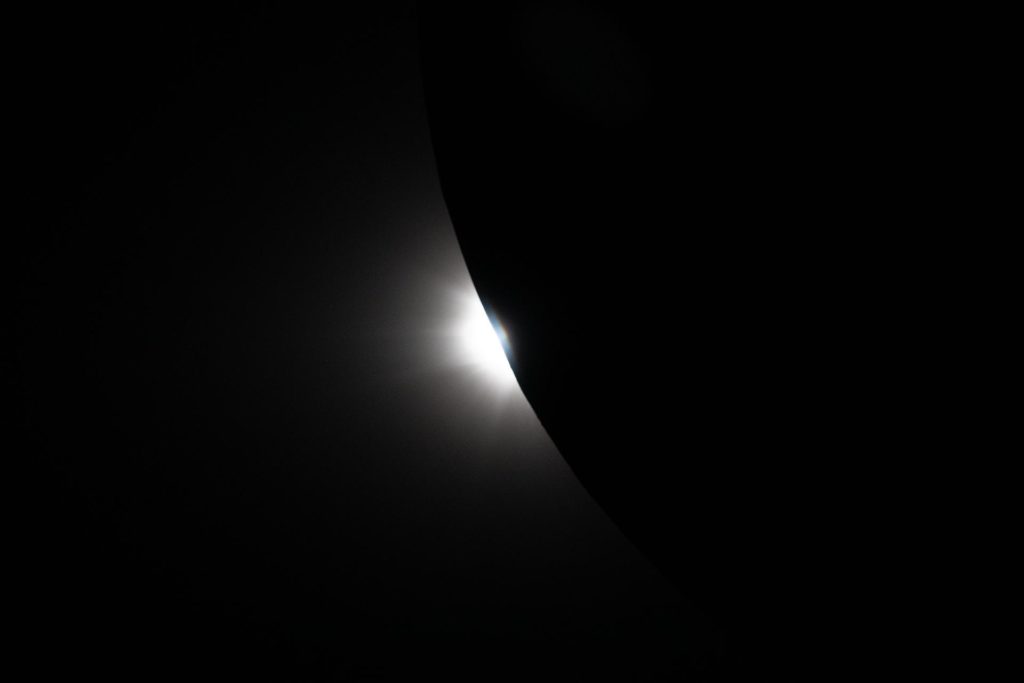
They witnessed a total solar eclipse from lunar orbit, a 54-minute spectacle where the sun’s corona haloed the entire lunar disk. During totality, both Wiseman and Hansen reported brief, unconfirmed flashes on the surface—potential meteorite impacts on the utterly unprotected terrain.
Perhaps most disturbing are the anomalies that challenge fundamental understanding. The crew photographed Reiner Gamma, a bright, swirling pattern aligned with a localized magnetic anomaly on a world with no global magnetic field. Scientists are now forced to confront data indicating buried heat sources and granite formations, a rock that requires water and plate tectonics to form, processes the moon supposedly lacks.
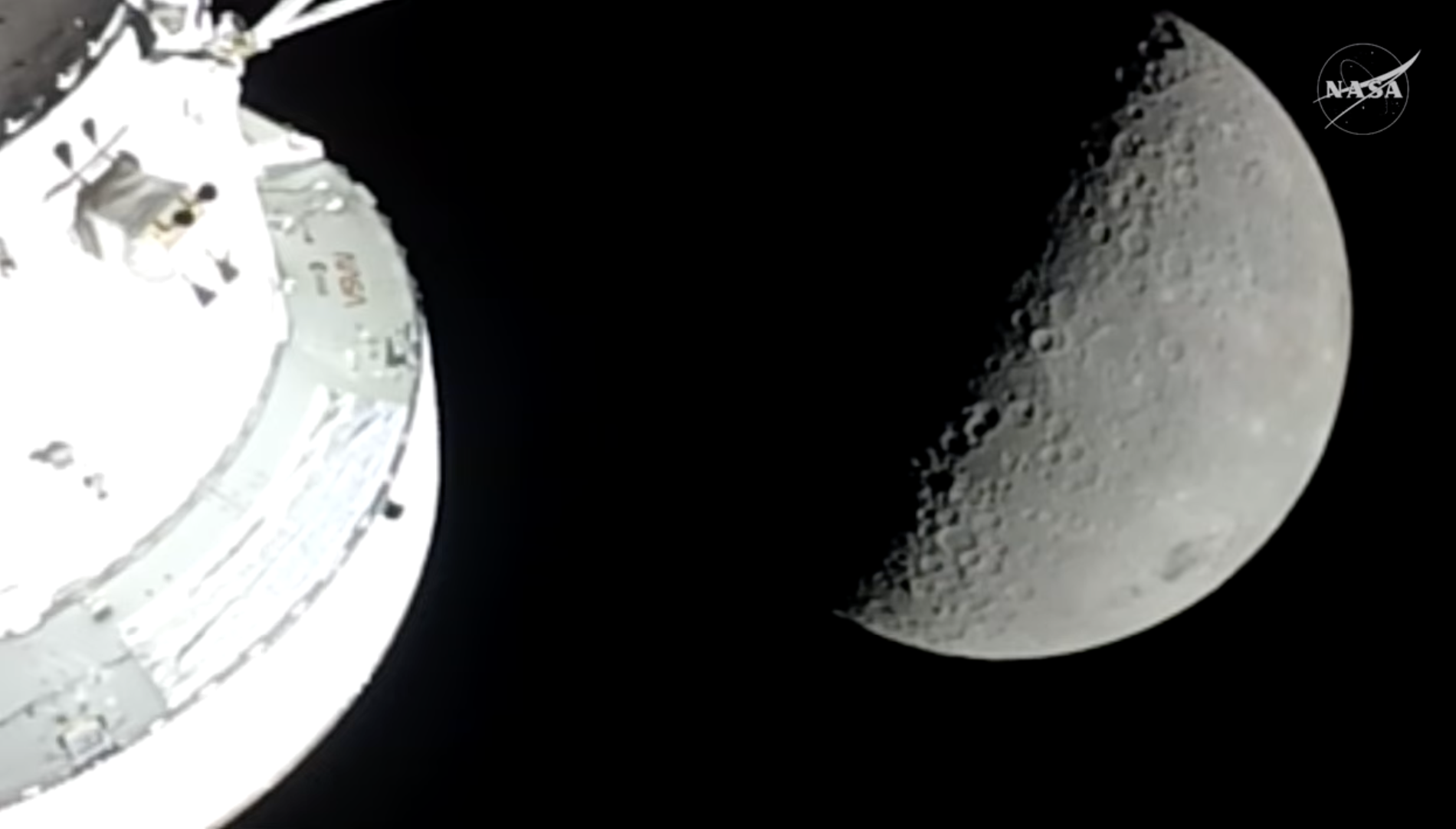
The mission unfolded during solar maximum, exposing the crew to heightened deep-space radiation, the paramount threat to long-duration exploration. An experimental payload aboard Orion carries their own bone marrow cells to study this biological frontier. For 40 minutes, they were beyond any help from Earth, a fact underscoring the peril inherent in this new chapter.
Upon signal re-acquisition, the crew described watching “Earthset,” our planet slipping behind the lunar horizon, a poignant mirror to the iconic Apollo 8 “Earthrise.” Koch reflected that the perspective underscores everything Earth provides, a realization only possible from the other side.
Artemis II has set a new record for human distance from Earth, approximately 252,756 miles. The crew named two craters: “Integrity” for their spacecraft, and “Carol” for Wiseman’s late wife, a bright spot straddling the boundary between the moon’s two faces.
Their thousands of photographs, yet to be fully transmitted, promise to rewrite lunar textbooks. The observations have immediate practical stakes, informing landing site selection for future Artemis missions aiming for the lunar surface, particularly the coveted South Pole.
The far side is no longer a scientific abstraction. China’s Chang’e missions have already landed there, returning samples that are now under analysis. The region also offers pristine radio silence, shielded from Earth’s electromagnetic noise, making it a unique platform for astronomy to peer into the early universe.
For decades, humanity’s lunar model was built from a handful of nearside sites. Artemis II reveals that it was akin to sampling a desert and declaring the whole Earth made of sand. The far side is the true archive, recording a history of cosmic bombardment; the near side has long been buried.
It presents a world of contradictions: unexplained magnetism, internal heat, a lopsided structure, and seismic whispers suggesting it is not geologically dead. Every answered question spawns three more. The crew is now en route to a Pacific splashdown, carrying with them the indelible, firsthand truth that the moon is a real, complex, and deeply mysterious place. We have barely begun to learn what it actually is.
Source: YouTube