A massive slab of black basalt, carved by an enemy of ancient Israel nearly three millennia ago, has emerged as one of the most profound and unintended validations of the Biblical record ever unearthed. The Mesha Stele, also known as the Moabite Stone, stands in a Paris museum not as a relic of faith, but as a secular king’s boast, yet its inscription echoes the scriptures with startling precision.
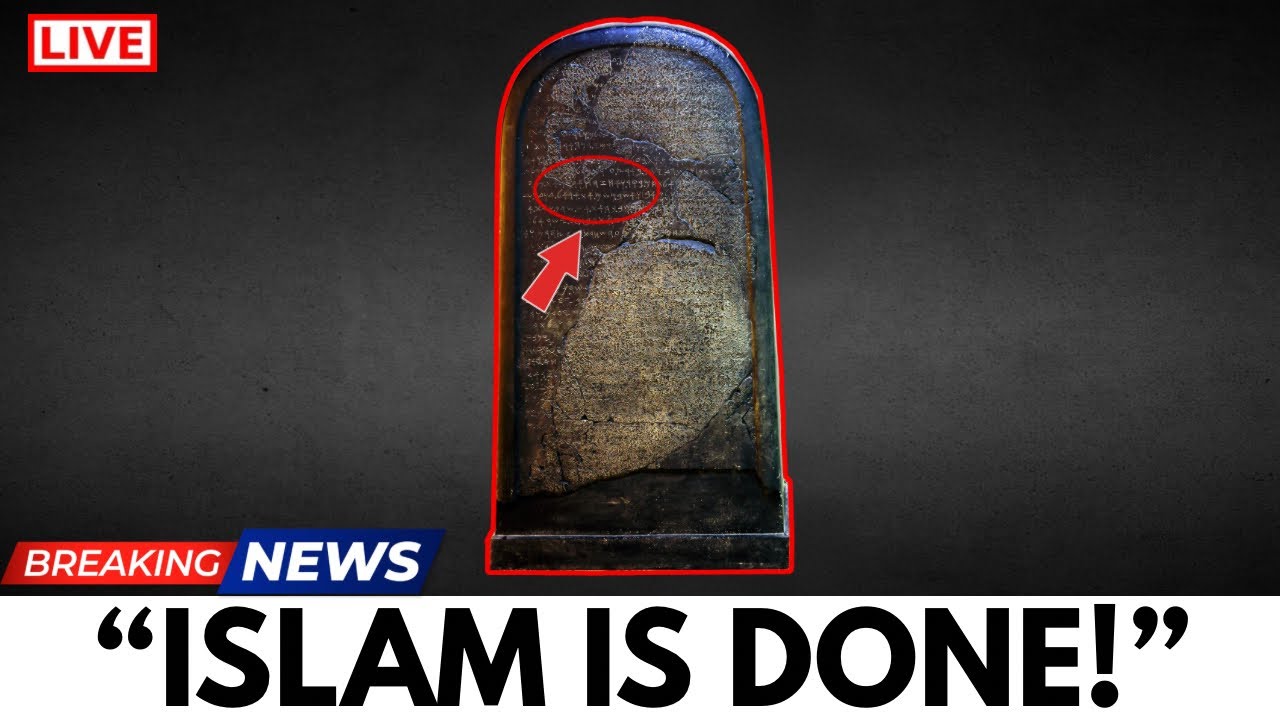
Discovered in 1868 in the region of ancient Dibon, modern-day Jordan, the stone dates to the 9th century BC. It bears the victory proclamation of King Mesha of Moab, a pagan ruler who worshipped the god Chemosh. His text chronicles a rebellion against the Kingdom of Israel, detailing battles, conquered cities, and tributes exacted.
The inscription’s historical correlation is immediate and powerful. It names Omri, King of Israel, a figure well-documented in the Books of Kings. It describes Moab’s subjugation under Omri and his son, confirming the political dynamics described in 2 Kings Chapter 3. The stele provides a parallel, contemporary account from the opposing side of a conflict recorded in the Bible.
Most significantly, the text contains the sacred Tetragrammaton: the name Yahweh, the God of Israel. In one line, Mesha claims, “I took the vessels of Yahweh and dragged them before Chemosh.” This single assertion delivers a monumental blow to theories that Yahweh was a late theological development or unknown to surrounding nations.
Here, a pagan adversary acknowledges Yahweh as the recognized deity of Israel centuries before the rise of later Abrahamic faiths. The stone testifies that Yahweh was worshipped by name in dedicated temples and was a potent spiritual force in the regional consciousness, feared and combated by Israel’s enemies.
A damaged portion of the stele may contain an even more explosive reference. Many epigraphers reconstruct the phrase “House of David.” If accurate, this would mean a rival kingdom recognized the Davidic dynasty as the ruling family of Judah, corroborating another archaeological find, the Tel Dan Stele.

This potential mention provides extrabiblical, contemporary evidence for King David’s historical reality, moving him from the realm of legend into the arena of attested history. It suggests his dynasty was a known and formidable political entity in the region’s memory.
The stone’s modern history is a tale of scholarly passion and near-tragedy. After its discovery by German missionary Frederick Klein, a fierce dispute over ownership erupted. Local tribes, intending to prevent Ottoman authorities from seizing it, shattered the slab by heating it and dousing it with cold water.
Fortunately, a paper impression, or “squeeze,” had been made of the inscription. This allowed scholars to reconstruct the text after the fragments were recovered. The reconstructed stele remains the most extensive inscription in the Moabite language ever found.
King Mesha’s intent was purely political and propagandistic. He sought to glorify his god Chemosh, celebrate his military prowess, and cement his legacy in stone. He had no intention of defending Hebrew scripture or affirming the power of Yahweh.
Yet, in recording his own version of events, he inadvertently locked in time the very names, places, and divine references that anchor the Biblical narrative in historical reality. His hostile witness is considered among the most compelling by archaeologists, precisely because he had no motive to support the Israelite account.

The Mesha Stele predates the founding of Islam by approximately 1,300 years and the earliest Christian writings by centuries. Its existence challenges narratives that suggest the Biblical record was invented or substantially altered in later periods.
It presents a fixed point from the Iron Age, contemporary with the events it describes, that confirms the geopolitical landscape of the Divided Monarchy. The stone silently testifies that the kingdoms of Israel and Judah, their kings, and their God were active participants in the ancient Near East.
This artifact transcends religious debate, offering a rare convergence of archaeology and scripture. It does not preach doctrine but presents carved, immutable facts. A king who sought to erase the humiliation of Israel ended up preserving its history for millennia.
The stele embodies the concept that material evidence can rise from the dust to speak across ages. As a non-Israelite source, its confirmation carries exceptional weight, turning a monument of pride into one of history’s most powerful accidental affirmations.
For historians and theologians alike, the Mesha Stele remains a cornerstone discovery. It affirms that the Biblical writers operated within a real historical framework, engaging with real nations and real conflicts, under the name of a God their enemies knew well.
The stone’s voice, etched in basalt, continues to resonate. It reminds us that history is often written by the victors, but sometimes, the most truthful echoes come from the unlikeliest of sources—a pagan king’s boast, forever carved in stone.
Source: YouTube