In a haunting culmination of nearly 30 years on death row, Lauren Kenstley Cole was executed by lethal injection on August 29, 2024, at Florida State Prison. At 57, he faced the end of a long legal battle that began with a brutal crime in the Ocala National Forest in 1994.
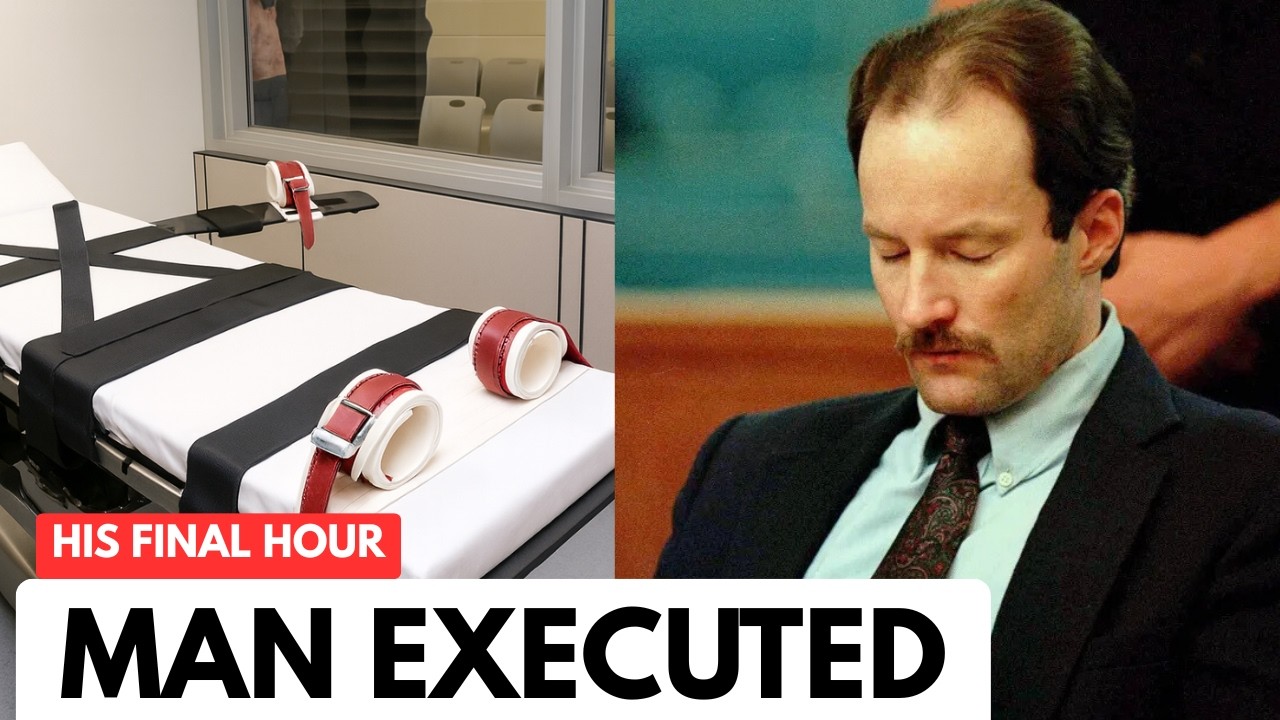 The execution took place at 6:15 p.m., marking a grim milestone in the state’s judicial history. Witnesses, including family members of the victim, gathered to witness the closure of a case that had haunted them for decades. Cole’s final meal consisted of pizza, ice cream, M&M’s, and a soda, a small comfort before the finality of his sentence.
The story of Cole is intertwined with tragedy, beginning on February 18, 1994, when 18-year-old John Edwards and his sister, Pam, embarked on a camping trip that would forever alter their lives. Their innocent outing in the serene Ocala National Forest turned into a nightmare when Cole, posing as a helpful stranger, attacked them.
As the sun set on that fateful day, violence erupted. Cole assaulted Pam, while his accomplice, William Paul, engaged John in a struggle that ended in John’s brutal murder. The aftermath left Pam as a survivor, her resilience a testament to her strength, as she managed to escape and provide crucial details to law enforcement.
 Cole’s life before the crime was marred by trauma. Sent to a notorious reform school as a teenager, he claimed to have suffered severe 𝓪𝓫𝓾𝓼𝓮, which shaped his later criminal behavior. His journey from a troubled youth to a death row inmate raises complex questions about justice and accountability.
In the courtroom, Cole’s fate diverged dramatically from Paul’s, who received a plea deal that spared him the death penalty. Cole maintained his innocence, arguing that evidence pointed to Paul as the actual murderer, a claim that was consistently rejected by the courts.
The legal battles continued for decades, with Cole’s attorneys highlighting the disparities in their sentences and the impact of his traumatic past. Yet, the courts found no legal basis to overturn his conviction, leading to a long, drawn-out wait on death row.

As the execution drew near, Cole’s health declined due to Parkinson’s disease, raising concerns about the humanity of the lethal injection process. His attorneys argued against the execution, but the courts dismissed these appeals, and the date remained unchanged.
On the day of his execution, the atmosphere was heavy with anticipation. Witnesses observed as Cole was brought into the execution chamber, a moment that encapsulated years of anguish for the Edwards family and a complex narrative of crime and punishment.
 As the lethal drugs coursed through his veins, Cole’s body reacted visibly, a reminder of the human cost of capital punishment. Just minutes later, he was pronounced dead, marking the end of a long and tragic chapter for all involved.
The Ocala National Forest continues to attract visitors, its beauty unchanged despite the horrors that once unfolded there. John Edwards, a victim with a promising future, was lost forever, while Pam Edwards emerged as a survivor, shaping her life in the wake of unimaginable trauma.
The execution of Lauren Cole serves as a stark reminder of the complexities surrounding justice, the enduring pain of victims’ families, and the intricate narratives that define human lives. In the end, the stories of those affected by this tragedy linger, a testament to the lasting impact of violence and the quest for justice.