A stark archaeological discovery in Jerusalem has unearthed a stone marker bearing a chilling and direct command linked directly to a biblical king. The artifact, identified as the tombstone of King Uzziah of Judah, was found with a clear inscription: “Here were brought the bones of Uzziah, king of Judah. Do not open.” This simple yet potent warning, echoing across more than two millennia, transforms a historical relic into a profound moral caution.
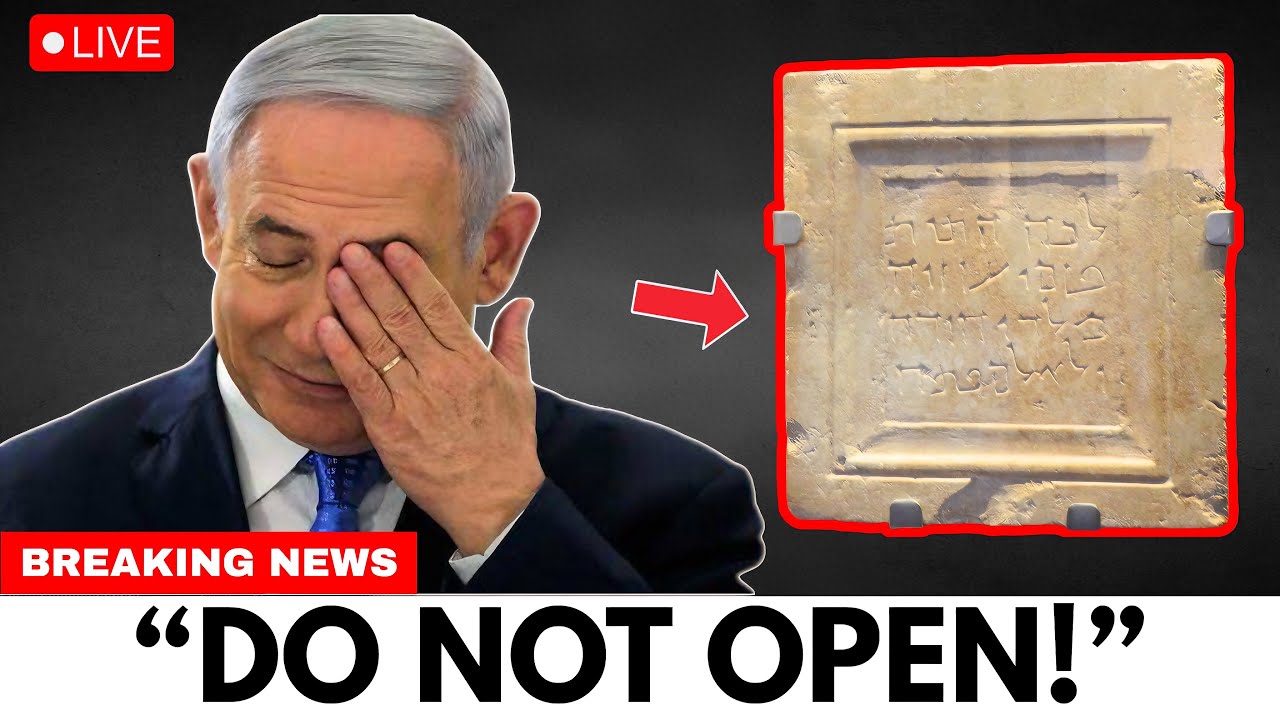
The discovery immediately captivated archaeologists and historians, not merely for its age but for its explicit textual content. Such definitive warnings are exceptionally rare in ancient epigraphy. The stone serves as a tangible, physical bridge to a narrative detailed in the biblical book of 2 Chronicles, moving the story of Uzziah from the realm of scripture into the documented archaeological record.
King Uzziah’s reign, beginning in the 8th century BCE, is historically noted for prolonged prosperity and military success. Biblical accounts state he ascended the throne at sixteen and initially ruled with righteousness, which brought his kingdom strength and expansion. The text credits his early success to his faithfulness, noting “as long as he sought the Lord, God gave him success.”
This period of flourishing, however, set the stage for a dramatic and tragic fall. According to the chronicle, Uzziah’s power bred a fatal pride. In a definitive act of overreach, he entered the Temple to burn incense on the altar, a sacred duty reserved exclusively for priests. He was confronted by the high priest Azariah and eighty others.
The priests issued a stern correction, warning the king he had acted unfaithfully and that such honor did not belong to him. Uzziah, enraged by this challenge to his authority, refused to heed them. At that precise moment, leprosy broke out on his forehead, a divine punishment as recorded in the text.

The disease was both a physical and social catastrophe. Immediately declared unclean, Uzziah was forced to live in isolation for the remainder of his life. His son, Jotham, assumed the practical duties of governance. The king who had known great power died a quarantined man, his legacy forever marred by the consequence of his pride.
This historical and theological context gives the tombstone’s warning its profound weight. The command “Do not open” is interpreted by scholars as a multilayered directive. On a practical level, it may reflect ancient concerns about ritual impurity associated with leprosy, seeking to contain any perceived contagion, physical or spiritual.
On a far deeper level, the inscription acts as a permanent safeguard for the story’s lesson. It is a silent guardian ensuring that the final resting place of the king remains undisturbed, just as the moral of his life should remain unaltered. The stone itself becomes the ultimate teacher, preserving the consequence of his actions in perpetuity.
The artifact’s authenticity and its correlation with the biblical account provide a compelling case for historical synchronism. It stands as material evidence that the story of Uzziah was significant enough to be memorialized physically generations after his death, likely when his remains were relocated during the Second Temple period.
The implications of this finding extend far beyond academic circles. In an era often characterized by assertions of unchecked authority and self-reliance, Uzziah’s story is a timeless parable. It underscores a universal principle found across cultures and faiths: unchecked pride precedes a fall. The warning on the stone is not merely about disturbing bones; it is a caution against disturbing the fundamental boundaries of humility and respect.
Theological experts emphasize the narrative’s core message of accountability. Uzziah’s initial success was contingent upon his humility and obedience. His downfall commenced the moment he believed his power granted him an exception to sacred law. The abruptness of his punishment highlights the seriousness with which such transgressions were viewed.

This discovery also reinforces the dynamic nature of archaeological work in Jerusalem, where every layer of soil can yield a fragment that illuminates ancient texts. The tombstone does not just mark a grave; it marks a point of convergence where faith, history, and human nature intersect. It is a monument to a moral truth carved in stone.
The enduring power of the artifact lies in its simplicity. There is no lengthy epitaph glorifying the king’s achievements. Instead, a name, a title, and a stark command suffice. This very brevity forces the observer to seek the story behind it, thereby ensuring the lesson is passed on. The stone compels engagement and reflection.
Modern audiences are left to ponder the contemporary resonances of this ancient warning. In personal, professional, and political spheres, the temptation to overstep, to believe one is beyond reproach, remains a constant human challenge. Uzziah’s tombstone stands as a silent sentinel against that hubris.
As the artifact is preserved and studied, its primary function remains unchanged. It continues to fulfill its inscribed purpose: to keep the remains within from being opened, and to keep the lesson they represent from being forgotten. It is a permanent marker of a life that began with promise and ended with a cautionary tale.
The discovery ultimately reminds us that history’s most powerful artifacts are not always made of gold. Sometimes, they are simple stones bearing heavy truths. The tombstone of Uzziah challenges every generation to consider the legacy they are building and the warnings they are choosing to heed or ignore. Its message, though silent, echoes with urgent relevance.
Source: YouTube