A Douglas County judge has cleared the final legal hurdle for the execution of Nikko Jenkins, rejecting his latest appeal and closing the door on his protracted efforts to avoid the death penalty for a brutal 10-day killing spree that terrorized Omaha in 2013. The ruling marks a pivotal moment in a case that exposed catastrophic failures within Nebraska’s correctional and mental health systems.
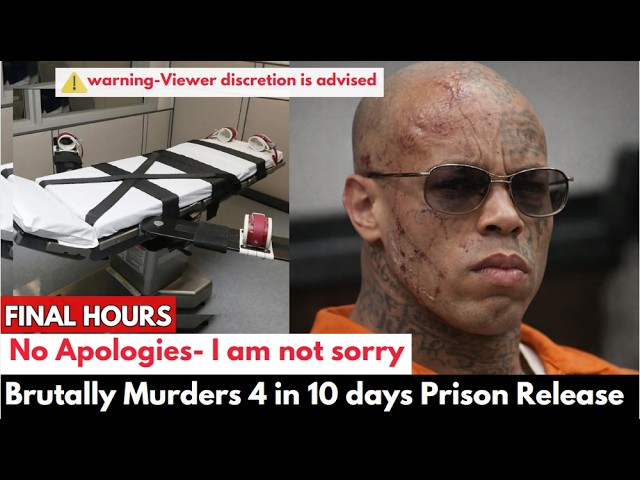
Judge Peter Bataillon denied all claims in Jenkins’s most recent motion for post-conviction relief, which argued ineffective assistance of counsel and intellectual disability. This decision follows Jenkins’s own erratic legal maneuvering, including a 2025 handwritten motion demanding the state set an execution date, which he retracted less than a month later. The judge found no issues requiring further hearings or examination.
Jenkins was sentenced to death in 2017 for the murders of four people in August 2013. His victims were Juan Uribe-Pena and Jorge Cajiga-Ruiz, shot in a pickup truck at Spring Lake Park; Curtis Bradford, killed behind a garage in North Omaha; and Andrea Kruger, a mother of three, carjacked and shot in West Omaha. The spree ended only after his arrest.
The killings occurred just 12 days after Jenkins’s release from prison, where he had served 10 years. Despite repeated, dire warnings from multiple psychiatrists, his own mother, and Jenkins himself, the state released him directly from long-term solitary confinement with no parole, treatment plan, or supervision. Three professionals had urgently recommended civil commitment.
One evaluating psychiatrist, Dr. Eugene Oliveto, testified that Jenkins was “psychotic, delusional, and he told me he was going to kill people, and I believed it.” These warnings were ignored or buried by prison officials. A state ombudsman’s report later concluded the department’s mental health system failed to do everything it might have done.

Jenkins did not act alone. His family operated as a criminal unit. His sister, Erica, was convicted of first-degree murder in Bradford’s death and received life plus centuries for subsequent prison assaults. His mother, Lori, is serving federal time for buying the ammunition. An uncle and a cousin also received lengthy sentences for their roles.
For over a decade, Jenkins’s case has been mired in competency battles and appeals, punctuated by gruesome acts of self-mutilation in prison, which he claimed were commanded by the Egyptian serpent god Apophis. The Nebraska Supreme Court upheld his death sentences in 2019, and the U.S. Supreme Court declined to hear the case in 2020.
Douglas County Attorney Don Kleine, who prosecuted the case, called this week’s ruling a step toward justice. “It could be years before he’s executed,” Kleine acknowledged, referencing Nebraska’s struggles to obtain lethal injection drugs and an existing death row queue. The state’s last execution was in 2018.

The victims’ families, who have endured years of painful court hearings, expressed weary relief. Valita Glasgow, mother of Curtis Bradford, has long described Jenkins as an “attention seeker.” Andrea Kruger’s mother, Terry Roberts, stated previously, “He’s pure evil… He is exactly where he belongs for the safety of every Nebraskan.”
This ruling effectively exhausts Jenkins’s primary state-level appeals. While further federal appeals remain possible, the execution path, though administratively long, is now legally unambiguous. The state must now confront the practical realities of carrying out its first death sentence since voters reinstated capital punishment in 2016.
The Jenkins case spurred significant reforms in Nebraska’s prison system, including the creation of an Inspector General’s office and improved discharge planning. Yet for the families of four innocent people, these changes are a legacy of profound loss, arriving far too late to prevent a tragedy foretold by the killer himself.
Source: YouTube