A joint Egyptian-French archaeological mission has made a staggering discovery in the depths of the Nile River near Aswan, unearthing a submerged gallery of ancient rock carvings depicting powerful pharaohs, a find that is reshaping historical understanding of the region. The engravings, hidden for over half a century, date from the Middle Kingdom through the Late Period and were lost to the rising waters created by the Aswan High Dam’s construction in the 1960s.
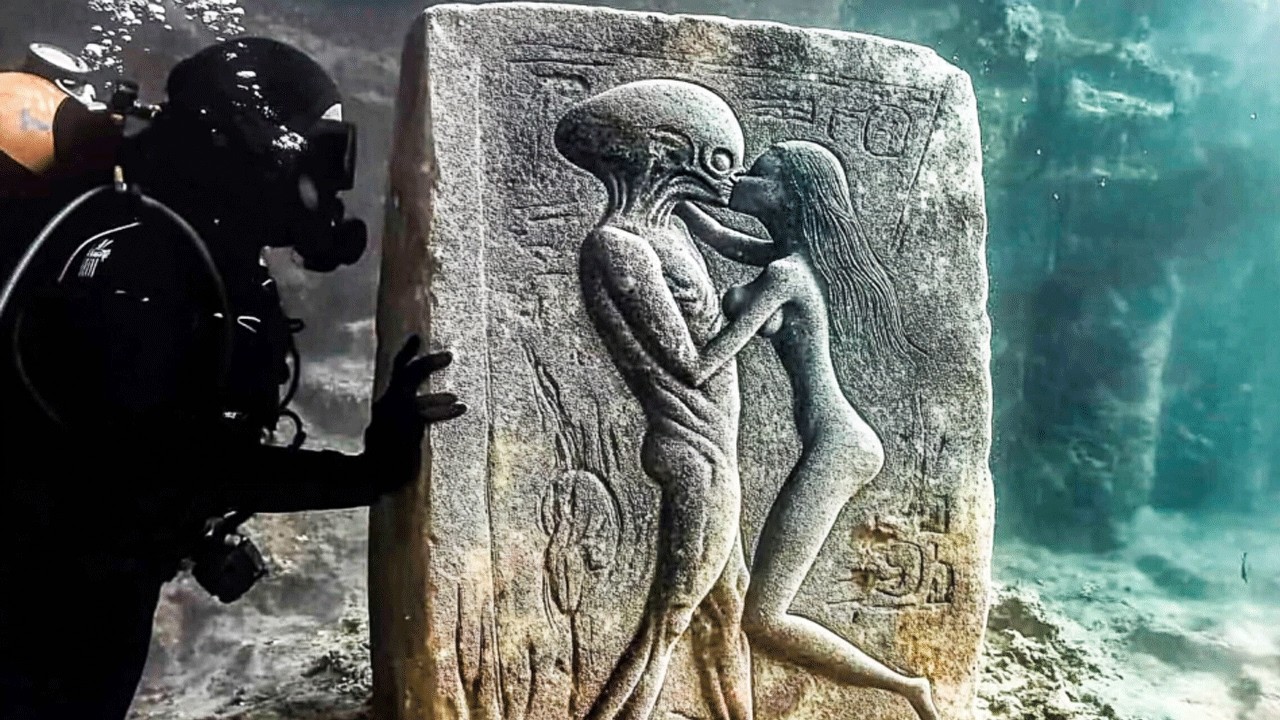
The international team, comprising experts from Egypt’s Supreme Council of Antiquities and France’s Paul Valéry University Montpellier 3, conducted a series of complex underwater dives to document the site. Their efforts revealed remarkably preserved carvings of pharaohs from the 18th to the 26th dynasties, a span of nearly a millennium, adorned with hieroglyphic inscriptions. The discovery has sent shockwaves through the archaeological community.
Among the royal figures identified are the mighty warrior Amenhotep III, the strategic Thutmose IV, and later rulers Psamtik II and Apries. The presence of these specific pharaohs so far south is particularly significant, suggesting a more sustained and active royal presence in Upper Egypt and Nubia during their reigns than previously documented by existing historical records.
The carvings were submerged following the completion of the Aswan High Dam, which created the massive reservoir of Lake Nasser. While the dam brought economic benefits, it also flooded countless archaeological sites, despite a monumental UNESCO-led salvage campaign in the mid-20th century that relocated major temples like Abu Simbel.
This discovery proves that not all treasures can be saved, and many still lie preserved in the deep. The underwater environment, while challenging, has protected these carvings from the weathering and human interference that often degrades terrestrial sites, offering an unprecedented snapshot frozen in time.
Led by Dr. Christian, a specialist in underwater archaeology, the team employed cutting-edge technology to study the finds. They utilized high-resolution underwater photogrammetry, a process involving thousands of photographs, to create precise three-dimensional digital models of every carving and inscription for detailed analysis without further disturbing the site.
The location of the carvings is of profound historical importance. Aswan was ancient Egypt’s southern frontier, a critical military, trade, and quarrying center. The granite quarries there supplied stone for iconic monuments, and the city was a hub for projecting pharaonic power into Nubia. These engravings served as permanent propaganda, asserting royal authority at the empire’s edge.

The hieroglyphic texts accompanying the royal images are now under intense scrutiny. Epigraphers believe they may contain official decrees, records of military campaigns, or dedications related to the region’s strategic and economic importance, potentially offering new narratives about Egypt’s interactions with its southern neighbors.
The mission faced immense technical challenges, including limited visibility, strong Nile currents, and the logistical difficulties of conducting delicate archaeological work at depth. Divers required specialized training to meticulously clean and record the stones without causing damage to the fragile surfaces.
Preservation is now a paramount concern. While the water has preserved the carvings, they remain susceptible to erosion and biological growth. The team is developing long-term conservation strategies, which may include controlled monitoring or even the future consideration of selective recovery for the most vulnerable artifacts.
This find underscores the revolutionary role of technology in modern archaeology. Beyond photogrammetry, the team used sonar mapping and remotely operated vehicles (ROVs) to survey the lakebed, highlighting how advanced tools are unlocking secrets in environments once considered inaccessible.
The discovery recontextualizes the scale of the UNESCO Nubian Salvage Campaign. It confirms that the heroic mid-century effort, while saving countless monuments, was a race against time where some sites were inevitably left behind, now waiting for 21st-century technology to reveal them.
Local communities in Aswan have been integral to the mission’s success. Their collaboration provides essential logistical support and fosters a shared sense of guardianship over this submerged heritage, ensuring the site’s protection and integrating the find into the region’s living historical narrative.
For Egyptologists, the engravings are a treasure trove of new data. Each depiction provides insights into royal iconography, regalia, and artistic styles across different dynasties, allowing for direct comparison and a deeper understanding of the evolution of pharaonic self-representation over centuries.

The find also prompts a reevaluation of the late period pharaohs, Psamtik II and Apries. Their visible investment in monuments at Aswan indicates strong efforts to consolidate power and legitimize their rule throughout all of Egypt during an era often characterized by foreign pressure and internal fragmentation.
Prospects for the area are immense. The success of this preliminary survey has galvanized support for a comprehensive, large-scale underwater archaeological project in Lake Nasser, with scientists confident that many more sites of equal or greater importance remain to be discovered.
This breakthrough exemplifies the power of international scientific collaboration. The pooling of Egyptian historical expertise with French technological and methodological prowess has yielded a result that neither party could have achieved alone, setting a new standard for underwater archaeological research.
The submerged carvings stand as a potent symbol of resilience. Silenced for decades beneath the Nile, they have resurfaced to tell their stories, proving that the legacy of ancient Egypt continues to yield new secrets, challenging and enriching our comprehension of one of humanity’s most foundational civilizations.
As analysis continues, the global academic community awaits the full translation of the hieroglyphs and the detailed publication of the 3D models. Each piece of data promises to refine, and potentially rewrite, chapters of ancient Egyptian history focused on its southern frontier and the pharaohs who sought to command it.
The Aswan discovery is more than an archaeological triumph; it is a compelling reminder that history is not a closed book. It is a dynamic field where a single dive can alter the narrative, offering a breathtaking glimpse into a world thought lost, and forever changing our perception of the pharaohs’ reach and the enduring depths of their legacy.
Source: YouTube