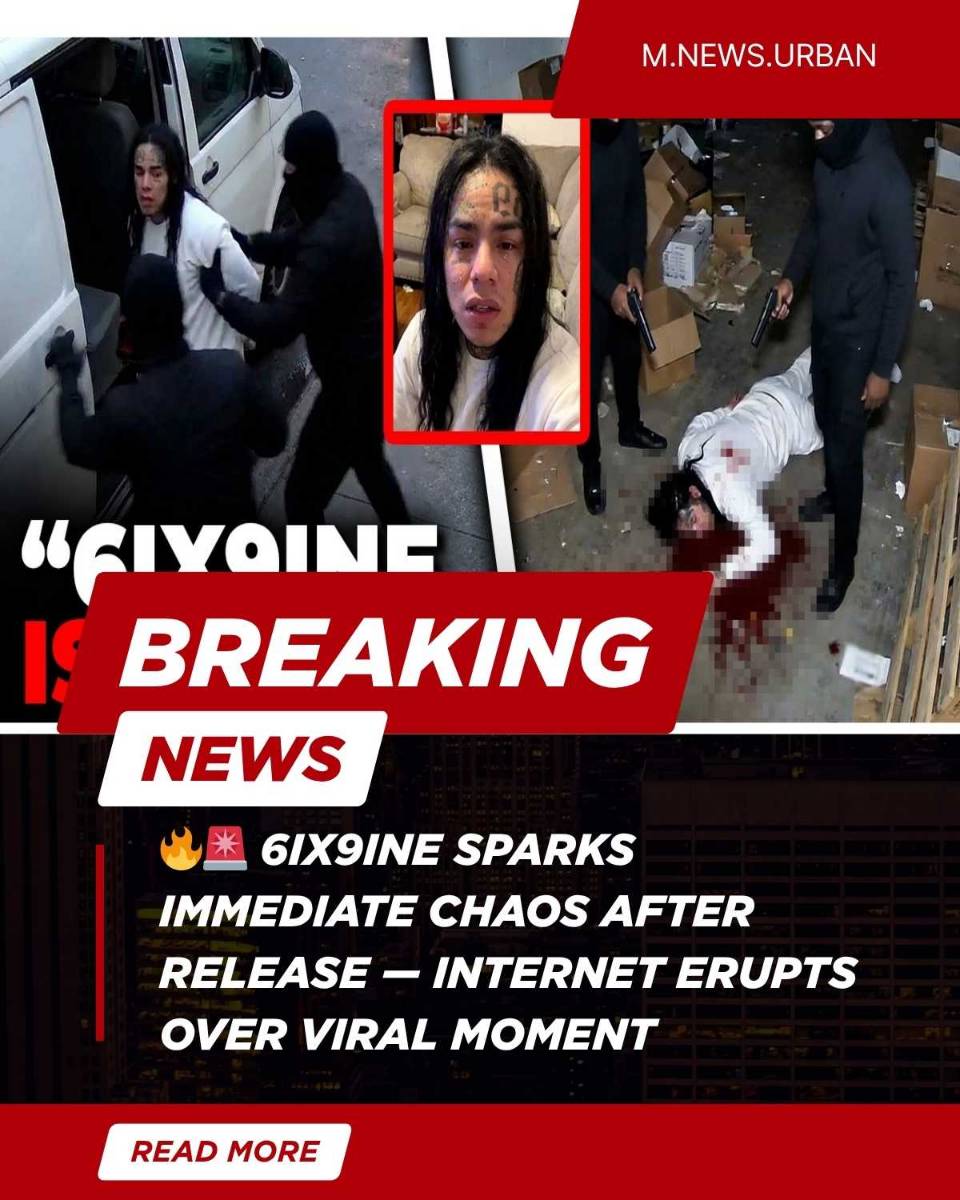
The gates of the Metropolitan Detention Center in Brooklyn swung open on April 3rd, 2026, releasing Daniel Hernandez, the controversial rapper known as 6ix9ine, back into a world that had spent years predicting his violent demise. Clutching a signed Spongebob doll and adorned with a multi-million dollar chain, he stepped into freedom after serving 90 days for supervised release violations—and immediately, the familiar chorus began: his time was finally up.
 This prophecy, however, proved as hollow as the many made before it. No ambush awaited him. No retribution followed in the days after. The rapper, whose legal name is Daniel Hernandez, posted celebratory content and resumed his life as if the stint was merely a content break. The stark disconnect between street lore and street reality has become the defining paradox of his post-federal case existence.
To understand this latest non-event, one must rewind to the origin of the threat. Hernandez’s journey from a Bushwick bodega worker to a platinum-selling artist was inextricably linked to the Nine Trey Gangsta Bloods, a relationship he later detailed with devastating precision under oath. The gang provided credibility; he provided financing, funding operations and even brokering a heroin deal.
That transaction shattered on November 18, 2018, with a federal racketeering indictment carrying a potential life sentence. Facing decades behind bars, Hernandez flipped, agreeing to cooperate just 66 days after his arrest. His cooperation was not casual; it was a forensic dismantling of the entire organization from the inside.
He identified command structures, detailed specific acts of violence he financed—including a plot to shoot Chief Keef—and provided granular testimony that led to lengthy sentences for his former associates. His manager, Shotti, received 15 years. Anthony Ellison, who kidnapped and pistol-whipped Hernandez, was sentenced to 24.

The cultural backlash was swift and severe. He was branded a pariah, declared untouchable by peers from Snoop Dogg to Meek Mill. The universal verdict from hip-hop’s commentary class was that the streets would deliver the justice the courts had not. Yet, upon his release from federal prison in 2020, he broke YouTube records with “Gooba” and taunted critics online.
Subsequent incarcerations for violations—45 days in 2024, 90 days in 2026—each prompted renewed predictions of violence. Each time, he walked out unscathed. Isolated incidents occurred, like a 2023 sauna attack in Florida, but the promised, definitive street sanction never materialized. The question shifted from “when” to “why not?”
The answer lies in a brutal calculus exposed by the very environment that vowed revenge. In a revealing 2023 podcast clip, a Brooklyn local dissected the hypocrisy. He pointed to older neighborhood figures known to have cooperated years ago, who still move freely because they are embedded, useful, or financially connected.

“Selective politicking,” he called it. The code, he argued, bends where power and money are sufficient. 6ix9ine, with his massive wealth and global notoriety, represents the ultimate test case. His association generates attention and revenue, a “bag” that outweighs outdated principles.
This was demonstrated when a group brought him to a Brooklyn project to shoot a music video, despite the pervasive “snitch” label. When asked if they would have done it for free, the answer was telling: “If I want to.” The decision was framed as autonomy, but it existed in a context saturated with the commercial value of his name.
Artists like Kodak Black accepted million-dollar offers to collaborate. Others refused not on principle, but, as observed by rapper Lil Woody, because they feared public perception. The economic incentive structure had permanently altered the enforcement mechanism.

Furthermore, as commentators like Woody noted, violence offered no solution. Even if someone “smoked” 6ix9ine, the permanent, public court record of his cooperation would remain. The label could not be killed. Hernandez himself embraced this permanence, refusing shame and reframing his cooperation as a divine cleansing of disloyal associates.
His unapologetic stance—declaring he would attack the mall heckler again and showing no remorse for his testimony—created a shield. A man who does not accept the verdict of the streets cannot be effectively sentenced by it. The combination of immense wealth, a relentless troll’s mentality, and the sheer visibility of his case made him a uniquely complicated target.
On April 3rd, 2026, the scene outside MDC Brooklyn was not one of vengeance, but of a quiet, revealing truth. The $2.2 million chain around his neck was more than jewelry; it was a symbol of the very force that rendered him untouchable. The streets, governed by selective enforcement and economic reality, did not smoke 6ix9ine because the bag, and his defiant embrace of his own narrative, protected him. The myth of consistent street justice met its match in the complicated, profit-driven modern world.
Source: YouTube