A profound spiritual awakening is reportedly sweeping through the Gaza Strip, with thousands of residents claiming transformative encounters with Jesus Christ through dreams, visions, and direct spiritual experiences. These accounts, emerging from a territory long defined by conflict and despair, describe mass conversions not led by traditional missionary work but by personal, supernatural visitations. The testimonies, shared cautiously among growing networks of new believers, suggest a movement of faith unfolding in one of the world’s most unexpected and challenging environments.
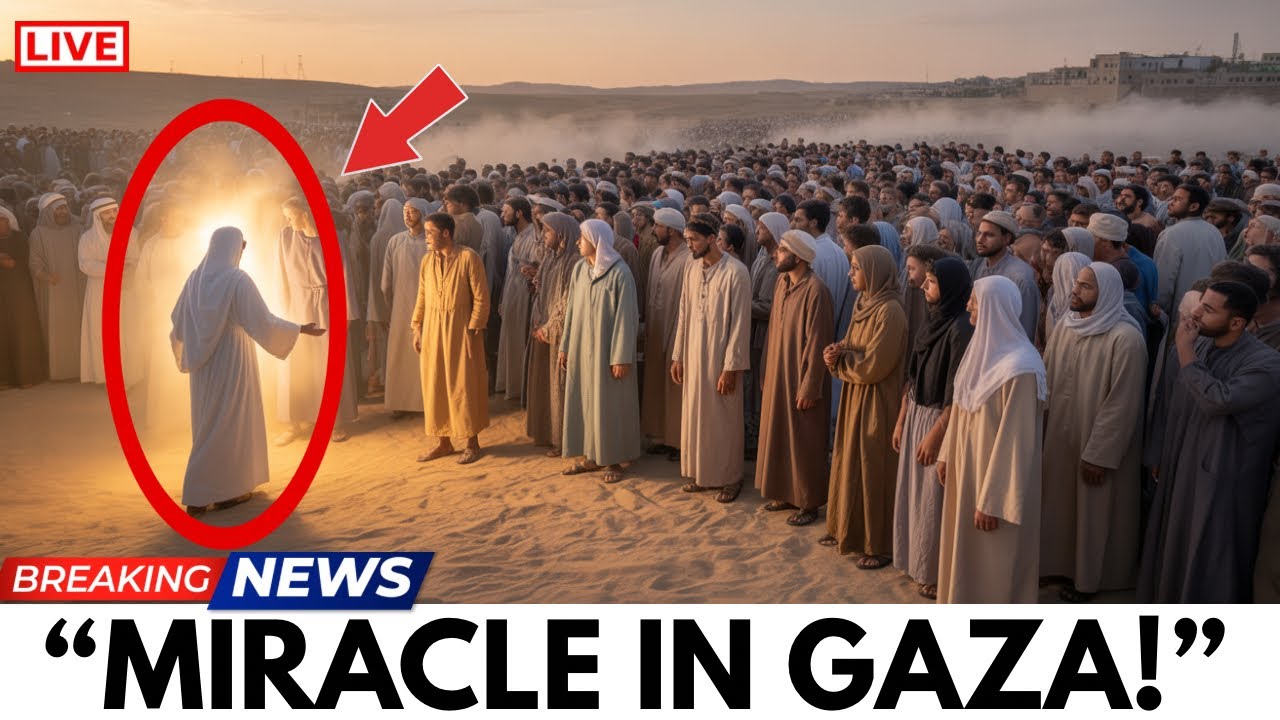
Eyewitness reports detail consistent narratives of divine intervention in the midst of profound hardship. One man described a vision of a figure in white during a night of intense bombardment, who spoke words of comfort from the Biblical scripture. He awoke without fear, sought out a Bible, and subsequently led his entire family to embrace Christianity. Similar stories circulate of individuals overcome by grief or hopelessness who report experiencing an overwhelming presence of peace and a call to faith.
The scale of these conversions is described as unprecedented in the region’s modern history. While exact numbers are impossible to verify due to security concerns, sources within the small, existing Christian community indicate a surge of interest and secret gatherings. New believers are reportedly meeting in discreet groups to worship, study, and share their experiences, often at great personal risk. The movement appears organic, spreading through familial and social networks as individuals discover shared visions.
Gaza’s historical and contemporary context makes this phenomenon particularly striking. The coastal enclave, home to over two million people, has endured decades of blockade, repeated military conflicts, economic collapse, and pervasive trauma. Life is a daily struggle for survival, with resources scarce and futures uncertain. In this landscape of palpable despair, the reports of spiritual hope and personal transformation carry extraordinary weight for those involved.
The phenomenon aligns with a pattern noted by some religious scholars of spiritual revivals often arising in areas of extreme persecution or societal breakdown. The accounts from Gaza heavily feature dreams, a medium of divine communication emphasized in both the Old and New Testaments. For believers, this echoes the prophecy of Joel, which states that God will pour out His Spirit and that “your old men will dream dreams, your young men will see visions.”

Major international news outlets and local government authorities have remained silent on these reports. Analysts suggest this silence stems from extreme sensitivity. Gaza is governed by Hamas, an Islamist group, and public acknowledgment of mass conversions from Islam to Christianity could trigger severe backlash, including accusations of apostasy. The potential for violent reprisal against converts makes discretion a matter of life and death, forcing the movement further underground.
This silence, however, has fueled speculation and fervent discussion within global evangelical and charismatic Christian communities. Satellite television, social media, and encrypted messaging apps are cited as tools allowing these testimonies to bypass traditional media gatekeepers. For many believers worldwide, the events are interpreted as a modern-day miracle and a direct fulfillment of biblical prophecy about God moving in the “last days.”
The existing Christian community in Gaza, numbering only about a thousand individuals before these reports, now faces a complex new reality. Historically a tight-knit Greek Orthodox and Catholic minority, they are now potentially serving as spiritual guides for a sudden, hidden influx of new believers. This places them in a precarious position, balancing compassion with the need for extreme caution to protect all involved from potential persecution.
Theological responses vary. Some Christian leaders urge caution, emphasizing the need for discipleship and doctrinal teaching alongside emotional experiences. Others hail the events as a clear work of the Holy Spirit, arguing that God is capable of revealing Himself directly to anyone, anywhere, regardless of political or religious barriers. They point to the core message of the reports—a turn toward peace, repentance, and love—as evidence of authenticity.
Human rights organizations monitoring the region express deep concern for the safety of any individuals choosing to convert. Apostasy laws, though not uniformly enforced in Gaza, can carry severe penalties. The social stigma and potential for familial disownment or violence present immense risks. Any public declaration of faith could have dire consequences, making the clandestine nature of the movement a necessary shield.

For the individuals at the heart of these stories, the experiences are described as fundamentally life-altering. Testimonies repeatedly mention a trade of deep-seated fear for a profound, inexplicable peace, and a shift from hopelessness to purpose. This internal transformation, they report, persists despite the unchanged external circumstances of siege and poverty that surround them.
The geopolitical implications, while speculative, are significant. A sustained, growing Christian movement within Gaza could potentially alter long-standing social and religious dynamics in unforeseen ways. It introduces a new, fragile variable into an already volatile equation, one that all governing powers in the region would likely view with intense suspicion and unease.
International religious freedom advocates are calling for vigilance. They stress that the global community has a responsibility to ensure that any person in Gaza, or anywhere else, can safely explore matters of faith without fear of violence or reprisal. Monitoring the situation for any signs of systematic persecution against converts is now a critical concern for watchdog groups.
Skeptics, both secular and within other faith traditions, question the verifiability of the claims. They suggest the stories may be a form of collective psychological response to extreme, prolonged trauma, a coping mechanism manifesting as religious euphoria. Others suspect the influence of external propaganda campaigns designed to foster religious discord. Without independent, on-the-ground verification, definitive conclusions remain elusive.
Despite the skepticism, the persistence and consistency of the narratives continue to attract attention. The shared details across unrelated accounts—the imagery of light, the messages of peace, the specific scriptural references—lend a compelling coherence to the reports for those inclined to believe. The movement’s growth, by all accounts, is driven by these personal testimonies rather than organized proselytization.
The events also challenge the global Christian community. Sermons and publications are asking how believers in contexts of safety and religious freedom should respond to such reports from persecution zones. The dominant answer has been a call to focused prayer for protection, wisdom, and provision for both new converts and the established church, attempting to guide them.
Looking forward, the sustainability of this spiritual shift remains an open question. The test will be whether these initial experiences mature into enduring faith communities capable of withstanding intense pressure. Discipleship, access to scriptures, and the development of indigenous leadership will be crucial, yet immensely difficult, next steps in an environment where such activities are dangerous.
Ultimately, the story emerging from Gaza is one of stark contrasts: light in darkness, hope in despair, and whispers of faith amid the roar of conflict. Whether viewed as a divine miracle or a human psychological phenomenon, it underscores a powerful, universal yearning for peace and transcendence that persists even in the most brutal circumstances. The world, for now, can only watch, listen, and wonder at the reports continuing to seep out from behind the walls of a long-suffering land. The silence of official channels does nothing to dampen the conviction of those who claim their lives have been irrevocably changed by an encounter they never sought but now cannot deny.
Source: YouTube