After more than three and a half decades awaiting justice, the State of Florida has executed Mark Allen Geralds for the 1989 torture and murder of Tresa Lynn Pettybone. The lethal injection was carried out Tuesday evening at Florida State Prison, closing one of Bay County’s most brutal and protracted capital cases.
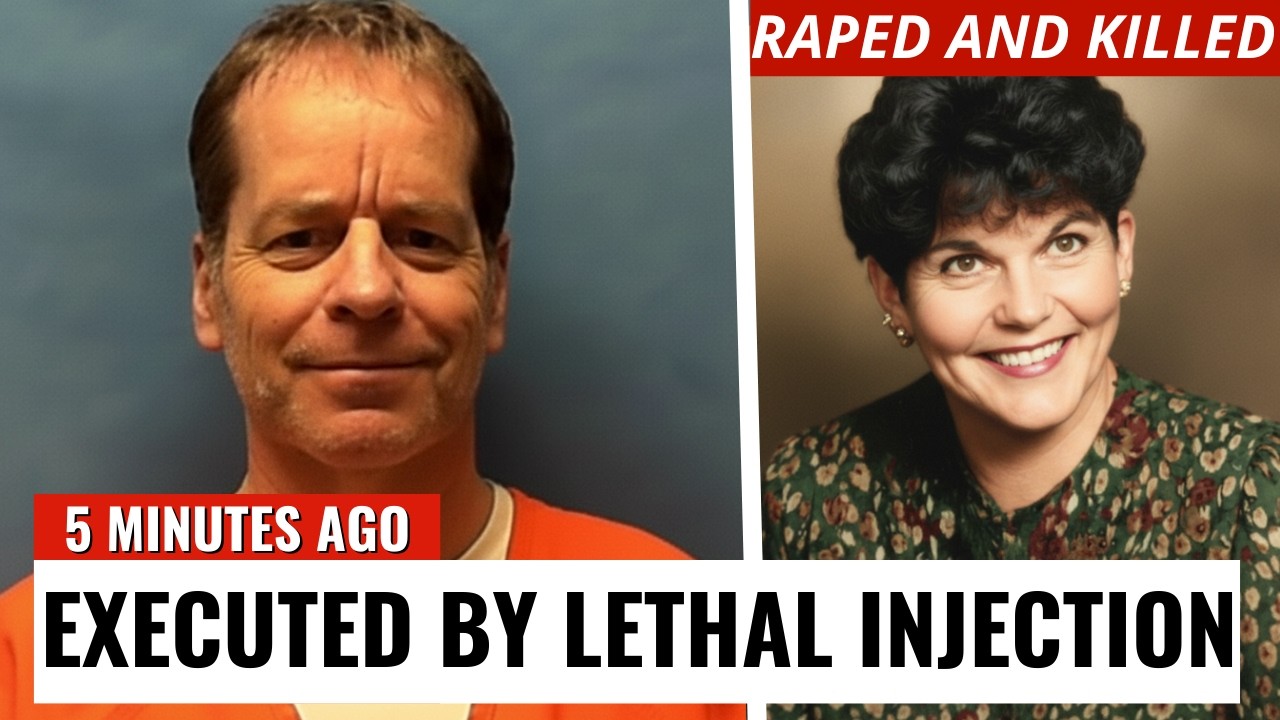
Geralds, 58, was pronounced dead at 6:30 p.m. on December 9, 2025. He offered no final statement, remaining silent with his eyes closed throughout the procedure. The execution proceeded after Geralds made the extraordinary decision to waive all remaining appeals, bringing a definitive end to a legal saga that began when Ronald Reagan was president.
The crime for which Geralds was executed stands out for its calculated cruelty and the shattered trust at its core. In January 1989, Geralds was a trusted carpenter remodeling the Pettybone family home in the quiet Panama City Beach neighborhood known as The Cove. The family gave him a key to their house, a gesture of faith he would grotesquely betray.
His plan crystallized after a chance meeting with Tresa Pettybone at a mall, where she mentioned her husband was away on business. Geralds then deliberately sought out the couple’s eight-year-old son, Bart, extracting details about the family’s schedule. He was gathering intelligence for a robbery, waiting for the moment Tresa would be alone and vulnerable.
That moment came on the afternoon of February 1, 1989. Using the copied key, Geralds entered the Pettybone home. His objective was $7,000 in cash he believed was inside. To force Tresa, 33, to reveal its location, he subjected her to a methodical, 20-minute torture session, binding her with plastic zip ties he had brought, beating her, and gagging her.
When she refused to divulge where the money was hidden, Geralds stabbed her three times. The fatal wound was to her side. Forensic reports indicated Tresa did not die instantly but bled out on her kitchen floor. After the murder, Geralds ransacked the home, stealing jewelry, sunglasses, and the family’s Mercedes, but he never found the cash he killed for.
The aftermath was discovered by her young son, Bart, who returned from school to find his mother’s body. That traumatic image would haunt him for the rest of his life. The investigation moved swiftly, with evidence quickly converging on the family’s carpenter. Pawned jewelry matched missing items and bore Tresa Pettybone’s blood.

Most damningly, investigators found plastic zip ties identical to those used on the victim inside Geralds’s vehicle. He was arrested and charged with first-degree murder, armed robbery, burglary, and vehicle theft. His criminal history, which included eight prior convictions, painted a picture of a man adept at hiding a predatory nature behind a facade of normalcy.
His 1990 trial was swift. The jury returned a guilty verdict on all counts on March 26 and recommended a sentence of death. Later that same year, Gerald briefly made headlines again by orchestrating an escape from the Bay County Jail using saw blades smuggled in by his wife during a conjugal visit. He was recaptured within hours.
For the next 32 years, Gerald resided on Florida’s death row, filing a series of unsuccessful appeals through every level of the judiciary, including the U.S. Supreme Court. The execution path was set in motion in November 2025 when Governor Ron DeSantis signed a new death warrant, scheduling the execution for December 9.
In a final, unusual twist, Gerald subsequently petitioned the courts to waive all his remaining appeals, actively seeking to expedite his own execution. This cleared the way for the state to proceed. On the day of his execution, Gerald awoke at 4:00 a.m., showered, and met with a spiritual adviser. He received no final phone calls or visits from family.

At 5:50 p.m., he was escorted to the execution chamber. The intravenous procedure for the lethal injection began at 6:00 p.m. Officials reported some initial difficulty establishing an IV line, but after several attempts, the flow of chemicals began. The process lasted approximately six minutes, during which Geralds moved slightly, gasped, and frowned before falling still.
The execution was witnessed by some distant relatives of Tresa Pettybone. Notably absent was her son, Bart, who carried the trauma of his mother’s murder for 33 years before passing away in 2022, never seeing the final act of justice carried out. The Pettybone family’s patriarch, Kevin, had also died years earlier.
Prosecutors had long argued the murder was especially heinous, atrocious, and cruel, aggravated by the fact that it was committed during a burglary and for financial gain. The $7,000 Geralds sought, adjusted for inflation, would be worth nearly $19,000 today. Tresa Pettybone’s steadfast refusal to reveal its location, even under torture, became a central pillar of the state’s case.
With this execution, Florida closes a chapter on a crime that devastated a family and shocked a community. It marks the end of a life spent on death row that began in an era of different social and technological norms. The case underscores the long, often delayed arc of capital punishment in the United States, where decades can pass between sentence and execution.
The silence of the condemned man in his final moments stood in stark contrast to the violence of his crime and the prolonged legal battle that followed. For the state, it represents the culmination of a judicial process. For a community in Panama City Beach, it is the end of a long, painful memory that began with a trusted carpenter and a stolen key.