At a critical moment in humanity’s return to the moon, NASA lost all contact with the four astronauts of Artemis II. The blackout struck during a vital engine burn, leaving mission control blind to the crew’s fate for agonizing minutes as systems meant to protect them began to falter.
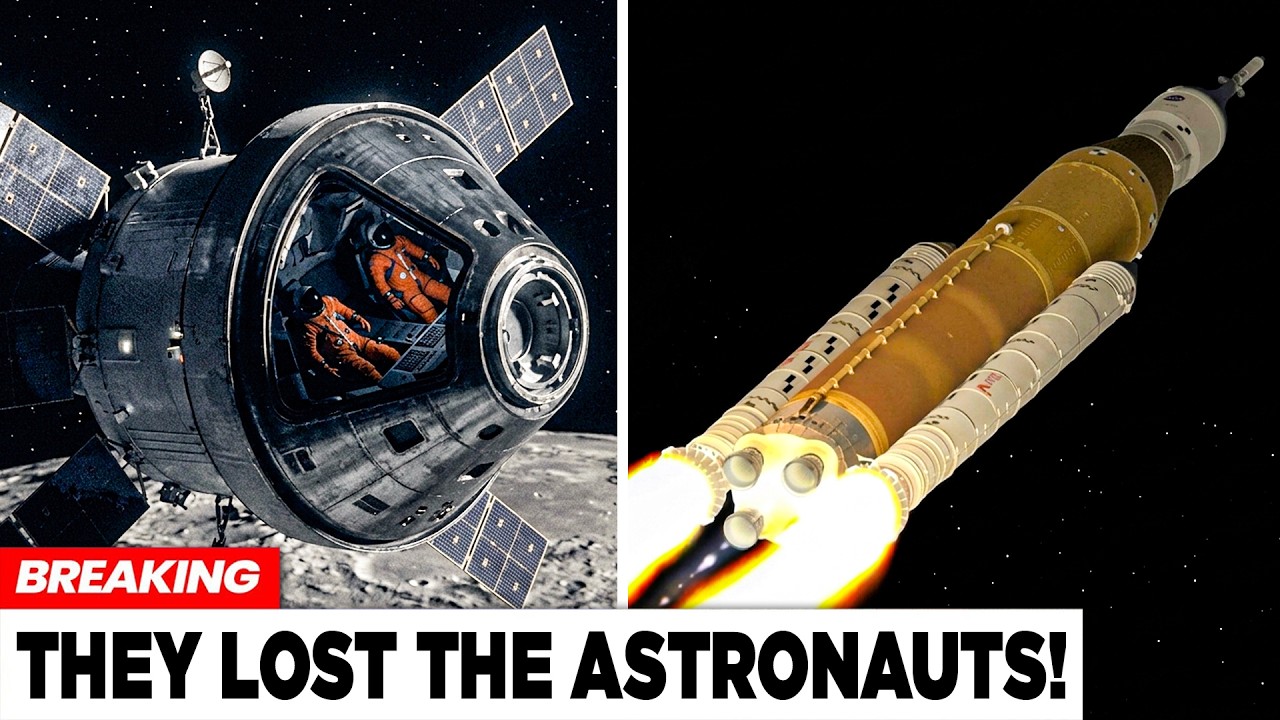
The silence descended 51 minutes after a flawless launch from Kennedy Space Center. The Orion capsule was executing a “perigee raise maneuver,” a violent engine burn to position it for the journey to the moon. A mistake here could strand the crew in a useless orbit.
Mission Control in Houston lost the downlink—voice and data—instantly. Capcom Stan Love kept calling into the void, unaware if anyone could hear. Commander Reid Wiseman later confirmed the crew heard every plea but could not respond. They were alive, listening to their own potential obituary.
For the duration, flight controllers had no telemetry. They could not monitor oxygen, pressure, or power. If a fire had erupted or the cabin depressurized, no one on Earth would have known until it was too late. The spacecraft, sensing trouble, autonomously adjusted its solar arrays.
Communication was restored after engineers implemented multiple fixes. NASA officials stated they do not know which solution worked, meaning the root cause remains a mystery. The agency described it as a “planned satellite handover” that failed catastrophically at the worst possible time.
This incident was merely the first public failure in a mission plagued by pre-launch concerns and in-flight emergencies. It exposes a pattern of accepted risks and unresolved problems that critics argue mirrors the early, deadly days of the Apollo program.
The mission proceeded despite a flight readiness review that raised alarming questions. When asked to quantify the chance of losing the crew, senior manager John Honeycutt refused to give a specific number, stating only that it was between 1-in-2 and 1-in-50. NASA’s own safety benchmark is 1-in-75.
This ambiguity stands in stark contrast to recent commercial crew missions, where NASA publicly stated odds of 1-in-276 for SpaceX and 1-in-295 for Boeing. The agency’s inspector general has previously estimated Artemis missions could face serious problems at a rate of about 1 in 40.

Weeks before launch, a critical helium seal in the rocket’s upper stage failed, disrupting the flow of helium that regulates fuel tank pressure. The rocket was rolled back to the Vehicle Assembly Building, where engineers diagnosed and repaired the faulty seal.
NASA then made a consequential decision: they skipped a full-scale “wet dress rehearsal” test with the repaired system. The seal’s first real-world test under the extreme cryogenic conditions of launch would be with the crew aboard. Its performance in deep space remains unverified.
The vehicle’s heat shield, the only barrier protecting the crew during a 5,000-degree re-entry, also carries unresolved risk. During the uncrewed Artemis I test, the shield sustained unexpected and severe damage, with over 100 areas charred and material breaking away.
The fix for Artemis II was not a redesign but a change in the re-entry angle—a steeper plunge to spend less time in the heat. This adjustment has never been tested with a crew onboard. Experts privately estimate the risk of failure between 1-in-5 and 1-in-50.
Just hours before launch, two critical safety systems faltered while the astronauts were already sealed inside Orion. The Flight Termination System, designed to destroy the rocket if it veers off course, failed due to a lost communication link with range safety officers.
The launch was declared “no-go.” Technicians raced to fix it using spare hardware from the retired Space Shuttle program. Only after a 15-minute test was the system cleared, raising questions about what would happen if such a failure occurred in flight.
Simultaneously, an alarm triggered in the Launch Abort System—the crew’s emergency escape rockets. A battery sensor showed an “out of family” reading. Engineers concluded it was an instrumentation error, not a faulty battery, and launched with reduced system redundancy.
Once in orbit, a $23 million universal waste management system—the spacecraft’s toilet—failed on its first use. A fan controller malfunctioned, crippling the suction needed for urine collection. At least one astronaut resorted to a contingency bag, a throwback to Apollo-era solutions.

Ground teams spent hours uplinking instructions for the crew to physically access and clear the blocked system. NASA later called the repair a “collaborative win,” but the failure of a brand-new, critical life support system on day one underscored deeper reliability concerns.
Further compounding operational issues, Commander Wiseman reported software failures on a mission-issued Microsoft Surface Pro tablet. Two instances of Microsoft Outlook would not open, and a separate program called “Optimus” malfunctioned. Mission control had to remotely access and repair the device.
This fix was only possible because communications were restored. During the earlier blackout, such a software patch would have been impossible, potentially crippling access to mission schedules and procedures.
The crew has since successfully executed the Trans-Lunar Injection burn, committing them to a path that will loop around the moon. They are now on a “free return” trajectory, meaning the moon’s gravity will sling them back toward Earth even if all other systems fail.
A new communications blackout is inevitable. When Orion passes behind the moon, the crew will be out of contact for approximately 41 minutes—a planned silence. This will occur with the cause of the earlier, unplanned blackout still officially unknown.
All these events precede the mission’s ultimate test: the high-speed re-entry. The crew’s safety will hinge on the modified yet unproven re-entry angle and the heat shield that failed its last test. Success is not guaranteed.
The implications for the subsequent Artemis III mission, intended to land astronauts on the lunar surface, are severe. That mission will have no quick-return option and no possibility of rescue. The systems tested—and failing—on Artemis II are the same ones required for a landing.
The pattern is unsettling: a major communications loss of unknown origin, a critical life support failure, pre-launch safety system compromises, and reliance on untested fixes for known hardware flaws. Each was resolved individually, but together they paint a portrait of a program operating at its margins.
NASA’s leadership maintains public confidence, asserting all issues are under control. Yet the refusal to disclose a calculated crew risk factor, despite having one, speaks volumes. In the spaceflight community, silence on safety metrics is rarely interpreted as a sign of overwhelming confidence.
Four astronauts, aware of these compounded risks, chose to climb aboard. Their bravery is unquestioned. The central, lingering question for the agency and the public watching their perilous journey is whether the full truth of the danger was ever laid bare, or if the drive to return to the moon has once again outpaced the readiness to do so safely. The moon now looms, a silent witness to a gamble of historic proportions.