A man Alabama tried and failed to execute two years ago was put to death Thursday night in a chaotic and violent struggle, becoming only the second person in U.S. history to be killed using nitrogen gas. Alan Eugene Miller, 59, was pronounced dead at 6:38 p.m. at Holman Correctional Facility after a procedure the state promised would be “humane” descended into what witnesses described as several minutes of agonized suffocation.
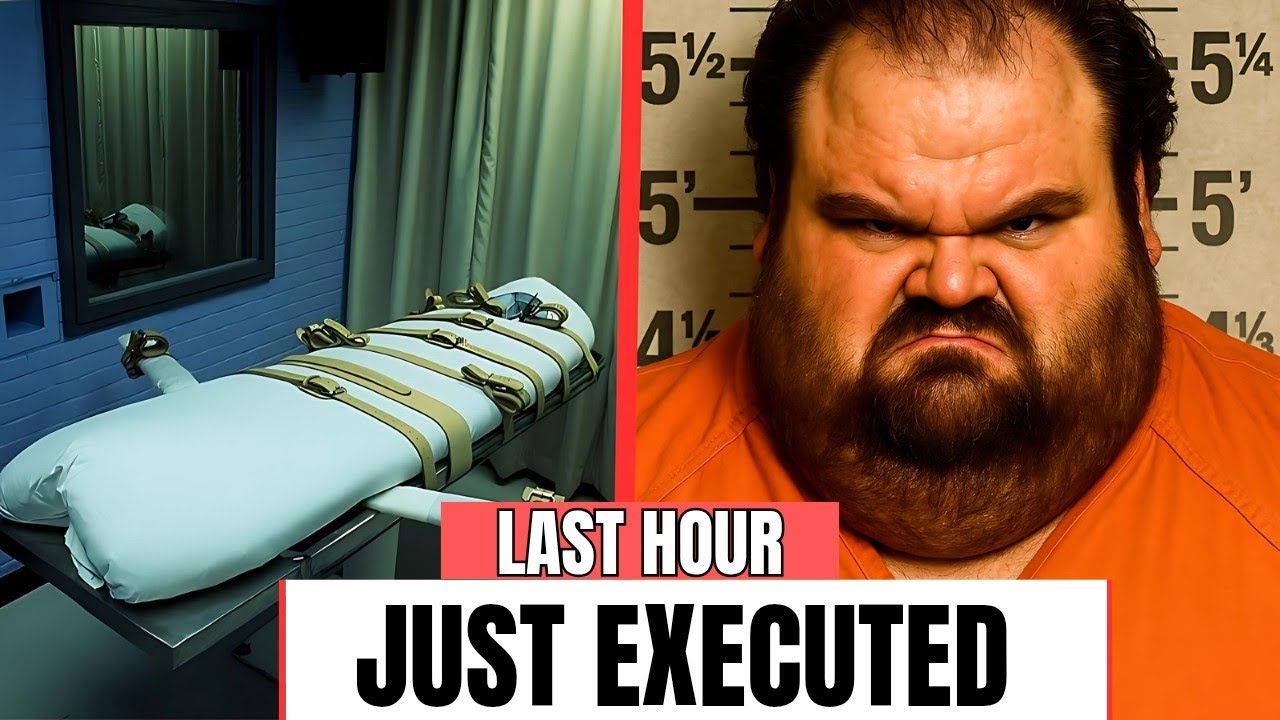
His execution marks a grim milestone in American capital punishment, carried out on a prisoner whose severe mental illness and traumatic childhood were largely absent from his original trial. Miller was convicted of murdering three men in a 1999 workplace shooting spree driven by delusional beliefs that his coworkers were spreading rumors about him. The jury took just 20 minutes to convict him and later recommended death.
On Thursday evening, Miller was strapped to a gurney as a plastic mask was sealed over his face. His final meal was a simple request: hamburger steak, a baked potato, and French fries. His final words, delivered calmly, were a stark denial: “I didn’t do anything to be in here.” Seconds later, at 6:16 p.m., nitrogen gas began to flow.
What followed was nothing like the swift, peaceful unconsciousness Alabama officials had assured courts and the public would occur. Witnesses, including media representatives and Miller’s spiritual adviser, watched in horror as his body convulsed against the restraints. For approximately two minutes, Miller writhed violently, his chest heaving.
The struggle did not cease. For another six minutes, Miller gasped desperately, his face contorting behind the mask as he fought for air that was not there. The sound of his suffocation filled the small chamber. “He looked like he was suffering,” his spiritual adviser, Dr. John Munch, later told reporters, noting the profound anguish of the scene.
This was the state’s second attempt to execute Miller. In September 2022, executioners spent nearly three hours trying unsuccessfully to establish an intravenous line for a lethal injection, repeatedly jabbing Miller’s arms and hanging him upside down before abandoning the attempt at midnight. Miller subsequently sued, arguing a second attempt by lethal injection would constitute cruel and unusual punishment.
In response, the state of Alabama agreed to use a different method: nitrogen hypoxia. The untested procedure had never been used on a human being for execution until January of this year. Alabama, undeterred by the botched lethal injection and the experimental nature of the gas, scheduled Miller to be its second nitrogen execution.

The path to the execution chamber began on August 5, 1999. Miller, then a 34-year-old delivery truck driver with no criminal history, arrived at Ferguson Enterprises in Pelham, Alabama, carrying a .40-caliber pistol. Paranoia that his coworkers were calling him gay had festered into a dangerous fixation.
He walked calmly into the building and shot 32-year-old Lee Holdbrooks six times. He then turned and fired three fatal rounds into 28-year-old Christopher Yancy. Without a word, Miller left, drove five miles to a former workplace, Post Air Gas, and shot his former supervisor, 39-year-old Terry Jarvis, five times. All three men died.
Miller was arrested later that day after a traffic stop, where he told officers, “They were talking about me.” He confessed to the murders. At his trial in Shelby County, the evidence was overwhelming, but a deeper story of mental collapse went largely untold.
A defense psychiatrist found Miller suffered from severe mental illness, likely experiencing a dissociative episode during the killings. Court documents noted a history of mental illness in his family and a childhood marred by violence and humiliation from his father. These critical mitigating factors were never fully presented to the jury.
Miller’s court-appointed attorney, who later stated he was “not proud” to represent him, withdrew an insanity defense before trial. During the sentencing phase, a psychiatrist gave only generic testimony, failing to detail Miller’s trauma or diagnose PTSD. After three hours of deliberation, the jury voted 10-2 for death.

At the time, Alabama was the only state that allowed judges to impose a death sentence based on a non-unanimous jury recommendation. The judge sentenced Miller to die. For over two decades, he waited on death row, a man described by experts as broken long before the murders, failed by a system that overlooked his illness.
The legal battles over how he would die culminated in the scene witnessed on Thursday. As the nitrogen flowed, the state’s promise of a clean, painless death evaporated. Officials later declared the execution went according to protocol, but the eyewitness accounts painted a far more harrowing picture of a prolonged and traumatic death.
With his execution, Alan Eugene Miller becomes the 1,600th person put to death in the United States since the Supreme Court reinstated the death penalty in 1976. His case forces a brutal question into the spotlight: What is the price of justice when the condemned is profoundly mentally ill, and the method of execution is an experiment?
Alabama has closed its case on a triple murderer. But it has also opened a new chapter in the nation’s long debate over capital punishment, one defined by untested methods, botched procedures, and the haunting final struggles of a man whose final words insisted on his innocence. The state has carried out its sentence, but the controversy over this execution, and the system that delivered it is only beginning.