A new scientific examination of the Shroud of Turin has uncovered a genetic and botanical map embedded within its fibers, tracing a 2,000-year journey across continents and directly challenging its dismissal as a medieval forgery. The findings, derived from cutting-edge DNA and material analysis, present a forensic puzzle that converges on first-century Jerusalem.
For centuries, the ancient linen bearing the faint, ghostly image of a crucified man has been venerated by many as the burial cloth of Jesus Christ. Modern science has now moved beyond debates of faith to treat the cloth as a biological crime scene, extracting data locked within its very threads.
The breakthrough stems from a 2015 genetic study led by Professor Gianni Barcaccia. His team collected microscopic dust and organic fragments from deep within the linen’s weave. Their focus was mitochondrial DNA, a durable genetic marker passed through maternal lines that acts as a biological GPS for geographic origins.

The results, published in Scientific Reports, left the research team in stunned silence. The DNA was not from a single individual, but a complex mosaic of human contact. The genetic signature revealed a startling geographic fingerprint spanning the globe.
Haplogroups linked to the Druze people pointed to the Middle East. Western European markers reflected centuries of documented handling. Unexpectedly, sequences from North and East Africa, South Asia, and even East Asia also appeared encoded into the fabric.
This pattern defies the theory of a medieval European forger. Globalization did not exist in the 14th century; no artisan in a French workshop could have gathered—or even conceived of planting—genetic material from China, India, and Ethiopia to fool future scientists.
Researchers realized the DNA distribution maps perfectly onto the ancient Silk Road. The shroud’s purported early journey, from Jerusalem to Edessa and then Constantinople, placed it at a historic crossroads where traders and pilgrims from across the known world would have encountered it.
Each touch, each kiss of its casing, over centuries, left microscopic traces. The cloth became a genetic archive, collecting the invisible biological dust of the ancient world. This provides profound material evidence for its claimed travels long before it surfaced in medieval France.
Botanical evidence corroborates the journey. Pollen analysis by botanist Avinoam Danin identified 58 plant species. While some were European, the majority originated in the Middle East, Turkey, and the Anatolian steppe.
Most compellingly, pollen from Gundelia tournefortii, a thorny desert thistle, was heavily concentrated around the head area. This plant grows near Jerusalem and blooms in early spring, consistent with the New Testament account of a crown of thorns.
Another plant, Zygophyllum dumosum, found only in the Judean Desert and Sinai, was also present. No forger could have sourced and invisibly applied such specific, microscopic pollen from a restricted region halfway across the world.
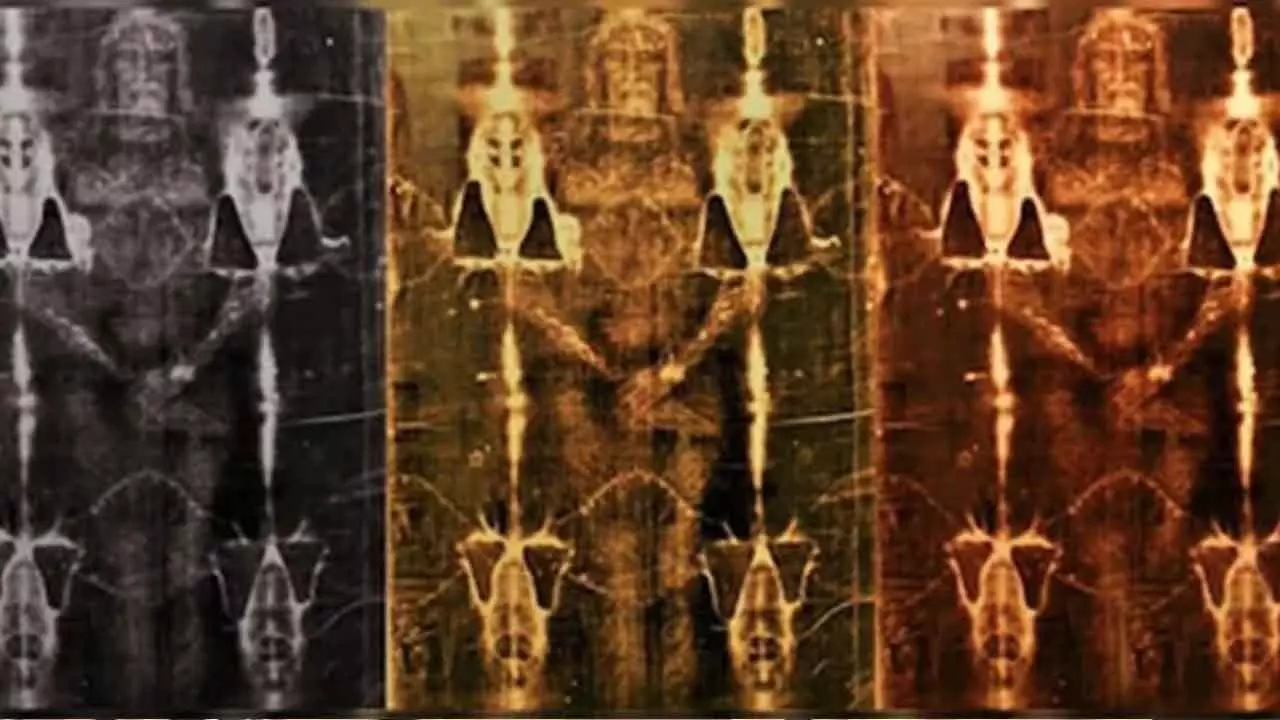
Forensic analysis of the bloodstains has further dismantled the painting hypothesis. Advanced microscopy and spectroscopy revealed human blood type AB, containing nanoparticles of creatinine and ferritin bound to hemoglobin.
These biomarkers indicate catastrophic trauma, severe dehydration, and extreme muscle destruction consistent with prolonged torture and scourging. The blood’s persistent red color was explained by high levels of bilirubin, a substance released by the liver under immense stress.
This is not painted pigment but a precise biochemical record of a dying man’s agony. Scientists confirm the stains depict over 100 scourge marks and show the nails piercing the wrists—an anatomically correct detail unknown to medieval artists, who universally depicted palm wounds.
The most enigmatic aspect remains the image itself. It is not composed of any pigment or substance. The faint, sepia imprint exists only on the outermost 200 nanometers of the linen fibers, a chemical change caused by oxidation and dehydration.

Researchers at Italy’s ENEA agency have failed to replicate it fully. The closest approximation required a fleeting, intense burst of vacuum ultraviolet radiation—technology nonexistent in human history. The image itself behaves as a perfect photographic negative, a concept centuries from invention when the shroud first appeared.
In 1976, NASA analysts made another startling discovery: the image contains encoded three-dimensional information. The shading corresponds precisely to the distance between a body and the cloth, a feature no artist can produce and no laboratory has successfully duplicated.
Perhaps the most decisive blow to the forgery theory came from revisiting the 1988 radiocarbon dating that placed the shroud in the Middle Ages. Subsequent investigations revealed the tested sample was not representative.
Chemist Raymond Rogers proved the sampled corner contained cotton and dye from a medieval repair, unlike the pure linen of the main cloth. In 2022, physicist Liberato De Caro used wide-angle X-ray scattering to date the linen’s molecular aging.
His results placed the shroud’s origin between 55 and 74 AD, aligning it with first-century textiles from Masada in Israel. This scientific reversal reopens the case that was once considered definitively closed.
Digital analysis has since identified faint, coin-like shapes over the eyes, consistent with Roman lepta minted under Pontius Pilate around 29 AD. The cumulative evidence—from genetics, botany, forensic pathology, physics, and now numismatics—points overwhelmingly to a single origin.
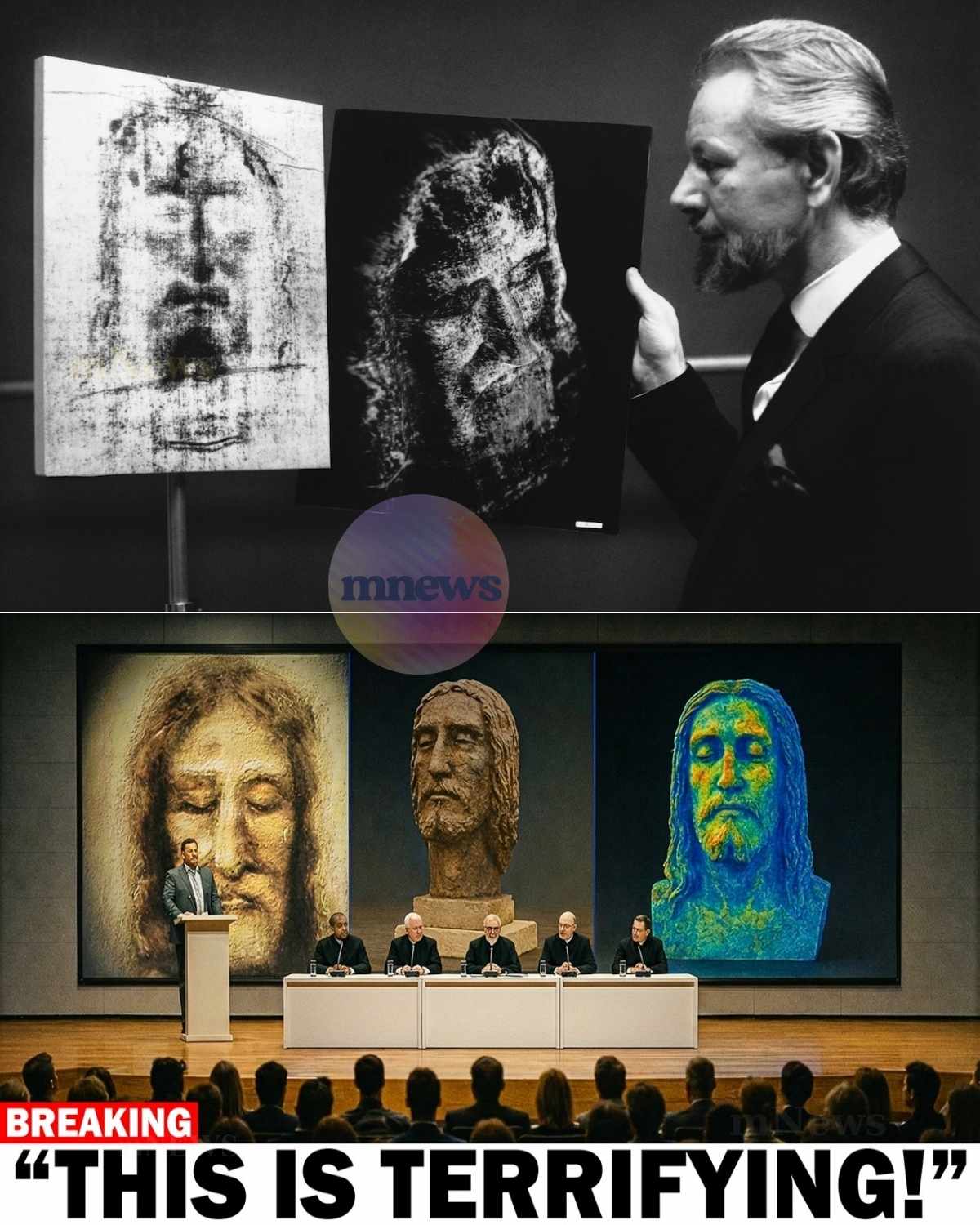
Every discipline converges on Jerusalem in the first third of the first century. The shroud emerges not as a simple artifact of faith or fraud, but as an unparalleled historical and forensic document.
It is a biological archive woven from the DNA of countless pilgrims, a botanical snapshot of a specific landscape, and a physical record of a brutal Roman execution. The image at its center remains, by any modern scientific standard, impossible to explain.
The question now facing scientists, historians, and the public is no longer whether the shroud is a medieval painting, but what phenomenon in first-century Jerusalem could have left behind such a complex, inexplicable, and enduring record. The search for that answer continues to redefine the boundaries between history, science, and mystery.