Ancient Egypt’s Enduring Enigmas Defy Modern Explanation
The sands of Egypt continue to guard their most profound secrets, as a cascade of recent discoveries and enduring mysteries challenges our fundamental understanding of this ancient civilization. From hidden architectural voids to unexplained burial rites, historians and archaeologists confront puzzles that resist conventional explanation, suggesting the ancient Egyptians possessed knowledge and motivations that remain tantalizingly out of reach.
The Great Pyramid of Giza, a 4,500-year-old monument of staggering precision, stands as the prime example. Its near-perfect alignment with cardinal points and the placement of over two million multi-ton limestone blocks present a logistical nightmare that ramp theories cannot fully satisfy. The recent non-invasive discovery of a “Big Void,” a massive, inaccessible cavity above the Grand Gallery, detected via cosmic-ray imaging, deepens the mystery, hinting at concealed chambers whose purpose is utterly unknown.
Beneath the iconic Sphinx, geological surveys suggest unexplored anomalies and potential chambers, fueling speculation about hidden repositories of knowledge. Simultaneously, at the Taposiris Magna temple, archaeologist Kathleen Martinez’s relentless search for Cleopatra’s lost tomb has uncovered submerged human-made structures offshore, supported by a newly found foundation plate confirming the site’s dedication to the goddess Isis, whom Cleopatra claimed to embody.
The Valley of the Kings refuses to yield all its dead. Despite decades of exploration, the burial chambers of Pharaoh Amenhotep I and the architect-god Imhotep remain lost. Ground-penetrating radar has detected several still-sealed tombs in the valley, their contents a profound mystery, while radar hints at hidden chambers adjoining Tutankhamun’s burial site, possibly holding the remains of the elusive Nefertiti.

Recent technological surveys reveal more than empty spaces. At the Giza plateau’s Western Cemetery, Japanese and Egyptian researchers identified a mysterious L-shaped structure buried beneath blank sand, its man-made shape clear but its function a total enigma. Furthermore, the potential discovery of a lost Nile branch, the “Ahramat,” may explain transport logistics but not the sheer engineering genius behind the pyramids’ construction.
Disturbing archaeological finds add a macabre layer to these structural puzzles. The “Screaming Mummy,” or Unknown Man E, found bound in sheepskin with a contorted expression, is theorized to be a prince executed for conspiring to murder Pharaoh Ramesses III. Elsewhere, pits of ritually severed hands at a Hyksos palace speak to a brutal practice of taking trophies to deny enemies power in the afterlife.
Cultural practices defy easy interpretation. The discovery of mummies with solid gold tongues at Taposiris Magna suggests a literal belief in enabling speech before the god Osiris. The find of a pregnant mummy, the fetus left within her womb, breaks all known mummification protocols and leaves experts baffled as to the spiritual reasoning.
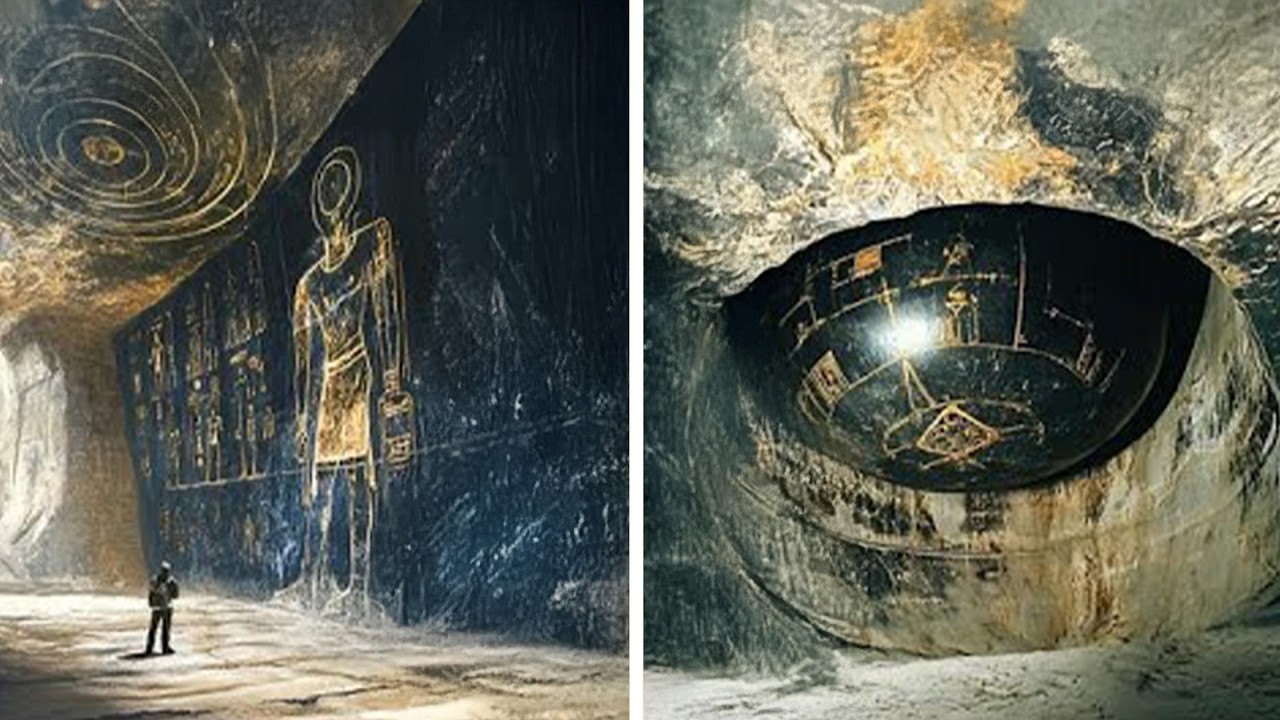
Even artistic depictions provoke wild theories. The Dendera Temple reliefs, interpreted by some as depicting giant light bulbs, are dismissed by mainstream scholars but underscore how Egyptian symbolism can feel alienly advanced. The purpose of two dozen precision-crafted, 100-ton granite boxes found in a Saqqara cave system also remains a complete mystery, their smooth surfaces and hieroglyphs offering no clear answers.

Biological mysteries persist. The advanced state of preservation in some mummies, sometimes at a cellular level, hints at lost chemical knowledge. Tattoos found on a 3,000-year-old female mummy, depicting deities and symbols, indicate a complex, personal religious expression previously undocumented at such a scale.
The legend of a vast, multi-chambered labyrinth near Hawara, described by Herodotus, continues to tantalize. While some foundations have been found, the full, sprawling complex—if it ever existed as described—remains lost, potentially holding untold insights into early Egyptian administration and ritual.
From the unaccountable decline of a civilization that thrived for three millennia to the unresolved fate of Alexander the Great’s coveted tomb, believed submerged near Alexandria, Egypt’s past is a palimpsest of unanswered questions. Each technological advance, from muon radiography to DNA analysis, peels back a layer only to reveal deeper complexities.
The silent gaze of the Sphinx, the impeccable geometry of the pyramids, and the silent testimony of golden-tongued mummies collectively form a legacy that is as much about profound knowledge as it is about enduring mystery. As excavation continues and technology improves, the world watches, waiting for the next strike of the archaeologist’s trowel to finally crack a code written in stone and sand over five thousand years ago. The secrets of ancient Egypt, it seems, are buried deeper than we ever imagined.