A seismic shift has occurred in one of music’s most enduring mysteries, as a central figure has broken his decades-long silence in a stunning courtroom admission.
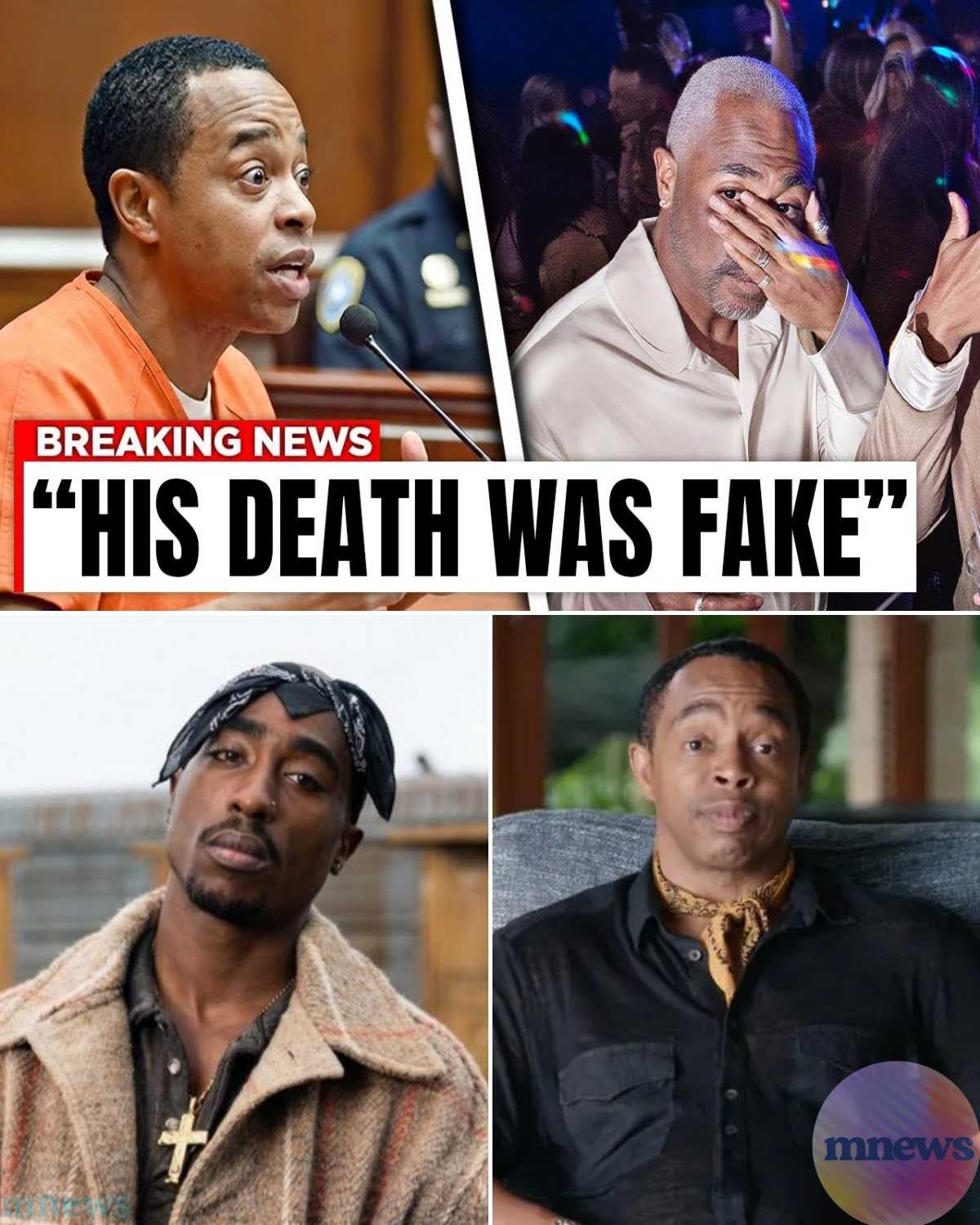
Jacques “Haitian Jack” Agnant offered a public apology and divulged everything he knew regarding the murder of Tupac Shakur, sending shockwaves through the hip-hop community and beyond. The revelations, made nearly 30 years after the iconic rapper’s death, promise to upend long-held narratives about the crime that changed music history.
The moment of disclosure came not in Las Vegas, but thousands of miles away during legal proceedings. Agnant described the visceral instant he learned of the tragedy on September 7, 1996, while attending a concert in Atlanta.
“I was at a Gypsy King concert in Atlanta and I got 200 pages from 200 different people and they all put 911 behind their numbers,” Agnant stated. He recalled telling his girlfriend, “Getting all these 911s. Tupac must be dead.”
That flood of emergency codes signaled the end of a complex relationship that had spiraled from close friendship into bitter public feud. Agnant’s heart, he revealed, “shattered into pieces” despite their fractured bond.
To understand the gravity of this apology, one must revisit the fateful night in Las Vegas. Tupac Shakur had just left the Mike Tyson boxing match at the MGM Grand, riding high alongside Death Row Records founder Suge Knight.
An altercation in the hotel lobby saw Tupac’s entourage assault Orlando “Baby Lane” Anderson, a known member of the Southside Crips. Security cameras captured the beating, footage that would become crucial evidence.
Later that evening, Tupac sat in the passenger seat of a black BMW driven by Knight. At a red light near East Flamingo Road and Koval Lane, a white Cadillac pulled alongside.
Multiple shots erupted from the Cadillac. Four bullets struck Tupac with devastating precision. The attackers vanished into the night, leaving a scene of chaos that would never be fully explained.

Tupac fought for his life for six agonizing days at University Medical Center. Surgeons removed his right lung in a desperate attempt to save him. On September 13, 1996, he succumbed to his injuries at just 25 years old.
The investigation spawned countless theories, documentaries, and debates. For years, suspicion swirled around Haitian Jack, whom Tupac had publicly accused of betrayal and of orchestrating a previous attack.
The roots of their rift trace back to 1993 in New York City. Their bond, built on mutual admiration, began to unravel during the legal fallout from a sexual assault case involving a woman Jack introduced to Tupac.
Tupac was convicted and sent to prison. Jack accepted a separate trial and received probation. In Tupac’s mind, this disparity proved Jack had cooperated with prosecutors—that he was a “snitch.”
This accusation was immortalized on Tupac’s posthumous album “The Don Killuminati: The 7 Day Theory.” The track “Against All Odds” directly names Haitian Jack as a federal informant.
Jack has consistently denied this, arguing that the accusation endangered his life. He sued Tupac’s estate for defamation in 1998, but the case was dismissed under New York law.
The most serious allegations concern the November 1994 Quad Studios shooting in New York. Tupac was ambushed, pistol-whipped, and shot five times in a robbery he believed was a setup.
He blamed Haitian Jack and music manager James “Jimmy Henchman” Rosemond. Witnesses claimed Jack was seen wearing Tupac’s stolen jewelry afterward, a symbolic act of disrespect.
Confidential FBI informants alleged Jack collaborated with Henchman to plan the ambush as a beating and humiliation, not a murder attempt. The robbery was reportedly meant to provide cover.
In his recent testimony, Agnant addressed these decades of accusations directly. While maintaining he was not involved in the Las Vegas shooting, his apology and detailed account provide a new perspective.

He described a philosophy that guided his street life: “One thing I don’t do, I don’t rob my friends or kill my friends. We’ve got a problem, we’ll go our separate ways.”
The timing of this revelation coincides with renewed legal action. Duane “Keffe D” Davis, who has long claimed knowledge of the shooting, is currently on trial for murder in connection with Tupac’s death.
Agnant’s statements may impact ongoing proceedings and the public’s understanding of the case. His account adds depth to the complex web of gang rivalries, music industry tensions, and personal vendettas.
The East Coast-West Coast feud, intensified by Tupac’s death, claimed another life six months later when The Notorious B.I.G. was murdered in Los Angeles. The violence created an atmosphere of paranoia.
Yet Tupac’s legacy only grew after his death. He achieved mythic status, influencing generations of artists with his socio-political narratives and raw vulnerability. His induction into the Rock & Roll Hall of Fame cemented his place.
Haitian Jack’s life took a different path. Deported from the United States after a 2004 conviction, he has lived in the Dominican Republic. He has participated in documentaries seeking to tell his side of this tangled history.
His courtroom apology represents a pivotal attempt at narrative reconciliation. For the families, fans, and historians who have sought closure for nearly three decades, these words carry profound weight.
The legal system continues its work, with Keffe D’s trial proceeding. Whether Haitian Jack’s testimony will lead to new charges or simply a revised historical account remains uncertain.
What is clear is that the story of Tupac Shakur’s murder remains a powerful, painful chapter in American culture. Each new revelation reminds the world of the talent lost and the violence that consumed a generation of artists.
The quest for truth continues, driven by an unwavering desire for justice. Haitian Jack’s decision to speak now, after so many years of silence, adds a crucial and unexpected voice to that search.
As the hip-hop community and the world process these developments, one truth endures: Tupac’s voice, silenced far too soon, continues to echo through his music and the enduring mystery of his death.