A state’s solemn duty to carry out a court-ordered execution descended into a scene of administrative chaos and a critical communications failure, according to a newly leaked and profoundly disturbing audio recording from inside a Virginia death chamber. The tape, one of several secret recordings from the 1980s and 1990s leaked from Virginia’s death row, captures the 1990 electrocution of inmate Richard Thomas Boggs with unprecedented and harrowing rawness. It reveals a breakdown in the most fundamental safeguard of the process mere seconds before the state took his life.
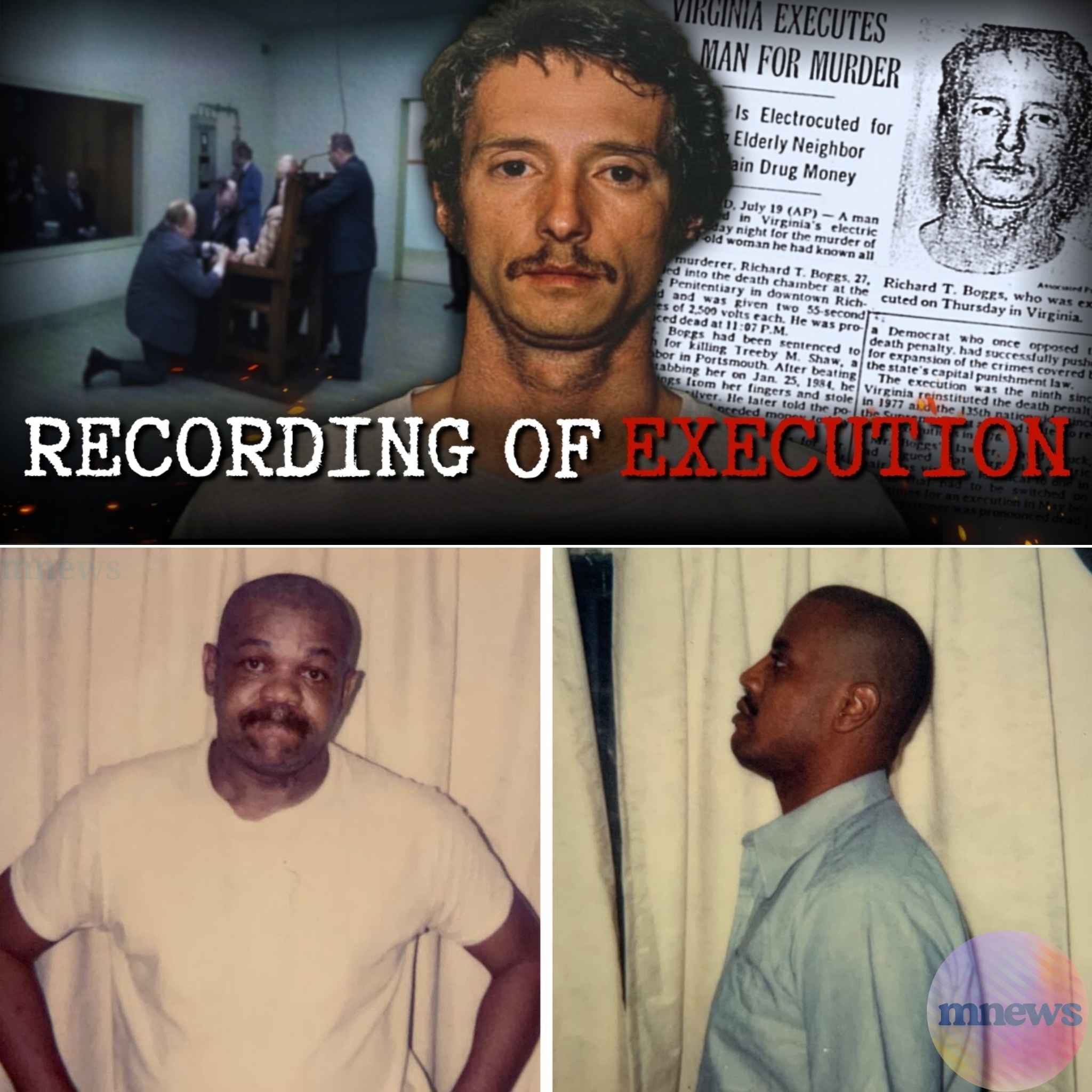
The recording’s authenticity, confirmed by archival markers and internal documentation, provides a real-time, uncensored audit of an execution gone procedurally awry. Most critically, it captures prison staff struggling with a jammed phone line as the governor’s office attempted to call. Virginia law, like that of many states, requires an open line to be maintained during an execution for the possibility of a last-minute stay or commutation.
On the night of July 19, 1990, that line failed. “The governor’s office is calling,” a voice is heard saying urgently, as others fumble with multiple phone lines, misidentifying extensions, and talking over one another. “They need to get this line clear,” another voice insists, while Boggs was already strapped into the electric chair. The confusion over which line was which and who was speaking to whom consumed precious minutes.
“We’re on 230 line up here at present. Therefore, this line is tied up,” an official states, explicitly acknowledging the blockage. The frantic exchange reveals a staggering lack of coordination, with staff unsure if the director of corrections was already in contact with the governor’s office. This procedural disarray occurred as the condemned man, a 27-year-old Richard Boggs, awaited death just feet away.
Boggs was sentenced to die for the brutal 1988 murder of 87-year-old Tribble M. Shaw in her Portsmouth, Virginia, home. Court records show Boggs, addicted to drugs and desperate for money, killed Shaw, who had been a close friend of his father. His crime, described by prosecutors as particularly heinous, led him to the execution chamber at the Virginia State Penitentiary in Richmond.

The audio begins with calm, official narration, noting Boggs being led from his cell at 10:49 p.m. The tone shifts dramatically as the phone line crisis erupts. The warden, seemingly unaware of the content of the governor’s call, proceeds based on a second-hand message. “Captain Green just gave us the message that the governor’s office called and said that the stay was denied,” a voice informs him.
Accepting this relayed message without direct confirmation, the warden gives the order to proceed. The recording confirms the state executed without ever having successfully connected the call from the governor’s office to the death chamber. This breach of protocol raises profound legal and ethical questions about the integrity of the process.
At 11:01 p.m., the first surge of electricity was administered. The recording captures the stark, unfiltered sound of the current, a chilling hum followed by silence. A second surge followed at 11:02 p.m. The official narration continues, clinical and detached, noting “no complications” as the physician examined Boggs and pronounced his death at 11:07 p.m.
Legal experts reviewing the transcript express grave concern. “This isn’t just a technical glitch; it’s a catastrophic failure of the system designed to be the final check on state power,” said constitutional law professor Dr. Evelyn Reed. “The entire purpose of the open phone line is rendered meaningless if the call can’t get through. It turns a safeguard into a facade.”

The leak has ignited immediate calls for investigation from human rights organizations and death penalty opponents. They argue the tape provides concrete evidence of the fallible, chaotic reality behind the sterile official reports typically issued after an execution. The Virginia Department of Corrections has not yet stated the leaked recording.
For advocates of capital punishment, the tape presents a severe challenge, illustrating how even in a state with long experience, the mechanics of execution are vulnerable to human error and technical failure. The question of whether the governor’s office was attempting to grant a stay, or merely to communicate, remains unanswered and now unanswerable.
The haunting audio stands as an indelible record of a man’s death and a system’s failure. It forces a reckoning not only with the crime of Richard Boggs but with the state’s capacity to fulfill the ultimate punishment with the solemn precision and absolute certainty the law demands. The chaos on the tape suggests that on that night in 1990, it did not.
The broader set of leaked tapes is believed to document other executions from the era, suggesting this may not have been an isolated incident. Historians and legal scholars are now demanding full transparency and the preservation of all such records, arguing they are vital to the public understanding of capital punishment’s administration.
As the audio circulates, it strips away the bureaucratic euphemisms, leaving in their place the stark sounds of procedure, panic, and finality. The case of Richard Boggs is now forever tied not just to his crime, but to the disturbing evidence of how his execution was carried out—a process marred by confusion and a broken line of communication at the most critical possible moment.