South Carolina executed inmate Mikal Dean Mahdi by firing squad, a rare and visceral application of the death penalty that ended a decades-long saga of violence, legal appeals, and profound tragedy for multiple families.
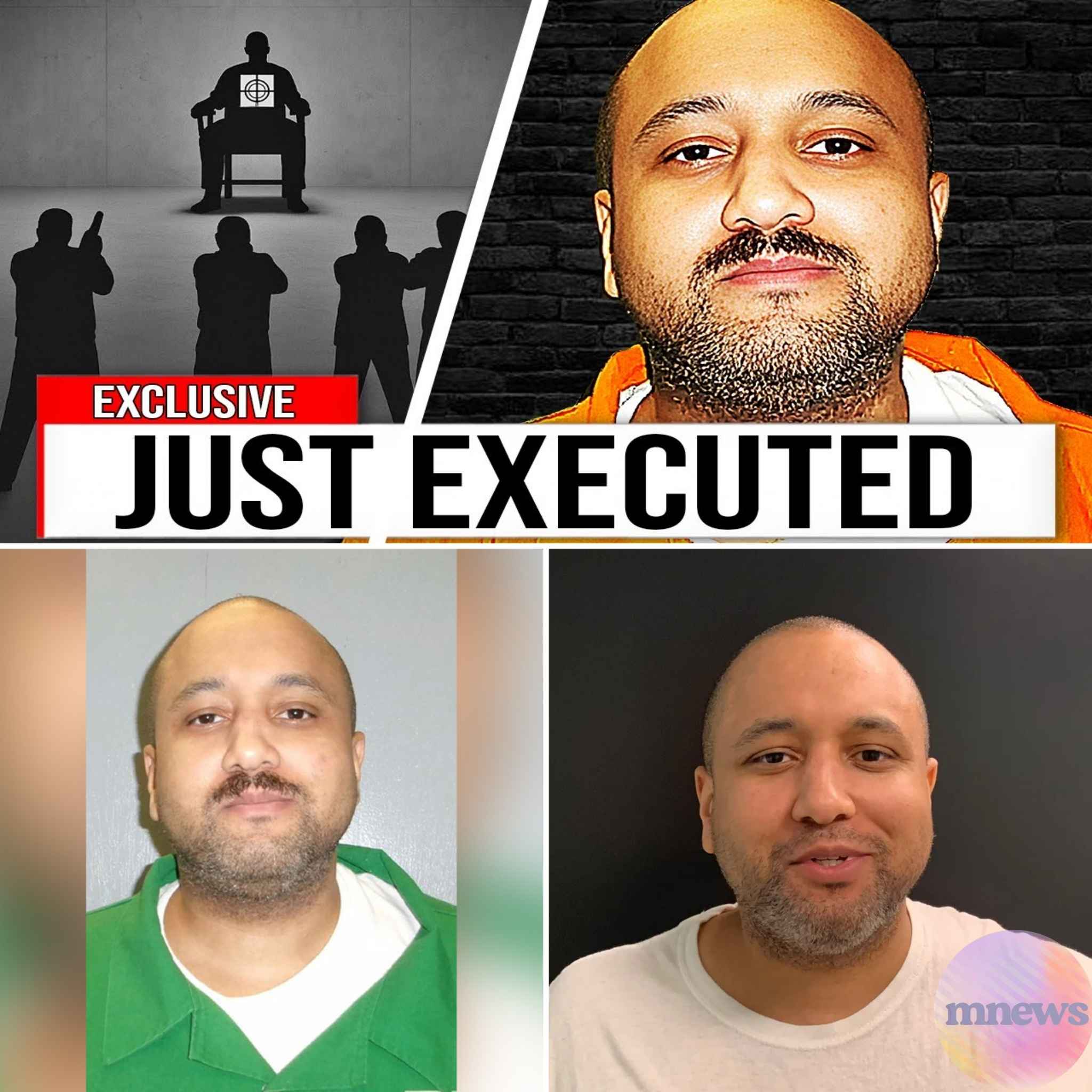
The execution was carried out at 6:01 p.m. on April 11, 2025, at the Broad River Correctional Institution. Mahdi, 42, was pronounced dead four minutes later, becoming the second inmate in the state’s modern history to die by this method.
He offered no final statement, remaining silent as he was strapped into a metal chair with a black hood placed over his head. A target was pinned over his heart.
Three volunteer corrections officers, positioned behind a wall 15 feet away, fired their rifles simultaneously. Witnesses reported hearing a sharp yell from Mahdi upon impact.
Officials state he continued to breathe for approximately 80 seconds before a prison doctor pronounced him dead at 6:05 p.m. The execution proceeded without technical issues under the state’s revised protocol.
Mahdi’s path to the execution chamber began over two decades ago with a multi-state crime spree in July 2004. At 21, he stole a pistol and a vehicle in Virginia before driving to North Carolina.
On July 15, he entered a Winston-Salem convenience store, where clerk Christopher Jason Bogs, 29, asked for identification. Mahdi responded by shooting Bogs in the face at point-blank range.
After the clerk collapsed, Mahdi fired a second shot into his body. Surveillance footage showed him subsequently robbing the dying man before taking a beer and fleeing in the stolen car.
Two days later, in Columbia, South Carolina, Mahdi carjacked another vehicle. His spree culminated on a quiet farm in Calhoun County owned by police captain James Edward Meyers, 56.
Mahdi broke into a workshop on the property. When Captain Meyers returned home from a family birthday celebration, Mahdi ambushed him, firing nine rounds from a .22 caliber rifle.
Three bullets struck Meyers in the head; one tore through his heart. Mahdi then doused the officer’s body in diesel fuel and set it on fire before stealing his police truck and weapons.
The victim’s wife, Amy Meyers—also a law enforcement officer—made the horrific discovery hours later in the same shed where the couple had taken wedding photos just one year prior.

Mahdi was captured days later in Florida following a police chase. He was extradited to South Carolina, convicted, and sentenced to death on December 8, 2006, for Meyers’ murder.
He later received a life sentence without parole for the murder of Christopher Bogs in North Carolina. Throughout his incarceration, Mahdi filed numerous appeals, all of which were denied.
His violent conduct continued behind bars. In 2009, while on death row, he and another inmate orchestrated a brutal attack on a correctional officer, stabbing him repeatedly in a failed escape plot.
The officer survived but suffered lasting physical and psychological trauma, ultimately losing his career. The assault resulted in Mahdi losing all prison privileges but did not alter his death sentence.
For years, his execution was stalled as South Carolina faced an inability to procure lethal injection drugs. The state legislature responded by amending its execution methods.
The revised law made the electric chair the default method and introduced the firing squad as an option for condemned inmates. Legal challenges were resolved by 2023, clearing the way.
On March 14, 2025, a judge signed Mahdi’s death warrant. He was given a choice between lethal injection, electrocution, or firing squad, with the state to choose if he declined.
Through his attorneys, Mahdi selected the firing squad. They stated their client feared the potential agony of the electric chair or a botched lethal injection, viewing the squad as the “least of three evils.”

For his final meal, Mahdi requested a ribeye steak cooked medium, mushroom risotto, broccoli, collard greens, cheesecake, and sweet tea. The request was fulfilled by the Department of Corrections.
Witnesses to the execution included media representatives, attorneys, and family members of the victims. They observed through bullet-resistant glass from a few feet away.
According to their accounts, Mahdi did not acknowledge anyone in the witness room. He remained motionless until the volley of gunfire struck his chest.
The scene was described as deeply disturbing, with one witness noting Mahdi’s chest appeared to heave before he groaned twice and fell still after a final, audible gasp.
The execution marks a significant moment in the state’s penal history. It is only the second firing squad execution since the method was reinstated, following that of Brad Keith Sigmon in March.
Prosecutors had long argued for the ultimate penalty, citing the calculated brutality of Mahdi’s crimes, a prior threat to kill a police officer, and a complete lack of demonstrated remorse.
Defense attorneys presented a narrative of a traumatic childhood marked by abandonment, neglect, and institutionalization, pleading for a sentence of life imprisonment without parole.
The jury rejected that argument. By the time of his death, Mahdi had spent 68% of his life, from adolescence onward, within the confines of either juvenile detention or adult prison.
The execution concludes a case that has haunted the families of Christopher Bogs and James Meyers for nearly 21 years. No statements from the victims’ families were immediately released.
South Carolina’s Department of Corrections confirmed the execution was carried out in accordance with all statutory and procedural requirements. A full report will be filed with the court.
With this execution, the national debate over methods of capital punishment is reignited, particularly concerning the firing squad, which remains legal in only a handful of U.S. states.
Advocates for abolition condemned the execution, calling it a barbaric spectacle. Supporters of the death penalty stated it represented long-delayed justice for the victims.
As the curtain closed on the execution chamber at 6:05 p.m., the legal and moral reckoning for Mikal Dean Mahdi’s actions reached its final, irrevocable conclusion.