In a stunning series of discoveries, perfectly preserved ancient humans and extinct creatures have emerged from the rapidly melting permafrost, revealing secrets lost for tens of thousands of years. From a saber-toothed cub to the Siberian Ice Maiden, these frozen time capsules challenge our understanding of history and raise urgent questions about what lies buried beneath the ice today.

Across Siberia and the Andean peaks, the thawing permafrost is unveiling astonishing relics of a prehistoric world. Creatures sealed in ice so pristine that their fur, skin, and even internal organs remain intact are reshaping paleontology and archaeology on a global scale. Each find deepens the mystery of Earth’s frozen past.
In 2020, a three-week-old saber-toothed cub surfaced along Siberia’s Badure River, its delicate features frozen in time after 37,000 years. Scientists marveled at the cub’s intact whiskers and paws, untouched by millennia, rewriting the species’ distribution map and igniting discussions about potential genetic resurrection.
Equally groundbreaking, a 42,000-year-old foal called the Lena horse was discovered in eastern Siberia’s cavernous crater. Its tissue preserved so perfectly that liquid blood and urine flowed upon incision, offering an unprecedented glimpse into Ice Age biology and opening avenues for possible revival efforts by Russian researchers.
Further north, the Yukon yielded a 57,000-year-old wolf pup named Jur, unearthed in 2016 by a gold miner’s water cannon blast. This wolf, unlike any living species, belongs to a ghost lineage lost to extinction. Jur’s genome provides the only evidence of a vanished population, transforming the study of ancient canids.
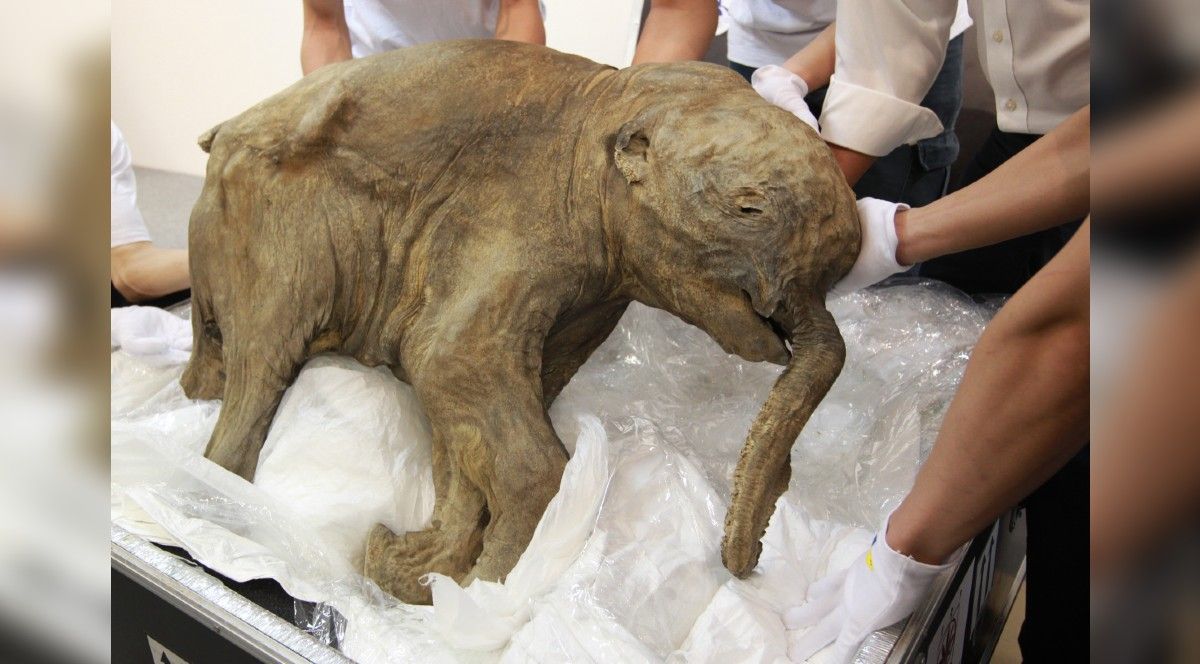
In Siberia’s permafrost, the steppe bison made a remarkable comeback in 2022 with a nearly complete specimen dating back 8,000 years. Its organs and even chromosomes remained viable, offering an extraordinary biological window and fueling possibilities for de-extinction projects focused on the ancestors of today’s bovines.
In a remote intersection of Russia, Kazakhstan, China, and Mongolia, the discovery of the Siberian Ice Maiden in 1993 stunned archaeologists. This 25-year-old woman, buried with elaborate tattoos and ceremonial sacrifices, bore signs of advanced cancer treated with cannabis. Her preservation tells a human story frozen through time.
The woolly rhinoceros, a colossal Ice Age herbivore, was brought to life through finds at Russia’s Kyma River, including a complete adult and a rare, 10,000-year-old calf. These findings illuminate the species’ harsh existence and close links to the critically endangered Sumatran rhino, highlighting fragile biodiversity threads.
High atop the Andes, frozen Inca child sacrifices were unearthed in 1999. Among them, a remarkably preserved 13-year-old maiden showed evidence of ceremonial preparation before death. Her hair revealed a shift to elite foods and sedatives, suggesting awareness of her fate in this tragic ritual of faith and endurance.
In Yakutia, Russia, two cave lion cubs emerged in 2017 and 2018, preserved for 28,000 and 43,000 years respectively. Named Sparta and Boris, they confirmed ancient cave art’s accuracy and provided invaluable data on this vanished predator, long feared and admired by Ice Age hunters who depicted them on cavern walls.

The Pazaric tattooed chieftain, discovered in 2007, revealed a 2,500-year-old warrior marked by intricate elk tattoos and buried with his horses and weapons. His burial chamber, frozen since antiquity, preserved textiles, cannabis, and ancient art, underscoring the depth of the permafrost’s archive of human culture and biology.
These discoveries illuminate a chilling reality: the permafrost is melting at an unprecedented rate, rapidly releasing creatures and humans from deep freeze. This unprecedented thaw threatens to flood science with more specimens, artifacts, and unanswered questions about prehistoric life and extinction timelines.
Scientists warn that the recovery of intact ancient DNA and biological materials could lead to efforts to resurrect extinct species. While some finds like the saber-toothed cub appear genetically close to modern relatives, revival remains theoretical and fraught with ethical complexities demanding urgent global discourse.
The possibility of uncovering an extinct human species preserved in ice is no longer the stuff of science fiction. Experts acknowledge the theoretical potential, yet caution that no international protocol or legal framework exists to manage such a discovery, posing profound scientific and ethical challenges.
Each frozen revelation from Siberia, the Andes, and beyond is a stark reminder of Earth’s hidden history and the irreversible changes wrought by climate change. These discoveries compel humanity to confront what it means to steward this newfound past responsibly, as melting ice accelerates their unveiling.
Every artifact and specimen resurrected from the permafrost reshapes t
he narrative of evolution, extinction, and survival. From ancient predators to sacrificed children, the ice is revealing stories that challenge accepted timelines and open new frontiers for research into life’s resilience and disappearance.
The frozen vaults of the planet, long nature’s crypt, are cracking open. What emerges is a rush of science and mystery demanding immediate attention. With each thawed treasure, the line between past and present blurs, forcing scientists and policymakers alike to prepare for the revelations—and risks—locked in the ice.
As the global permafrost continues to thaw, more marvels and mysteries beckon from beneath the ice. The race is on to discover, document, and understand these frozen time capsules before they deteriorate or disappear. The world watches as the ice surrenders its secrets faster than ever imagined.