A destructive force numbering in the millions is ravaging the American landscape, yet its potential as a food source is left to rot in the fields. The United States is grappling with an explosion of wild pigs, an invasive species causing billions in annual damage, raising a perplexing question: why isn’t this abundant meat feeding people?
An estimated 6 to 9 million feral hogs now root their way across at least 35 states, with Texas, Florida, and California bearing the brunt. Their relentless expansion shows no sign of slowing. These animals annihilate crops, tear up ecosystems, and reproduce at a rate that outpaces even aggressive control measures.
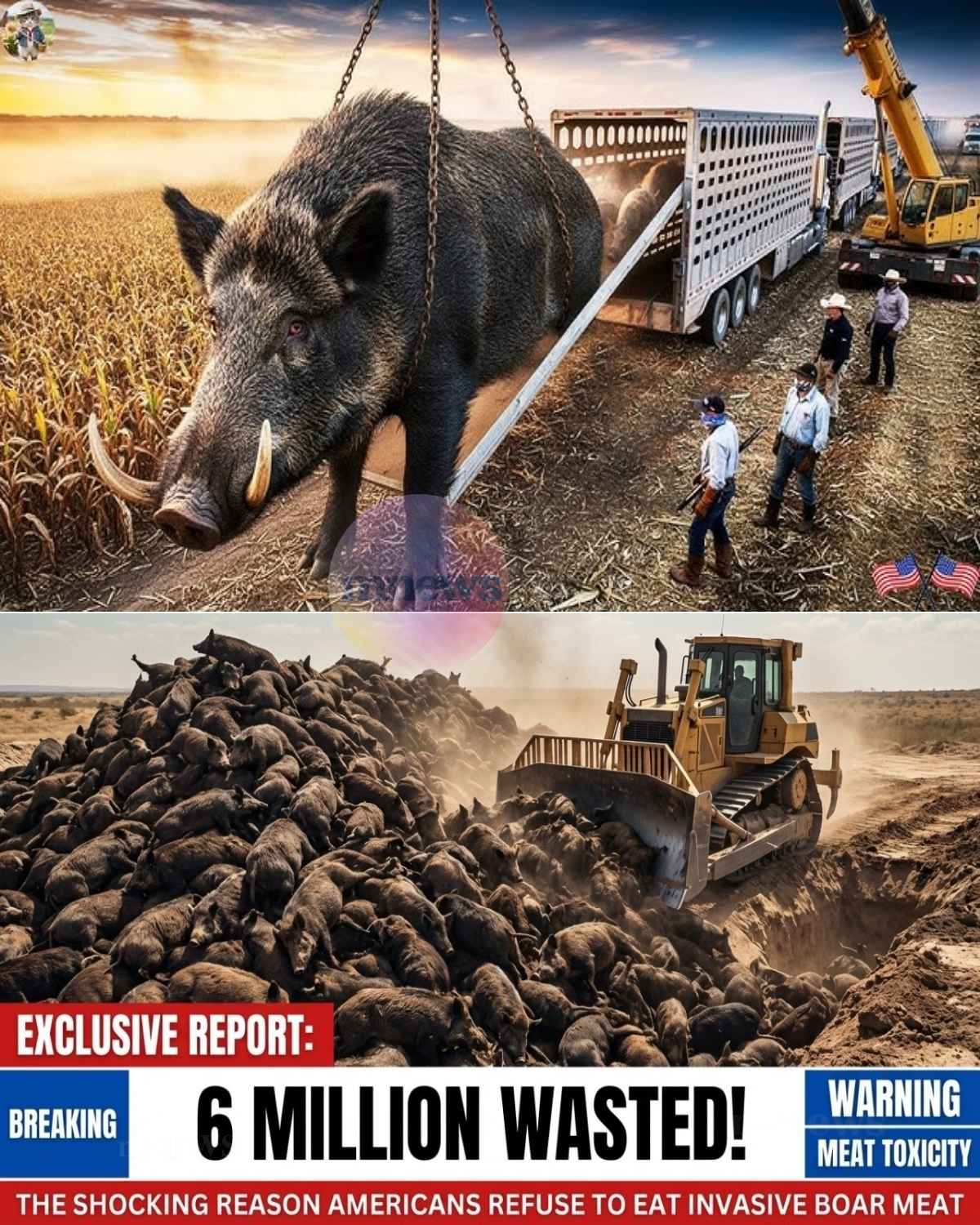
The paradox is stark. In many parts of the world, wild boar is a prized delicacy, featured on high-end menus and in traditional cuisines. Yet in America, where the animals are considered a costly nuisance, efforts focus on eradication, not utilization. Carcasses are left where they fall.
This situation reveals fundamental conflicts in how America manages wildlife, balances agricultural interests, and values convenience over a potentially vast, untapped protein source. The answer is not simple, but rooted in disease, economics, and a broken system.

The wild pig crisis is just the most dramatic example of a broader pattern of wildlife overabundance. White-tailed deer, native to the continent, now number an estimated 30 million, far exceeding natural carrying capacity. They are a textbook case of a species transitioning from valued game to public hazard.
Deer cause over a million vehicle collisions annually, resulting in hundreds of deaths, tens of thousands of injuries, and well over $1 billion in property damage. Their toll on agriculture is even more severe, with losses exceeding $1 billion each year as they devastate crops, orchards, and vineyards.
Here, the food resource question becomes particularly troubling. While hunters harvest millions of deer yearly, a significant portion of the meat is wasted. Many take only choice cuts, leaving edible pounds to spoil, highlighting a disconnect between population control and resource recovery.
If deer represent a severe management challenge, wild pigs constitute a full-scale ecological catastrophe. They are a hybrid of escaped domestic pigs and imported Eurasian boars, combining formidable intelligence, adaptability, and a voracious appetite.
Their economic impact is staggering, conservatively estimated at $2.5 billion annually. They root violently, destroying land and causing erosion. They spread disease, outcompete native species, and adapt to environments from swamps to suburbs with alarming ease.
Control methods have escalated to a military scale. Helicopter gunning, sophisticated trapping, and night-vision hunting are deployed in a costly war of attrition. Yet, mathematical models show that even eliminating 70% of a population annually barely curbs its growth.
The central reason this meat does not enter the food stream in a meaningful way is profound disease risk. Wild pigs are mobile reservoirs for at least 30 viral and bacterial diseases and 37 parasites transmissible to humans and livestock.
Brucellosis, which infects 20-40% of pigs in some regions, causes debilitating chronic illness. Trichinosis, carried at high rates, can lead to severe muscular and neurological complications. These are not mild threats but serious public health hazards.
The risk extends beyond consumption. Field dressing a carcass exposes hunters to pathogens through blood contact or simple cuts. Processing requires extreme sanitation protocols that are costly and complex to implement on a large scale.
Logistical and economic barriers are equally daunting. Wild pigs are killed in remote areas, often in hot weather that accelerates spoilage. Meat quality varies wildly by age, diet, and sex, resulting in a tough, gamey product unfamiliar to consumers.
Contrast this with the industrial efficiency of domestic pork. Raised in controlled conditions, vaccinated, inspected, and sold conveniently for a few dollars per pound, it sets a baseline that free wild meat cannot compete with, given its associated labor and risk.
Small niche markets for inspected wild boar meat exist, primarily supplying specialty restaurants. However, their scale is microscopic compared to the millions of animals killed and abandoned each year. The system is not designed for utilization.
This dynamic reflects a deeper American relationship with abundant wildlife. In a nation of agricultural plenty and efficient food production, wild game shifts from necessity to recreation or luxury. The trouble of harvesting it often outweighs its perceived value.
The pattern is clear with other species, like wolves, which are seen either as ecological essentials or livestock threats. The management challenge lies in reconciling conflicting desires: for abundant wildlife, protected ecosystems, productive farms, and safe suburbs.
As wild pig populations continue their relentless spread and deer numbers climb, the conflicts and costs will only intensify. Millions of pounds of potential protein will continue to be wasted, not out of malice, but because the practical realities of disease, economics, and logistics create an insurmountable barrier.
The story of America’s wild pigs is more than a tale of an invasive species. It is a revealing case study in how modern societies struggle to manage creatures that have become too successful, trapped between the impulse to eradicate and the potential to utilize, with no easy path forward.