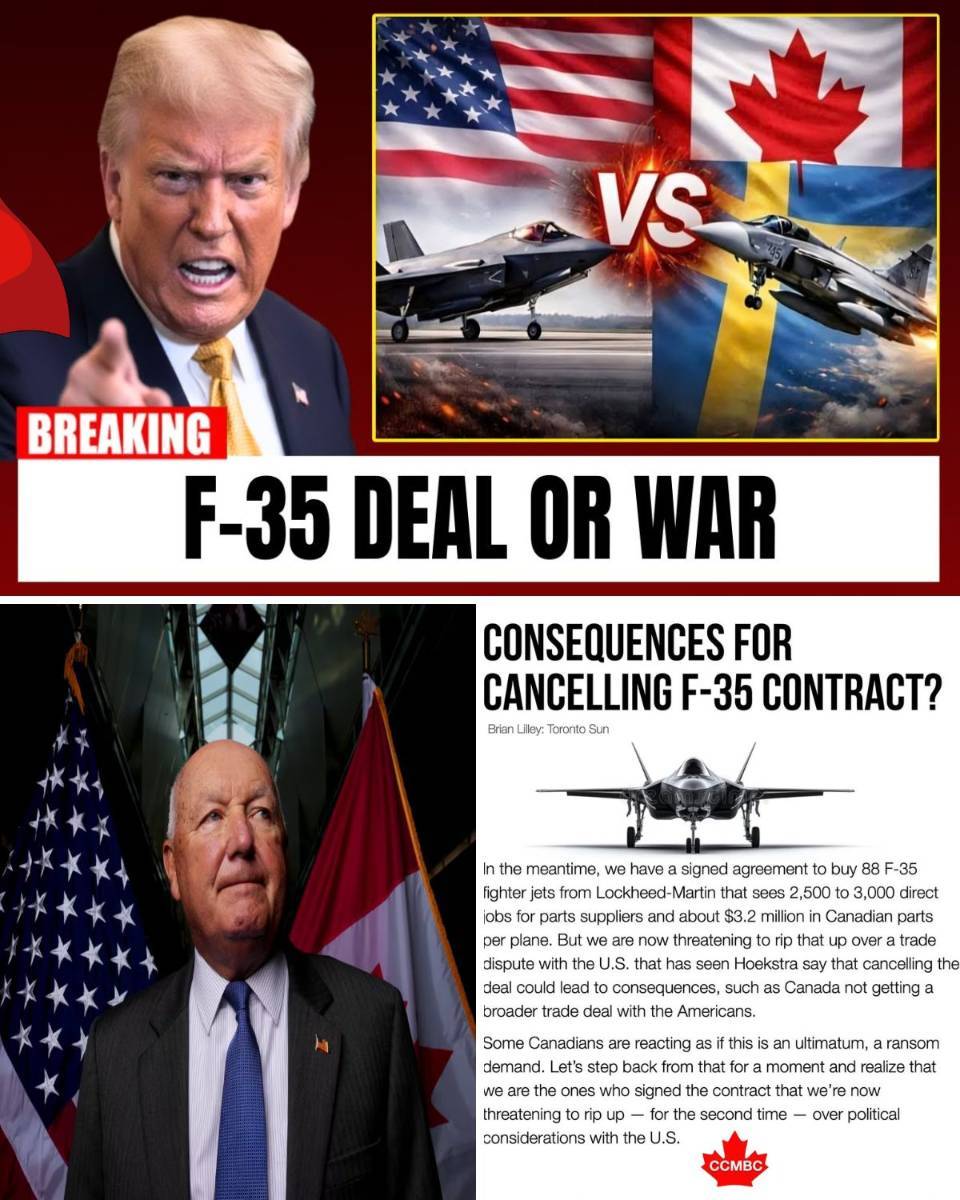

A diplomatic crisis is brewing between Canada and the United States as U.S. Ambassador Pete Hoekstra escalates pressure over Canada’s potential withdrawal from the F-35 jet deal. Prime Minister Mark Carney faces a pivotal decision amid accusations of diplomatic blackmail and an enticing alternative from Sweden’s Saab, which promises autonomy and jobs.
 In a striking turn of events, Canada’s commitment to purchasing 16 F-35 fighter jets hangs in the balance. Prime Minister Carney is now weighing the implications of this defense deal, which many Canadians view as a step toward compromising their sovereignty. The stakes are high, as the U.S. response to Carney’s contemplation has been anything but diplomatic.
At the Munich Security Conference, Ambassador Hoekstra issued a stark warning: if Canada backs out of the F-35 program, future trade agreements with the U.S. could be jeopardized. This aggressive stance has been interpreted by many as an attempt to bully Canada into submission, raising eyebrows and igniting fierce debate across the nation.
Meanwhile, Sweden has entered the fray with a compelling alternative. The Swedish royal couple, accompanied by Saab executives, presented a proposal centered around the Gripen E fighter jet. Unlike the F-35, this offer includes full technology transfer and promises to establish a domestic assembly line, potentially creating up to 10,000 Canadian jobs.
 The contrast between the two proposals is stark. With the F-35, Canada remains a mere buyer, beholden to U.S. control over software and maintenance. In contrast, the Gripen proposal empowers Canada to become a partner in defense production, fostering independence and self-sufficiency in military capabilities.
Concerns about the F-35’s reliability have also surfaced. U.S. Senate hearings revealed that many F-35s are frequently grounded, with maintenance costs spiraling out of control. The aircraft’s operational readiness has fallen short of promises, which raises serious questions about its viability as a long-term investment for Canada.
Moreover, the F-35’s software and systems remain under U.S. control, meaning Canada would be unable to upgrade or modify its fleet without American approval. This dependency creates a precarious situation for Canada, especially in light of unpredictable U.S. leadership, which could jeopardize Canada’s defense capabilities at a moment’s notice.
 Retired military officials, including former F-35 proponents, have begun to voice their concerns. Their shift in perspective underscores the growing unease about the implications of Canada’s reliance on U.S. technology. The narrative is shifting from one of partnership to one of vulnerability, as Canadians grapple with the implications of their defense choices.
Denmark’s recent experience serves as a cautionary tale. Lawmakers were blindsided when the U.S. transferred parts from Denmark’s F-35s to Israel without prior consultation. This incident highlights the risks of surrendering control over national defense assets to a foreign power, a fate that Canada must now consider.
 In contrast, Sweden’s Gripen proposal not only offers advanced aircraft but also the promise of true sovereignty. By establishing a local manufacturing capability, Canada would gain the ability to maintain and operate its fleet independently, free from external pressures and restrictions.
As the debate intensifies, the question remains: will Canada choose to accept U.S. pressure and commit to the F-35, or will it seize the opportunity presented by Sweden to build a more autonomous defense strategy? Prime Minister Carney’s decision will shape the future of Canada’s national security and its relationship with its southern neighbor.
The clock is ticking, and the stakes have never been higher. Canadians must now confront the reality of their choices: a path of dependence or one that fosters independence and control over their own defense. The implications of this decision will resonate for generations to come.