A 2,500-year-old mass grave in central Israel is forcing archaeologists and biblical scholars to confront a harrowing reality that may fundamentally reshape our understanding of ancient life and scripture. The discovery, unearthed at the site of Tel Azekah in the Judean Lowlands, has yielded the remains of dozens of infants and very young children, challenging long-held assumptions about the world described in the Old Testament.
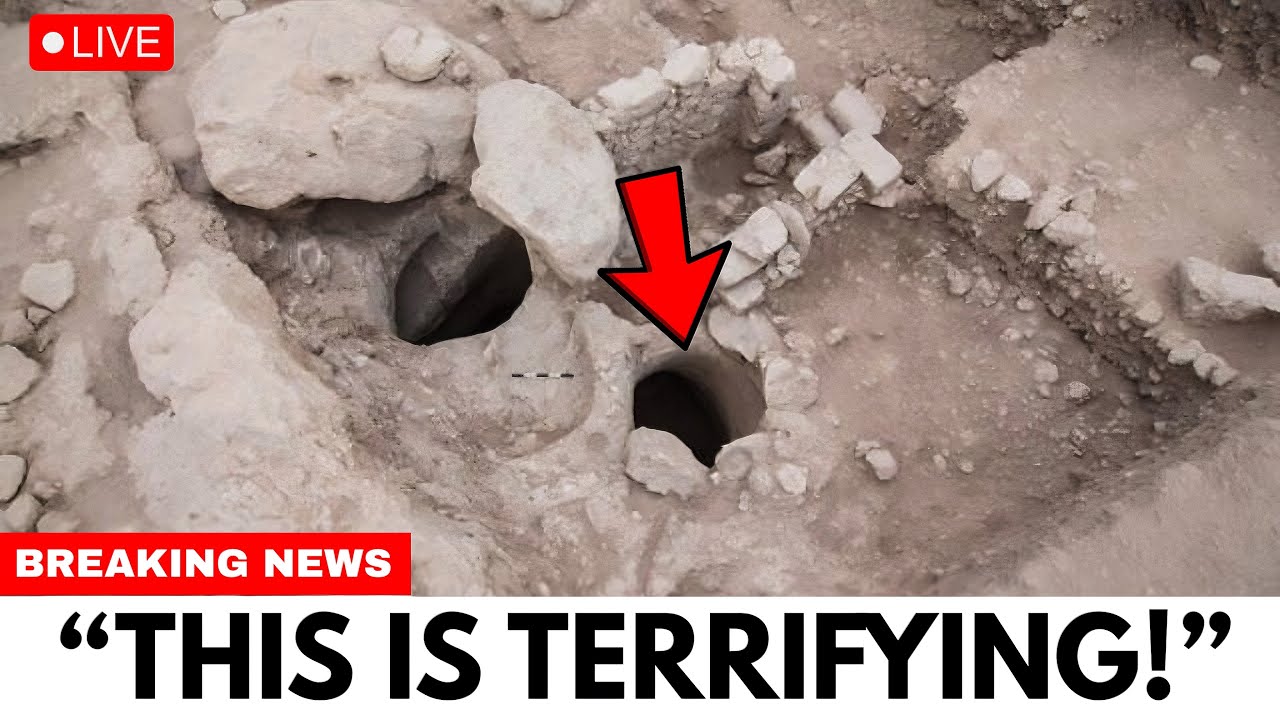
The excavation, led by Professor Oded Lipschits of Tel Aviv University, began as a routine archaeological dig aimed at uncovering layers of ancient civilization. For years, the team found pottery, tools, and architectural remnants that painted a predictable picture of life in this historically significant region. But in 2013, as they delved deeper into an ancient cistern, they encountered something that left even seasoned researchers stunned.
At the lowest levels of the cistern, the team found what they expected: fragments of pottery used for drawing water. But as they moved upward through the layers, they began to uncover hundreds of small, fragile bones. The discovery was so unexpected that it took years of careful analysis before the full scope of the find became clear.
The remains represent at least 68 individuals, with estimates reaching as high as 89. Nearly 90 percent of these were children under the age of five, and approximately 70 percent were under the age of two. This was not a single catastrophic event, but a pattern of death that stretched across nearly a century, from the 6th to the 5th centuries BCE, during the early Persian period.
The site of Tel Azekah is mentioned in the Bible as the battlefield where David faced the giant Goliath. This connection has sparked intense debate among scholars about whether the discovery validates or complicates biblical narratives. The location is sacred ground for historians and believers alike, making the find all the more significant.
Professor Lipschits described the moment of discovery as deeply unsettling. The bones were scattered, delicate, and unusually small, requiring extraordinary care in documentation and preservation. Every fragment was recorded, every inch of the site mapped, yet the meaning of the find remained elusive for years.
Detailed study revealed that these were not victims of violence or disease. There were no clear signs of trauma, no evidence of epidemics etched into the skeletons. Instead, the pattern suggested something more insidious: a slow, persistent tragedy woven into the fabric of everyday life in the ancient world.
In ancient times, child mortality was devastatingly high. It was not uncommon for four or five out of seven children to die before reaching the age of four. Illnesses we now consider minor, such as infections, fevers, or malnutrition, could end a life before it truly began. This context is crucial for understanding the burial practices revealed at Tel Azekah.
The Bible itself offers subtle insights into this worldview. In the book of Samuel, Hannah prayed desperately for a child and did not dedicate her son Samuel to the temple until he was weaned. As it is written in 1 Samuel chapter 1 verse 22, I will not go up until the child is weaned, and then I will take him that he may appear before the Lord.

Similarly, in Genesis chapter 21 verse 8, Abraham held a great feast when his son Isaac was weaned, marking a significant transition in the child’s life. These passages suggest that survival past early infancy was not just biological but symbolic, marking entry into recognized personhood within the community.
One of the most unsettling questions surrounding the discovery was whether these children were victims of ritual sacrifice. Such practices did exist in certain ancient cultures, but the evidence at Tel Azekah strongly argues against this interpretation.
In known cases of child sacrifice, remains are often burned and placed in ceremonial containers. Here, the bodies showed no signs of burning. There were no ritual artifacts suggesting sacrificial practices. Instead, the remains appear to have been placed, or possibly dropped, into the cistern over time.
This points to a different explanation: a communal method of handling infant death in a society where such tragedies were tragically common. The structure itself tells part of the story. Originally, the cistern served as a vital water source, likely used for centuries.
At some point, it fell out of use. Layers of debris and soil indicate a period of abandonment before it was repurposed. Over the next hundred years, it became a place where the smallest and most vulnerable members of society were laid to rest, not in individual graves, but together in silence.
Eventually, during the Hellenistic period, the site was sealed, preserving its contents for over two millennia. Artifacts found alongside the remains, including pottery, tools, and everyday objects, confirm that the people of Tel Azekah during this period were part of a Judean community.
This was the era following the destruction of Jerusalem in 586 BCE, a time often associated with exile. Yet archaeological evidence suggests that many Judeans remained in the land, continuing their lives amidst political upheaval. This discovery offers a glimpse into the resilience of a people navigating loss, survival, and identity in a challenging era.
The implications for biblical scholarship are profound. The mass grave does not prove or disprove specific biblical events, but it provides a tangible context for the world in which those stories were set. It forces readers to confront the harsh realities that shaped the lives of the people described in scripture.
Today, researchers are turning to advanced DNA analysis to uncover even more details. By examining genetic material from the remains, scientists hope to determine relationships between the individuals, their origins, and even aspects of their health. Such technology was unimaginable when these children were laid to rest.
Yet now, thousands of years later, it may give them a voice. The DNA analysis could reveal whether the children were related, whether they suffered from specific genetic conditions, and what their diet and environment were like. This information could paint an even more detailed picture of life in ancient Judea.

The discovery challenges modern assumptions about ancient life. It forces us to confront the realities of survival in a world without modern medicine. And it highlights the complex intersection between culture, faith, and human emotion that defined the lives of these ancient people.
Most importantly, it reminds us that behind every bone, every fragment, every layer of earth, there was a life, however brief, touched by love, loss, and memory. As it is written in Ecclesiastes chapter 3 verse 20, all go unto one place. All are of the dust and all turn to dust again.
The mass grave at Tel Azekah is not the end of a story. It is the beginning of one. A beginning that invites archaeologists, historians, and believers alike to look deeper, to ask harder questions, to seek understanding not just in grand events, but in the quiet, often overlooked details of human existence.
Professor Lipschits emphasized that the discovery took time, not just for analysis, but for courage to confront what they had found. The emotional weight of the find cannot be overstated. These were not anonymous remains, but the bodies of children who were loved and mourned.
The biblical connection adds another layer of significance. Tel Azekah is mentioned in the book of Samuel as the site where the Philistines camped before the battle with David and Goliath. The discovery of a mass grave of children at this location raises questions about the nature of life and death in biblical times.
Some scholars argue that the find validates the Bible’s depiction of a harsh and often brutal world. Others caution against drawing direct connections between archaeological evidence and specific biblical narratives. The truth, as always, lies somewhere in between.
What is clear is that the people of Tel Azekah lived in a world where child mortality was a constant presence. The Bible reflects this reality in its stories of mourning and loss. The book of Jeremiah, for example, describes Rachel weeping for her children, refusing to be comforted because they are no more.
This passage takes on new meaning in light of the discovery at Tel Azekah. The grief of ancient parents was no less real than our own. The mass grave is a testament to that grief, a silent monument to lives cut short by the harsh realities of the ancient world.
The excavation has also shed light on the broader historical context of the region. The early Persian period was a time of transition and upheaval. The Babylonian exile had ended, but the return to the land was fraught with challenges. Communities like Tel Azekah were rebuilding their lives from the ashes of destruction.
The discovery of the mass grave suggests that even in the midst of this rebuilding, death was a constant companion. The children buried in the cistern were part of a community struggling to survive. Their deaths were not anomalies but part of the fabric of daily life.
This perspective challenges modern readers to reconsider their understanding of the Bible. The stories of faith, courage, and divine intervention that fill its pages were written by people who lived in a world where death was never far away. The hope expressed in scripture was not naive optimism but a hard-won faith born of suffering.
The mass grave at Tel Azekah is a reminder of that suffering. It is also a reminder of the resilience of the human spirit. The people who buried their children in that cistern did not stop living. They continued to farm, to build, to worship, and to hope.
The discovery has sparked a new wave of interest in biblical archaeology. Researchers from around the world are eager to study the remains and the artifacts found alongside them. The hope is that further analysis will reveal even more about the lives and deaths of these ancient children.
For now, the mass grave at Tel Azekah stands as a powerful testament to the fragility of life in the ancient world. It is a discovery that challenges our assumptions, deepens our understanding, and reminds us of the common humanity that binds us across the millennia.
As the DNA analysis continues and more details emerge, the story of Tel Azekah will continue to unfold. It is a story that connects us to the past in ways that are both disturbing and profound. And it is a story that invites us to look at the Bible with new eyes, seeing not just the grand narratives of kings and battles, but the quiet, often overlooked stories of the people who lived and died in the shadow of those events.
The mass grave at Tel Azekah is not just an archaeological find. It is a window into a world that shaped the foundations of Western civilization. It is a reminder that the past is never truly past, and that the voices of the dead can still speak to us across the centuries.
In the end, the discovery raises more questions than it answers. But that is the nature of true scholarship. It is not about finding definitive answers, but about asking better questions. The mass grave at Tel Azekah forces us to ask those questions, to confront the uncomfortable truths of our shared history, and to seek understanding in the face of mystery.
As the sun sets over the Judean Lowlands, the site of Tel Azekah stands silent. The bones of the children rest in the earth, their story finally being told. It is a story of loss and love, of faith and doubt, of life and death. And it is a story that will continue to resonate for generations to come.