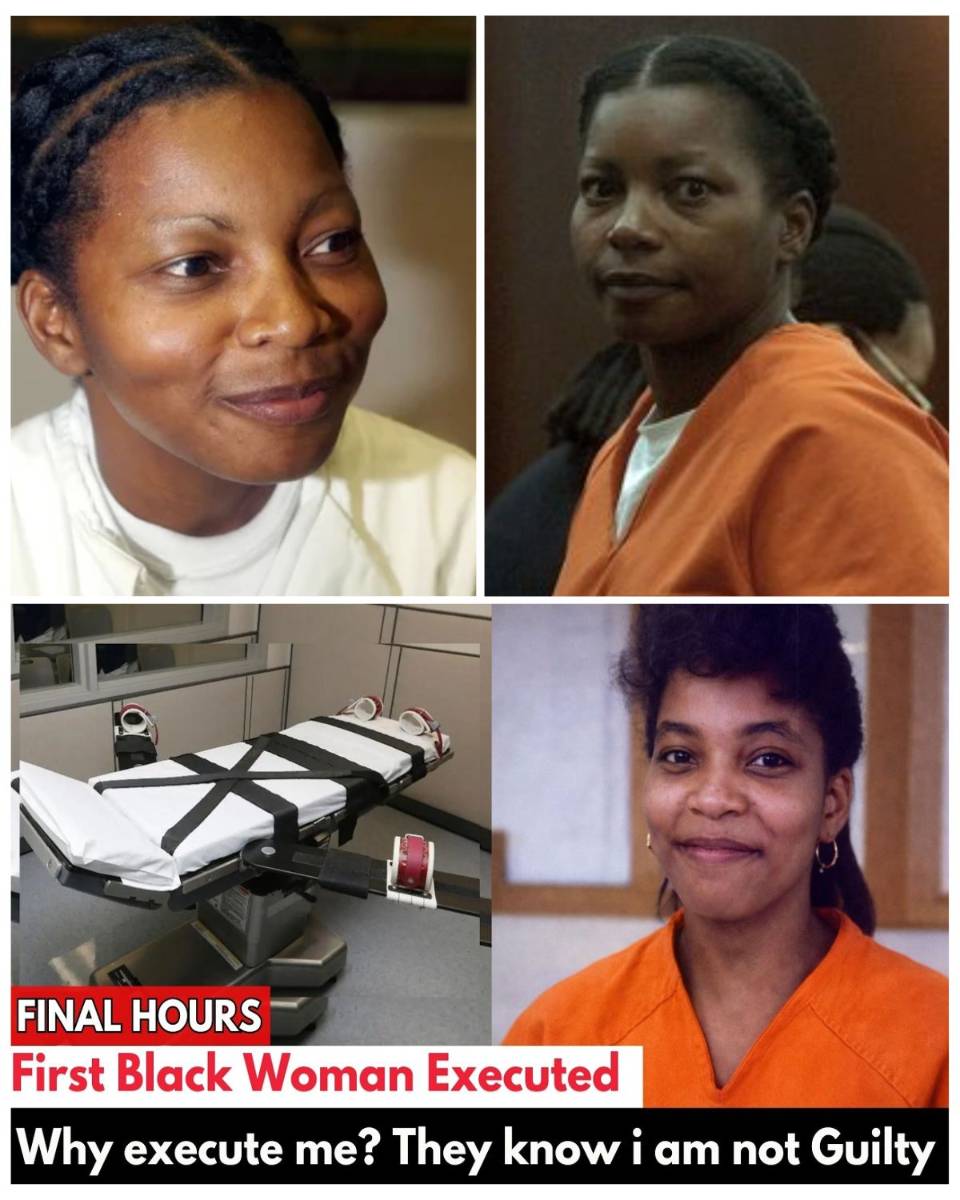
HUNTSVILLE, Texas – The state of Texas executed Frances Elaine Newton on Wednesday evening, making her the first Black woman put to death in the state since the Civil War, despite desperate pleas from the family of the victims she was convicted of murdering and mounting questions about the evidence that sent her to death row. Newton, 40, was pronounced dead at 6:17 p.m. inside the Huntsville Unit after receiving a lethal injection. She had been convicted of the 1987 murders of her husband, Adrian Newton, 23, her 7-year-old son, Alton, and her 21-month-old daughter, Farah, inside their Houston apartment.
 The execution proceeded after the Texas Board of Pardons and Paroles voted 7-0 against recommending clemency, and after Governor Rick Perry declined to intervene. The United States Supreme Court rejected two emergency petitions filed just hours before the scheduled execution. Newton’s final words were a quiet refusal to speak. She shook her head when asked if she had a last statement, then turned toward her parents and sisters in the witness room, mouthing words that could not be heard through the glass.
The case had drawn international attention and deep scrutiny over the quality of Newton’s legal representation and the reliability of forensic evidence used to convict her. Her trial attorney, Ron Mock, had never won a murder case and had been removed from court-appointed capital cases by 2001. He admitted in open court before the trial began that he had not spoken to a single prosecution witness, had not subpoenaed any defense witnesses, and had not investigated Newton’s claim that a drug dealer named Charlie, to whom her husband owed $1,500, was responsible for the killings.
The judge who removed Mock from the case refused to delay the trial to allow a new attorney time to prepare, leaving Newton represented by the same lawyer whose incompetence had just been acknowledged in court. The jury convicted her in 1988 and sentenced her to death.

In 2003, an independent audit of the Houston Police Department Crime Laboratory found systemic failures in ballistics testing and chemical analysis, the very disciplines that produced the key evidence against Newton. The lab had operated for years without proper oversight. The gun found in Alton’s knapsack was matched to the bullets recovered from all three victims by that lab. Nitrate residue consistent with gunpowder was found on Newton’s skirt, also by that lab.
Newton’s attorneys sought retesting. The skirt had been contaminated by being stored near the victims’ clothing for 17 years, and the original residue had been consumed in the initial test. An independent ballistics expert confirmed the gun match, but the defense argued that a second firearm had been present at the scene and never disclosed. In a recorded interview with a Dutch documentary crew, Harris County Assistant District Attorney Roe Wilson appeared to acknowledge the existence of a second gun, a claim prosecutors later disputed.
Adrian Newton’s own family begged the state to spare Frances’s life. Tom Lewis, Adrian’s brother, wrote a letter stating that the family opposed the death penalty and that if Frances had committed the crime, she should live with it, not die for it. Adrian’s parents also asked the board to stop the execution. The board voted unanimously to let it proceed.

Newton spent 17 and a half years on death row at the Mountain View Unit in Gatesville. She maintained her innocence from the night she called 911 until her final moments. She said she had asked her husband’s brother, Sterling, to leave the apartment so she and Adrian could talk. She left herself, drove to her cousin’s house, then returned to find the bodies. She said she removed the gun from the scene because she was afraid.
The execution was the third of a woman in Texas since capital punishment resumed in 1982, following Carla Faye Tucker and Betty Lou Beets. Newton was the first Black woman executed in the state since the Civil War. Her family watched through the glass as the drugs took effect. Her mother wiped a tear. Her sister pressed herself against the back wall. Outside, the September evening settled over Huntsville, and the question of whether the state had executed an innocent woman remained unanswered.