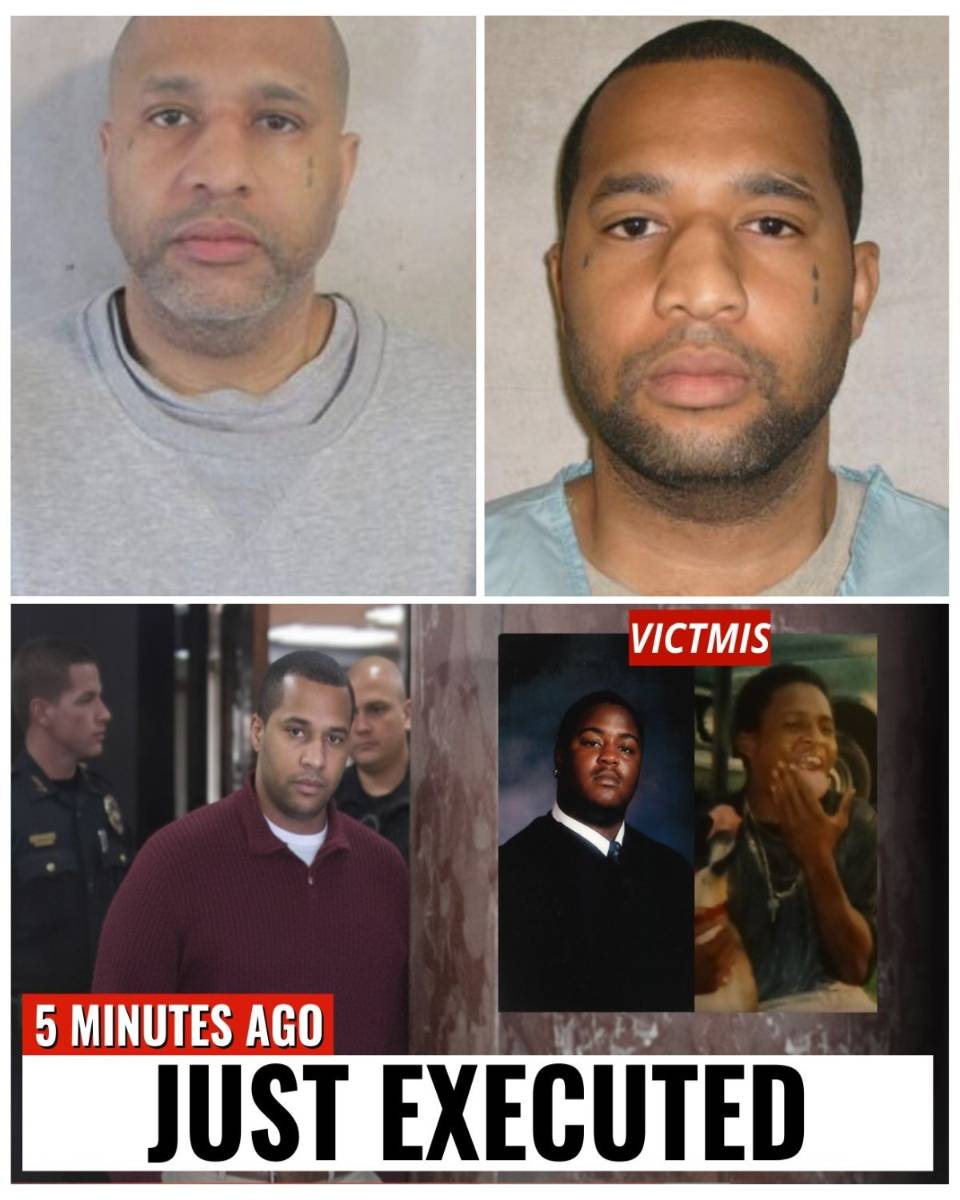
In a stark and final act of state justice, Oklahoma executed Kendrick Antonio Simpson by lethal injection on February 12, 2026, ending his 19 years on death row for the brutal 2006 murders of two men. Pronounced dead at 10:33 a.m. at the Oklahoma State Penitentiary, this execution closes a chapter marred by violence and legal battles.
 Simpson’s story began in the shadows of New Orleans’ Ninth Ward, a neighborhood gripped by poverty and crime. Born in 1980, he was immersed in a world of drugs and gang activity from a young age, culminating in a violent home invasion at 16 where he shot a store owner at point-blank range. The victim survived, but it foreshadowed the path ahead.
Years later, in 2004, Simpson survived a harrowing shooting that left him with permanent injuries, including damage to his head, abdomen, and leg. He endured 16 surgeries and a coma, only to face Hurricane Katrina in 2005, which destroyed his home and left him stranded for days without aid. Seeking refuge, he relocated to Oklahoma City as a displaced survivor.
The night of January 15, 2006, ignited the tragedy that sealed his fate. Accompanied by friends Jonathan Dalton and Latango Robertson, Simpson attended a private party before heading to Fritz, a hip-hop nightclub in northwest Oklahoma City. Tensions flared when a comment about his Chicago Cubs cap, linked to a rival gang, sparked confrontation.
As the night escalated, Simpson clashed with London Johnson, Anthony Jones, and Glenn Palmer inside the club. After being punched during a heated exchange, he stormed out, seething with rage. The group followed some women to a nearby 7-Eleven, where they spotted Palmer’s car pulling in, reigniting the fury.
In a deadly pursuit, Simpson demanded to follow Palmer’s vehicle onto Interstate 44. From the passenger seat of Dalton’s Monte Carlo, he grabbed an AK-style rifle and opened fire as they pulled alongside. Bullets ripped through the other car, striking Palmer multiple times and killing Jones instantly with shots to the head and torso.

Palmer, though initially conscious and gasping for breath, succumbed to his wounds as blood filled his chest. Johnson, in the back seat, desperately attempted CPR, but it was futile. The victims were pronounced dead at the scene, their lives cut short in a burst of gunfire born from street vendettas.
Authorities swiftly arrested Simpson, who initially denied involvement despite evidence mounting against him. Dalton and Robertson, charged as accomplices, turned state’s witnesses, detailing the events that led to the killings. In 2007, Simpson’s trial in Oklahoma County District Court ended in conviction on two counts of first-degree murder and one for shooting with intent to 𝓀𝒾𝓁𝓁.
The jury’s verdict sent him to death row, where he spent nearly two decades filing appeals, all ultimately denied. Despite his grim circumstances, Simpson pursued redemption, earning his GED and publishing a book of poems and essays that reflected on his life and regrets. His words echoed a plea for mercy amid the shadows of his past.
As the execution date approached, set by court order on November 19, 2025, Simpson’s final hours unfolded with quiet intensity. Waking at 5 a.m. on February 12, he met with his spiritual adviser and shared emotional goodbyes with his four children and granddaughter until 8:30 a.m. His last meal was a bacon cheeseburger, onion rings, and a strawberry milkshake—a simple contrast to the gravity ahead.

At 9:30 a.m., he entered the execution chamber, strapped to a gurney as medical staff prepared the three-𝒹𝓇𝓊𝑔 protocol: midazolam for sedation, vecuronium bromide to halt breathing, and potassium chloride to stop the heart. Witnesses reported Simpson showing signs of distress, with irregular breathing and movements in the initial minutes before he lost consciousness.
By 10:33 a.m., it was over, with family members of the victims, including Anthony Jones’s sister and Glenn Palmer’s relatives, present to witness the closure. Simpson’s death at age 45 raises profound questions about justice, retribution, and the cycles of violence that define such cases. This execution underscores the unyielding march of the legal system in America.
Yet, the events leading to this moment highlight deeper societal wounds. Simpson’s life, from the streets of New Orleans to the penitentiary in McAlester, Oklahoma, illustrates how poverty, trauma, and gang culture can spiral into irreversible tragedy. His story is not isolated; it echoes in communities nationwide, where unresolved conflicts often explode into loss.
Legal experts note that Simpson’s case exemplifies the complexities of capital punishment, with appeals processes stretching years and debates over rehabilitation versus retribution. While some view his execution as a necessary end to a heinous crime, others question if it truly serves as deterrence or healing for the victims’ families.

The double murder at the heart of this saga stemmed from a petty dispute, yet it claimed two lives and altered countless others. Palmer and Jones, ordinary individuals 𝒄𝒂𝓊𝓰𝒉𝓉 in the crossfire, left behind grieving loved ones who now face the permanence of their absence. Jones’s sister, Telasha, spoke of the enduring pain, emphasizing the human cost beyond the headlines.
Simpson’s final words, as recounted in records, expressed profound sorrow and a hope for forgiveness, adding a layer of humanity to his otherwise infamous legacy. This execution, carried out with clinical precision, serves as a reminder of the state’s power and the fragility of life in the balance of justice.
As news of this event spreads, it prompts urgent reflection on criminal justice reforms, the impact of systemic inequalities, and the moral implications of state-sanctioned death. Oklahoma’s action today marks not just an end, but a call for society to address the roots of such violence before more lives are lost.
In the fast-paced world of breaking news, stories like Simpson’s demand immediate attention, urging us to confront the realities of crime and punishment. With families shattered and communities scarred, the pursuit of justice continues, even as the gurney falls silent. This is a moment that will resonate, compelling all to consider the price of vengeance in our shared human story.