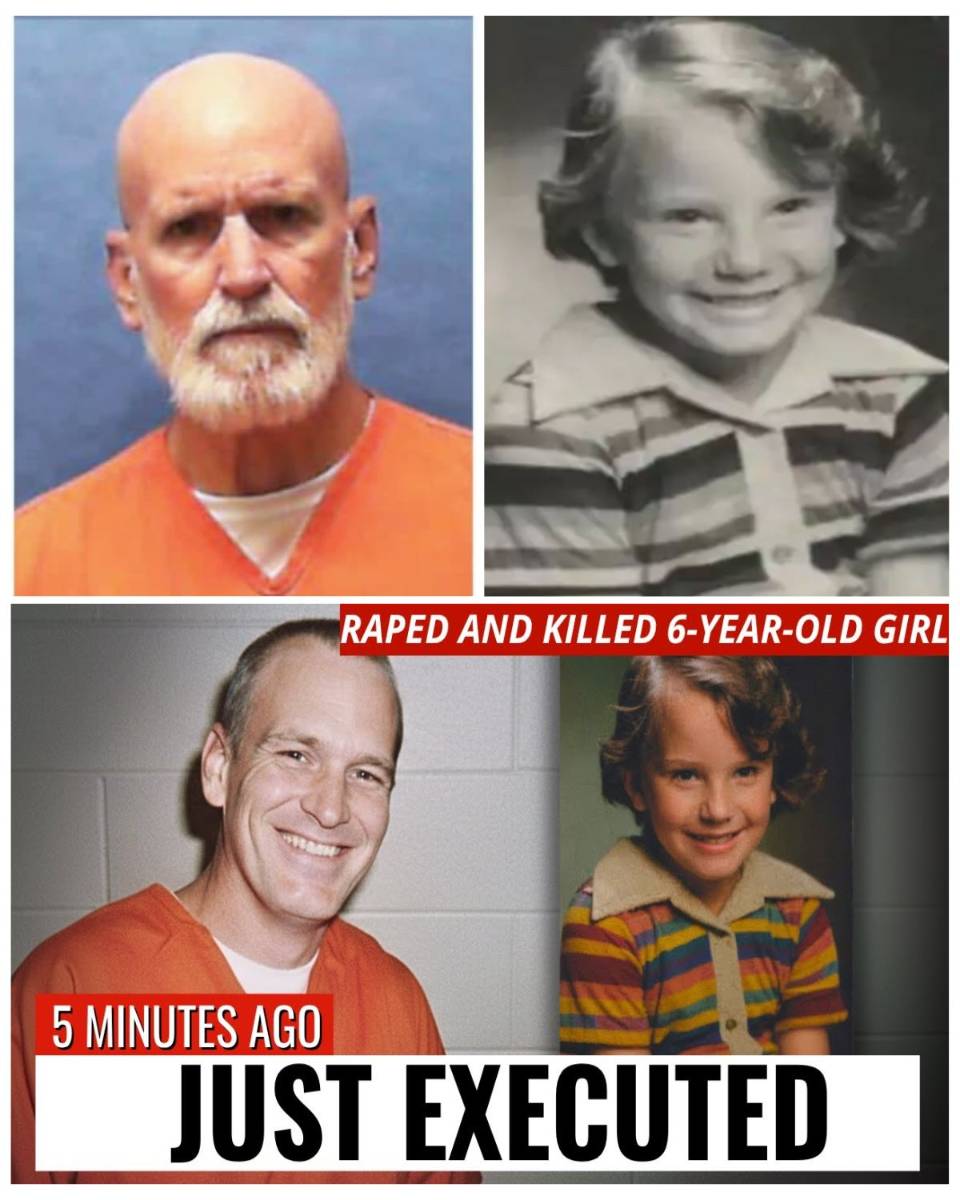
In a 𝓈𝒽𝓸𝒸𝓀𝒾𝓃𝑔 culmination of justice delayed but not denied, Florida executed Bryan Jennings late Thursday for the brutal rape and murder of 6-year-old Rebecca Kunash, ending a 46-year ordeal that gripped the nation with its horror. The lethal injection at Florida State Prison marked the final chapter for a man whose crimes in 1979 shattered a family and community forever.
 This execution, carried out with clinical precision, underscores the state’s resolve to deliver accountability for one of its most heinous acts. Jennings, once a young Marine, descended into infamy on that fateful May morning, invading the innocence of a quiet neighborhood in Merritt Island, Brevard County. He slipped through a child’s bedroom window under the cover of darkness, abducting the sleeping girl and plunging her into a nightmare from which she would never awaken.
The details of the crime remain seared in memory, a testament to Jennings’ unfathomable violence. Intoxicated and driven by dark impulses, he drove Rebecca to a remote canal, where he assaulted her with savage force, inflicting injuries that spoke of pure evil. Witnesses and evidence painted a chilling picture of the 𝒶𝓈𝓈𝒶𝓊𝓁𝓉, with Jennings’ own bruises later linking him directly to the scene.
As dawn broke on May 11, 1979, Rebecca’s parents awoke to an unimaginable void. Their daughter’s bed was empty, the window screen removed, and panic erupted in their home. A frantic search ensued, but it was too late; her body was discovered floating in the canal, the autopsy revealing the full extent of the brutality she endured.
Law enforcement moved swiftly, piecing together the puzzle with shoe prints matching Jennings’ footwear and fingerprints on the windowsill. Neighbors had spotted a suspicious figure lurking nearby, descriptions that zeroed in on the 20-year-old suspect. Hours after the discovery, Jennings was apprehended on a unrelated warrant, his wet clothes and hair a damning clue.

Under interrogation, Jennings cracked, confessing to the kidnapping and killing in a recorded statement that became the cornerstone of the prosecution’s case. Brought to trial in February 1980, he faced charges of first-degree murder, kidnapping, and burglary, with the state aggressively seeking the death penalty. The jury, confronted with overwhelming evidence, convicted him on all counts.
On May 7, 1980, a judge handed down the death sentence, alongside four life terms, sealing Jennings’ fate on death row. Yet, the wheels of justice turned slowly. For decades, appeals flooded the courts, delaying execution and making him one of Florida’s longest-serving inmates. A near-execution in 1989 was halted at the last moment by the state Supreme Court.
The case lingered in legal limbo, a reminder of the system’s complexities, until Governor Ron DeSantis signed a new death warrant in October 2025. Set for November 13, the execution proceeded as scheduled, with Jennings, now 66, meeting his end via lethal injection at 6 p.m. He offered no final words, his eyes closed, perhaps in final denial of his deeds.

Rebecca’s family, who had long advocated for closure, were absent from the proceedings; both parents had passed away years earlier, never witnessing the justice they sought. This execution closes a dark chapter, but the scars remain, prompting reflection on child protection and the long arm of the law.
Experts and advocates have weighed in, noting how this case highlights flaws in the appeals process, which stretched over 45 years. Yet, for many, it reaffirms the principle that no crime is too heinous to escape ultimate consequence. Florida’s action sends a stark message about accountability for the most vulnerable victims.
The community of Merritt Island, still haunted by the events of 1979, may find some solace in this resolution. Jennings’ story serves as a grim cautionary tale, illustrating the devastating impact of unchecked violence and the enduring pursuit of justice.

As the nation processes this news, questions arise about the death penalty’s role in modern society. Supporters argue it delivers necessary closure, while critics point to the prolonged delays and human cost. Regardless, this execution marks a pivotal moment in criminal justice history.
In the aftermath, authorities are reviewing similar cases to ensure timely resolutions, emphasizing reforms to prevent such extended waits. The memory of Rebecca Kunash endures, a symbol of innocence lost and the unyielding quest for truth.
This breaking development underscores the urgency of protecting children and holding perpetrators accountable. Florida’s decision resonates far beyond its borders, sparking nationwide conversations on crime, punishment, and healing.
The execution of Bryan Jennings brings a measure of justice to a tragedy that defined an era, reminding us all of the fragility of life and the strength of the human spirit in the face of darkness.