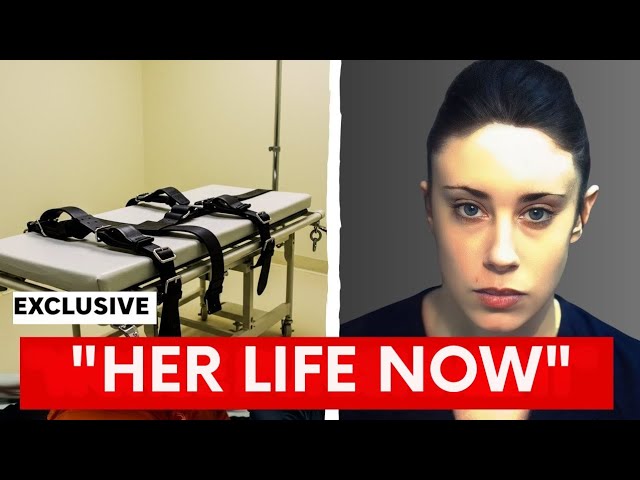
The jury’s verdict of not guilty on July 5, 2011, was supposed to mark the end of Casey Anthony’s legal ordeal, but for the 38-year-old woman now living in the shadows of South Florida, it was the beginning of a punishment that forensic psychologists describe as social death, a life sentence imposed not by a judge but by a public that refuses to forgive or forget. More than 13 years after her acquittal in the death of her two-year-old daughter, Caylee Marie Anthony, Casey Anthony exists in a state of perpetual hiding, unable to buy groceries without glancing over her shoulder, unable to use her real name to secure employment, and unable to walk into a bar without someone recognizing her face and pulling out a phone to capture her image. This is not freedom as most understand it; it is a psychological prison constructed from the collective rage of millions who decided her fate the moment the verdict was read, and it is a punishment that, according to experts, may be worse than any cell in the American penal system.
The case that captivated the nation began on June 15, 2008, when Cindy Anthony called 911 to report that her granddaughter, Caylee, had not been seen in 31 days, a period during which Casey Anthony had been photographed partying at nightclubs, entering hot body contests, and getting a tattoo that read “Bella Vita,” Italian for “beautiful life.” When confronted by her mother, Casey fabricated a story about a nanny named Zenaida Fernandez Gonzalez, who she claimed had kidnapped the child, but investigators quickly discovered the nanny did not exist, the apartment Casey described had been vacant for months, and the job she claimed to hold at Universal Studios was a complete fiction. On December 11, 2008, a utility worker found Caylee’s skeletal remains in a wooded area less than a quarter mile from the Anthony family home, the child’s body inside a laundry bag wrapped in a blanket with duct tape over the mouth area of the skull, leading to a homicide ruling by undetermined means. Casey was charged with first-degree murder, and prosecutors sought the death penalty, arguing she had suffocated Caylee with chloroform and duct tape, stored the body in her car trunk for days, and dumped the remains like garbage to free herself for a carefree life as a 22-year-old.
The trial began on May 24, 2011, and was broadcast live on Court TV, with commentator Nancy Grace labeling Casey the most hated mother in America as protesters gathered outside the courthouse demanding justice for Caylee. Prosecutors presented evidence including cadaver dogs alerting to Casey’s trunk, air samples showing chemical decomposition, and computer searches for chloroform and how to break a neck, painting her as a narcissist who saw her daughter as an obstacle to her own desires. The defense, led by attorney Jose Baez, offered an alternative narrative, claiming Caylee had drowned accidentally in the family pool and that Casey’s father, George Anthony, had discovered the body and helped cover it up, while also alleging Casey had been sexually abused since childhood, creating a pattern of lies and dysfunction. George Anthony denied all allegations, and there was no evidence to support the drowning theory, no 911 call, no attempt to revive the child, and no explanation for the duct tape or months of deception, but the defense did not need proof, only reasonable doubt.
On July 5, 2011, after less than 11 hours of deliberation, the jury returned a verdict that shocked the nation: not guilty of first-degree murder, not guilty of aggravated child abuse, not guilty of aggravated manslaughter, and guilty only of four misdemeanor counts for lying to law enforcement. The courtroom erupted as people outside screamed in anguish, one woman collapsed, and Casey showed no emotion, hugging her lawyers before sitting down as Judge Belvin Perry sentenced her to four years for the lying charges, which, with time served and good behavior, meant she had already completed nearly three years of incarceration. Twelve days later, Casey walked out of the Orange County jail at midnight, driven away in an SUV with darkened windows, legally free, but freedom would become its own death sentence as the hatred from the public was instant and overwhelming.
Death threats flooded in by the thousands, her lawyer’s office received bomb threats, and websites appeared dedicated to tracking her location, with every sighting, every rumor, and every scrap of information fueling a relentless manhunt. A bail bondsman allegedly offered $50,000 for her whereabouts, and bounty hunters claimed million-dollar rewards circulated underground, turning her freedom into a constant state of siege where she could never let her guard down. Casey went into hiding immediately, unable to return home as protesters gathered there daily, holding vigils for Caylee and hurling insults and objects at the house, while her own parents, George and Cindy Anthony, who had mortgaged their home to pay for her defense, wanted nothing to do with her. George testified during the trial that he believed Casey was responsible for Caylee’s death, Cindy said in interviews she could not forgive the lies, and Casey’s brother Lee testified but cut off all contact afterward, leaving her completely isolated from any family support.

For months, Casey vanished from public view, with paparazzi hunting her, news outlets offering bounties for photos, and private investigators tracking leads across multiple states, until photos surfaced in late 2011 showing a different woman, one who had cut and dyed her hair, wore glasses, and gained weight, looking older, haunted, and unrecognizable compared to the young mother who had been tried for murder. Court documents from civil cases revealed she lived in safe houses provided by her defense team, moving every few weeks and using aliases to avoid any public place where she might be recognized, a life of constant paranoia and vigilance. In 2012, Casey filed for bankruptcy, listing debts totaling over $792,000, including $500,000 owed to the IRS, over $145,000 in legal fees, and $68,000 to the Orange County Sheriff’s Office for investigation costs, while her assets amounted to just $1,000 in cash and a 2007 Pontiac G6 worth $3,000. She had no job, no income, and no prospects, with court filings showing she lived with Jose Baez and his wife, working briefly doing social media management for his law firm but only under complete anonymity.
Her legal troubles continued as Zenaida Fernandez Gonzalez, the real woman whose name Casey had used for the fictional nanny, sued for defamation, arguing Casey’s lies destroyed her reputation and made her a target of harassment, a case that settled in 2015 with Casey paying nothing due to her bankruptcy status. Roy Kronk, the utility worker who found Caylee’s remains, sued after the defense accused him of involvement in the child’s death, but that case was dismissed, and Texas EquuSearch, a nonprofit that spent over $100,000 searching for Caylee based on Casey’s claims the child was alive, sued to recover costs, with Casey ordered to pay $75,000, a debt she never paid. The constant legal battles meant endless depositions where Casey sat across from attorneys and cameras, answering questions about the worst moments of her life over and over, and in a 2011 deposition for the Gonzalez case, she invoked the Fifth Amendment to nearly every question, unable to even say where she lived or how she supported herself without fear of exposure.
Over the years, brief glimpses emerged of Casey trying to reclaim some semblance of normal life, such as in 2017 when photos showed her at an anti-Trump rally in West Palm Beach with her face partially covered, reportedly living in South Florida and working as a legal assistant for a private investigation firm run by Patrick McKenna, a member of her defense team. Neighbors who discovered her identity were horrified, with one telling reporters she felt physically ill knowing Casey lived nearby and another saying she would have moved if she had known, forcing Casey to relocate again to avoid the backlash. Investigative journalists who tracked her movements described a woman in a state of constant paranoia, using multiple aliases, most commonly Casey Williams, avoiding cameras, and rarely leaving her residence except at night or in disguises to minimize the risk of recognition.
Former prosecutor Jeff Ashton said in a 2018 interview that Casey would never have a normal life, explaining that the court of public opinion had delivered a verdict far harsher than anything the legal system could impose, one that was permanent and without any possibility of appeal. Dr. Wendy Walsh, a psychologist who studied the case, explained that Casey lives in what is called social death, legally alive and free but functionally erased from society, with no community, no support network, and no path forward to rebuild her life. In November 2022, Peacock released a three-part documentary titled “Casey Anthony: Where the Truth Lies,” featuring Casey’s first extended on-camera interview in over a decade, during which she maintained her innocence, claimed Caylee drowned accidentally in the family pool, and blamed her father George for covering it up and sexually abusing her throughout childhood. The public reaction was brutal, with reviewers calling the documentary tone-deaf, self-serving, and insulting to Caylee’s memory, and social media exploded with renewed hatred that reignited every ounce of vitriol from 11 years earlier, as George Anthony released a statement calling Casey’s accusations completely false and the same lies from the trial.
As of 2025, Casey Anthony is 38 years old, living somewhere in South Florida, reportedly still working for Patrick McKenna’s investigation firm under aliases and avoiding public settings where she might be recognized, with sources saying she has virtually no social life and no long-term relationships. Any man who discovers her identity distances himself once the public finds out, and she has been seen occasionally in bars or restaurants, always keeping a low profile and always leaving if she senses recognition, with one witness claiming to see her at a Fort Lauderdale bar in 2023 describing her as paranoid and constantly looking around like she expected someone to attack at any moment. She has no relationship with her parents, no contact with her brother, and her family has completely severed ties, while she reportedly suffers from severe anxiety and depression, conditions intensified by the isolation and constant vigilance required to navigate daily life.

Dr. Paul Mattiuzzi, a forensic psychologist, explained that what Casey experiences is a unique form of psychological torture, where she has freedom of movement but none of the psychological benefits of true freedom, as every interaction carries risk, every new person could recognize her, expose her, or threaten her, and every online presence must be carefully hidden. He described her existence as living in a panopticon of public surveillance, always being watched, always being judged, and always one slip away from exposure and renewed harassment, a state that damages more than physical incarceration. Cameron Driggers, a retired FBI profiler, noted that in prison, there is structure, routine, and the possibility of rehabilitation or release, but Casey has none of that, frozen in 2011 as the woman who walked out of that courthouse, forever condemned by public opinion.
Dr. Judy Kuransky, a clinical psychologist, observed that Casey likely experiences complex PTSD from the trial, media coverage, and years of hiding, explaining that the human nervous system is not designed to sustain this level of hypervigilance indefinitely, and the long-term effects could be devastating. Casey remains financially destitute despite the 2022 documentary for which she was reportedly paid an undisclosed amount, but she has no substantial income, cannot use her real name for employment, cannot build credit, and cannot establish financial stability, still owing hundreds of thousands in judgments she will almost certainly never pay. Any attempt to monetize her story meets immediate backlash, as when news broke she had been paid for the Peacock documentary, boycotts were organized, advertisers were pressured, and the network faced intense criticism for profiting off a child’s death, leaving Casey in permanent financial precarity dependent on a small circle of supporters and employers willing to risk the backlash of associating with her.
Through it all, the central question remains what really happened to Caylee Anthony, as Casey has never provided a consistent, believable account, with her trial defense claiming accidental drowning and her documentary repeating that claim while blaming her father, but no evidence supports it. The prosecution’s narrative that Casey murdered Caylee to free herself from parental responsibility remains the most widely accepted explanation, even if it could not be proven beyond reasonable doubt in court, and Jeff Ashton, the former prosecutor, said in interviews he still believes Casey is guilty, calling the evidence circumstantial but overwhelming and the jury’s verdict a mistake. Marcia Clark, the prosecutor from the OJ Simpson trial, called the Casey Anthony verdict one of the most shocking miscarriages of justice in modern American history, but legally, Casey Anthony is innocent, tried and acquitted, and under the Constitution, she cannot be tried again, yet in the court of public opinion, the verdict was delivered the moment Caylee’s remains were found.
This brings us to a deeply uncomfortable question: is what Casey Anthony experiences justice, or is it something darker, as she was acquitted by a legal system designed to protect the innocent even if it means occasionally freeing the guilty, but the public rejected that verdict and imposed their own sentence with no end date, no possibility of appeal, and no mercy. Casey’s supporters, few as they are, argue this is mob justice, pointing out she was never convicted, the drowning theory was never disproven, and the rush to condemn represents everything dangerous about trial by media, while critics counter that her lies, her behavior after Caylee’s disappearance, and her complete lack of accountability demonstrate guilt the legal system simply could not prove. Dr. Maurice Godwin, a criminal psychologist, said there is a reason Casey Anthony’s case provoked such visceral hatred, as it violated the most fundamental social contract, a mother’s duty to protect her child, and whether or not she legally murdered Caylee, her actions after the child’s death constituted a moral crime society could not forgive.
Casey Anthony’s story reveals something larger about American society, the way we consume tragedy, the way we demand vengeance when the legal system does not deliver the outcomes we expect, and the way social media and 24-hour news cycles have created a new form of permanent punishment existing entirely outside the justice system. Whether she is guilty or innocent, whether her suffering is deserved or excessive, her existence represents a cautionary tale about the power of public opinion to impose sentences no court could ever mandate, and her life after trial is actually worse than prison for several reasons. Prisoners have an end date, the possibility of parole, rehabilitation, and eventually re-entering society, but Casey Anthony has none of that, as she will never escape the surveillance that forces her to live under aliases and move every few months to avoid harassment.
Prisoners have structure, waking up, following a routine, and existing within a defined system, but Casey has chaos, the constant need to hide, to lie about who she is, and to live in fear of recognition, with no career, no family, no relationships, and no community, only endless paranoia and isolation. Prisoners earn forgiveness through good behavior, rehabilitation programs, and demonstrating change, eventually being seen as something other than their worst act, but Casey Anthony will never be forgiven, as every day for the rest of her life she will be that mom, the woman who partied while her daughter was dead, the most hated mother in America. No amount of time will change that, no act of contrition will erase it, and no explanation will satisfy the millions who believe they know exactly what she did, leaving her hunted, hated, and hollow in a silent, invisible, absolutely inescapable sentence that continues today, tomorrow, and every day after.
Caylee Marie Anthony would have been 19 years old this year, and her case remains officially unsolved, with a memorial standing near the location where her remains were found, covered in flowers, teddy bears, and messages from strangers who never knew her but will never forget her. The question of whether Casey Anthony’s life after acquittal is justice or something far darker remains unanswered, as the public continues to debate whether they have the right to impose a social death sentence when the legal system sets someone free, a conversation that forces us to confront the limits of justice in a society driven by outrage and the search for closure.