The set of The Chosen season 5 became an unexpected sanctuary of raw emotion, where actors portraying the Last Supper and the Triumphal Entry found themselves weeping uncontrollably, and hardened crew members walked away questioning the very nature of reality, as the line between performance and profound spiritual experience dissolved in the dust of ancient Jerusalem. What began as a meticulously planned production day, with lights calibrated and cameras positioned for the recreation of the most sacred moments in Christian history, quickly spiraled into something no script could have predicted. The atmosphere on set shifted from professional detachment to a palpable, collective vulnerability that left even the most seasoned technicians struggling to maintain composure. Jonathan Roumie, the actor embodying Jesus, knew the weight of this responsibility long before filming commenced, understanding that millions of believers would not view this as mere entertainment but as the foundation of their faith. He prepared not through method acting techniques alone, but through prayer and spiritual direction, seeking guidance from a director who remained close throughout the production. Roumie later described the experience as less about stepping into a role and more about carrying a historical and spiritual burden that extended far beyond television storytelling, believing that if the scene felt hollow or theatrical, viewers would immediately sense the emptiness. His goal was not to imitate a familiar image of Christ but to communicate the emotional and spiritual significance of a moment believed by Christians to represent the beginning of a new covenant between God and humanity. That sense of responsibility gradually infected the entire cast, transforming the set into a space where ancient history and modern hearts collided with unexpected force.
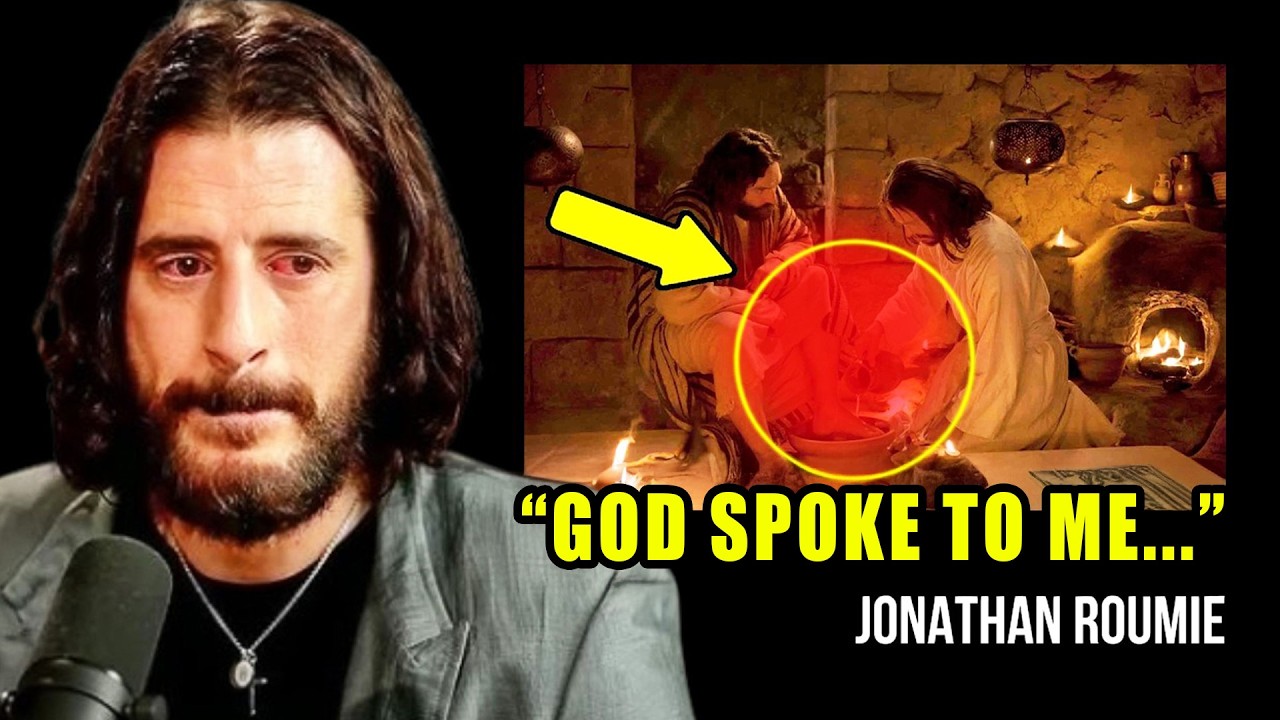
Before filming officially began, the production team organized something unprecedented for a television series, inviting the actors to participate in a traditional Passover meal. The gathering was guided by Rabbi Jason Sobel and held inside the synagogue set constructed for the series, transforming what could have been a simple cultural demonstration into a profound emotional journey. The actors were taught the historical meaning behind each element of the ritual, learning proper seating positions around the table, practicing the use of correct hands for ceremonial actions, and studying the blessings spoken during the meal. At first, some approached the experience as research, taking notes and asking technical questions, trying to understand how their characters would behave historically. But as the meal progressed, many began to realize that the ritual carried emotional weight they had not anticipated, connecting them to the ancient story of the Exodus when Israelites marked their doorposts with sacrificial blood so death would pass over their homes. For actors preparing to portray followers of Jesus during the Last Supper, this symbolism created an emotional connection to the events they were about to film, helping them understand how early followers may have interpreted his words and actions during that final meal. Dallas Jenkins, the creator and director, later reflected that he had grown up hearing biblical stories but had never fully grasped how Old Testament traditions connect to the events surrounding Jesus crucifixion. Watching the cast experience the Passover meal helped him recognize how those ancient traditions form a narrative that Christians believe points toward Jesus sacrifice, making the upcoming filming feel more personal for everyone involved.
When filming finally began, the emotional atmosphere on set felt noticeably different, with the Last Supper scenes shot over six consecutive days that would change everyone involved. By the second day, several actors noticed that rehearsals began to feel unnecessary, as emotional reactions that would normally require repeated takes or detailed directions started happening naturally. Noah James, who portrays Andrew, later described how he found himself reacting emotionally without planning to do so, explaining that instead of thinking about how his character should respond, he simply reacted to what he was witnessing around him. He described the experience as something internal awakening rather than something externally directed, a phenomenon that left him and his colleagues stunned. Between filming takes, the cast often gathered together quietly, some embracing, others sitting in silence, with tears appearing without warning. From a distance, it might have looked like physical exhaustion from long production hours, but those present recognized that something deeper was affecting the group, something that transcended the boundaries of professional performance. Elizabeth Tabish, who portrays Mary Magdalene, experienced one of the most emotionally demanding moments during these filming days, given scenes in which her character interacts with Jesus not as a distant teacher but as someone who allows himself to be cared for and served. Tabish later explained that filming those scenes required her to access emotions she had not anticipated, and by the end of one filming day, she reported being physically dehydrated from crying throughout multiple takes. She emphasized that the emotional reactions were not directed by the script alone but were generated by the environment created by the entire cast, making it difficult for anyone to remain emotionally distant from the scene.
The emotional intensity extended beyond dialogue, with small gestures like passing bread, sharing wine, or exchanging quiet glances across the table often becoming the moments that affected the actors most deeply. These silent interactions helped them imagine how followers of Jesus might have felt during what they did not yet realize would be their final meal together, creating a sense of intimacy that cameras could barely capture. As filming continued, the sense of time seemed to blur for many participants, with some actors later describing losing awareness of cameras, lighting rigs, and production schedules entirely. Their attention focused completely on the emotional relationships unfolding within the scene, as if they had been transported back two thousand years. What surprised the production team most was that these reactions were not limited to the performers, as members of the technical crew began experiencing emotional responses as well. Camera operators, sound engineers, and lighting technicians occasionally stepped away from their stations to regain composure, overwhelmed by the weight of what they were witnessing. Director Dallas Jenkins sometimes struggled to call the end of a scene because he found himself emotionally affected by what he was watching unfold through the monitor, unable to separate his professional duties from his personal response. Even individuals who did not identify as religious reportedly approached Jenkins privately after filming days to describe how the scenes had affected them, some admitting they had never experienced that type of emotional response while working on a production before. Others struggled to explain exactly why the scenes affected them so strongly, grasping for words that seemed inadequate to describe the depth of their experience. For Jenkins, these reactions reinforced his belief that the story being portrayed carries a unique emotional power that extends beyond cultural or religious boundaries, touching something universal in the human heart.
As the Last Supper filming progressed, many participants began describing the experience using language that surprised them, with words like performance and production feeling insufficient to capture what was happening. Several cast members began describing the set as a place where storytelling and personal reflection overlapped in unexpected ways, a sacred space where the boundaries between art and life dissolved. By the time filming for the Last Supper concluded, the cast and crew sensed that they had completed something far more demanding than a typical television sequence, something that had demanded their whole selves in ways they had never anticipated. Yet, the most visually dramatic scenes were still ahead, as the production prepared to recreate one of the most public and celebratory moments in the gospel narrative, the triumphal entry into Jerusalem. None of them expected that scene to affect them just as deeply, but in an entirely different way, proving that the power of this story could not be contained by any single emotional register. After the emotional intensity of filming the Last Supper, the production shifted toward a completely different type of scene, the moment Jesus enters Jerusalem while crowds welcome him with celebration and praise. On paper, the scene required logistical coordination more than emotional preparation, with hundreds of extras filling the streets and costumes, props, and crowd choreography needing careful management. It was designed to be visually powerful, energetic, and loud, a spectacle that would showcase the production scale. Yet, once again, something unexpected unfolded, proving that no amount of planning could predict the emotional impact of this ancient story.

The production assembled more than 600 extras to recreate the crowd that welcomed Jesus into the city, and the atmosphere on set immediately felt different from the quiet intimacy of the Last Supper scenes. Instead of candle lit tension and whispered dialogue, the environment filled with shouting, singing, movement, and celebration, as palm branches waved and dust rose beneath the movement of feet and animals. Voices echoed across the reconstructed streets of Jerusalem, creating a cacophony of sound that felt both ancient and immediate. Jonathan Roumie mounted the donkey, prepared for the scene, and from a technical perspective, his task seemed simple, to ride slowly through the crowd while maintaining a calm and reflective expression. But as filming began, the emotional energy surrounding him quickly became overwhelming, as the extras were instructed to shout phrases recorded in the Gospels, welcoming Jesus as the son of David and proclaiming him as a king. For Roumie, hearing hundreds of voices shouting those words created an experience he had not anticipated, with the sound surrounding him completely and the energy of the crowd feeling real, immediate, and intense. He later described the moment as deeply disorienting in a powerful way, as for a brief period, he felt as though he was no longer simply performing a historical reenactment. Instead, he imagined what it might have felt like for Jesus to enter Jerusalem, knowing that celebration would soon turn into rejection and suffering, a contradiction that pierced his soul. Roumie explained that he tried to hold on to that emotional contradiction, the mixture of public celebration and internal awareness of coming betrayal, believing that capturing that tension would allow viewers to understand the complexity of that biblical moment. According to Christian belief, the triumphal entry represents both the recognition of Jesus authority and the beginning of events that would lead to his execution, a duality that Roumie embodied with devastating authenticity.
While Roumie focused on maintaining emotional authenticity, the production team faced their own unexpected reactions, as the scale of the crowd scene created an energy that spread through the entire set. Extras who initially approached their roles as background performers began reacting emotionally to the atmosphere around them, some later describing feeling unexpectedly connected to the story they were helping to recreate. The emotional effect was not limited to visible performers, as crew members responsible for coordinating crowd movement reported feeling moved simply by watching the scale of the moment unfold. Many had worked on large productions before, but few had experienced a crowd scene that carried such emotional intensity rather than simple spectacle, a distinction that left them shaken. Director Dallas Jenkins monitored the scene from behind the camera, attempting to balance technical direction with the emotional momentum building across the set. He later admitted that controlling the timing of filming became difficult because he did not want to interrupt moments that felt authentic and spontaneous, fearing that any interruption would break the spell. The emotional reactions of both performers and extras created scenes that felt less choreographed and more organic, as if the story was telling itself through the hearts of those present. As filming progressed, the production team began noticing a pattern, with scenes centered on major biblical events generating reactions that extended far beyond professional performance expectations. Participants repeatedly described feeling connected to something larger than the production itself, something that defied easy explanation.
Some members of the crew approached Jenkins privately after filming the triumphal entry, several admitting they did not consider themselves religious or particularly interested in spiritual topics. However, they described feeling deeply affected by the emotional unity that developed among cast, extras, and crew during the scene, a unity that transcended their personal beliefs. A few described the experience as difficult to explain using professional or technical language, grasping for words that seemed inadequate to capture the depth of what they had witnessed. For Jenkins, these reactions reinforced his belief that historical storytelling can carry emotional and cultural power that transcends entertainment, touching something fundamental in the human experience. He believed that audiences might experience a similar connection when watching the completed scenes, a hope that drove him through the challenges of production. While the large-scale public scenes created emotional intensity through celebration and movement, Roumie soon faced another personal challenge that extended beyond filming entirely. Immediately after completing the Last Supper scenes, Roumie was scheduled to speak at the National Eucharistic Congress, a major gathering focused on Christian teaching surrounding communion, and the timing created an unexpected conflict. Roumie is known for remaining fully immersed in filming during production seasons, typically avoiding leaving the set to maintain emotional continuity with his role. When he realized that the conference would take place during filming, he initially considered cancelling his appearance, as the idea of stepping away from the production during one of its most emotionally demanding periods felt professionally risky and personally difficult.
However, as filming progressed, he began to reconsider, and Roumie later explained that the filming experience itself became the reason he decided to attend. After spending nearly a week portraying the Last Supper, he felt uniquely prepared to speak about the spiritual symbolism of communion, describing feeling as though he had not simply studied or memorized the event but had emotionally lived within its storytelling framework. When he eventually spoke at the conference, he described the experience as surprisingly natural, as rather than delivering prepared speeches or theological explanations, he spoke about the emotional weight of portraying Jesus during the Last Supper. He shared how the experience changed his personal understanding of communion, connecting him to the story in ways he had never anticipated. For Roumie, the connection between acting and personal faith became inseparable during that period, as he later described the entire sequence of filming and public speaking as an example of timing that felt beyond his personal planning. He interpreted the sequence of events as meaningful alignment rather than coincidence, a sign that he was part of something larger than himself. Meanwhile, the rest of the cast continued reflecting on their experiences filming the final days leading toward Jesus betrayal, with several actors describing feeling challenged not only professionally but emotionally. Portraying characters who misunderstood or struggled with Jesus teachings required them to explore emotions such as fear, confusion, loyalty, and doubt, emotions that resonated deeply within their own lives.

Paris Patel, who portrays Matthew, explained that some of his strongest emotional reactions occurred during scenes where the script itself seemed simple, describing moments where emotional responses appeared without warning. These reactions often came particularly when observing the reactions of other cast members, as the emotional atmosphere developed organically rather than through scripted direction. He emphasized that the emotional atmosphere often developed organically rather than through scripted direction, creating a sense of authenticity that could not be manufactured. Many actors later described the filming environment as unusually collaborative, with instead of focusing on individual performances, they began concentrating on maintaining emotional connection with one another. Scenes often felt like shared experiences rather than isolated character portrayals, as if they were all part of a single story that demanded their collective vulnerability. As season 5 moved closer to completion, the production team recognized that they were preparing to present viewers with more than a retelling of biblical events. They believed they had captured moments shaped by genuine emotional responses from those involved in the storytelling process, moments that carried the weight of authentic human experience. The scenes depicting the final days of Jesus public ministry, including celebration, intimacy, and approaching betrayal, were designed to invite viewers into an experience rather than simply presenting historical reconstruction. Jenkins repeatedly expressed his hope that audiences would feel emotionally connected to the story regardless of their religious background, believing that the power of the narrative transcended any particular faith tradition.
For many involved in the production, one realization became increasingly clear, that stories which have been told for thousands of years continue to hold emotional relevance. When presented through human experience, the cast and crew found themselves not only recreating ancient events but rediscovering their emotional impact through modern storytelling, a process that transformed them in unexpected ways. By the end of filming, participants described leaving the set with a sense that they had taken part in something that blurred the line between historical drama and personal transformation, something that would stay with them forever. Yet, the production team believed that the most important part of the story had not happened on set, as it would happen when viewers finally watch the scenes for themselves. What happened during the filming of The Chosen season 5 cannot be reduced to behind-the-scenes trivia or emotional anecdotes, as for the people involved, it became a reminder that some stories carry a weight that time does not erase. When handled with sincerity and respect, they continue to reach people in ways no one fully controls, touching hearts across generations and cultures. The cast and crew arrived expecting to create television, but instead, many left having encountered something deeply personal that changed their understanding of their craft and themselves. Actors found themselves emotionally exposed, crew members discovered reactions they could not explain, and even skeptics acknowledged that what unfolded on set felt different from ordinary production work. At the center of it all were moments that defined the Christian story, the Last Supper, the entrance into Jerusalem, the quiet awareness of betrayal approaching, moments that have shaped the faith of billions.
These scenes were not powerful because of visual spectacle alone, but because they were approached with honesty, humility, and a desire to understand what these moments have meant to generations before us. Season 5 invites viewers into that same space, not to be persuaded or instructed, but to feel, to consider how an ancient story can still reach into modern lives and transform them. The production team believes that the emotional authenticity captured on set will resonate with audiences in ways that transcend entertainment, offering a glimpse into the power of faith and storytelling. As the final scenes were completed, the cast and crew gathered for a moment of silence, acknowledging the profound journey they had shared. The experience left an indelible mark on everyone involved, a reminder that some stories are not just told but lived. The question that lingers is not about the production itself but about the story it tells, a story that continues to speak to the human condition across millennia. Which moment in the life of Jesus speaks to you most, and why do you think it still matters today, these are the questions that The Chosen season 5 invites viewers to explore. The conversations that arise from such questions are part of what keeps these ancient stories alive, connecting past and present in a continuous thread of meaning. The production team hopes that audiences will approach the season with open hearts, ready to encounter something that transcends the boundaries of television. In the end, what happened on that set in the dust of ancient Jerusalem was not just a filming but a testament to the enduring power of a story that refuses to be contained by time or culture.
Source: YouTube