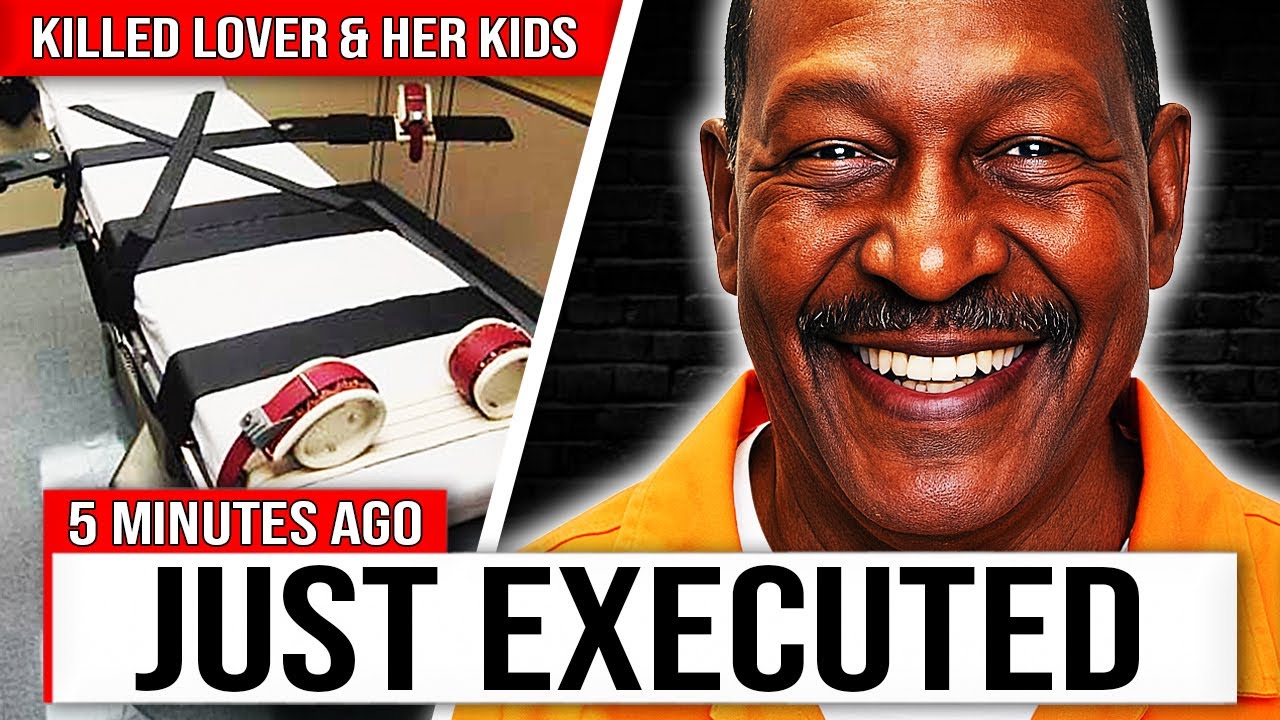
The state of Tennessee executed of Byron Lewis Black on Tuesday morning, ending a 35-year legal battle that stretched from the brutal murders of a mother and her two young daughters in 1988 to the final, contested moments inside the death chamber. Black, 69, was pronounced dead at 10:43 a.m. after a lethal injection that witnesses described as unusually distressing, marked by heavy breathing, groans, and visible confusion. The execution proceeded despite last-minute legal challenges over his mental competency and a potentially painful interaction between the lethal drugs and a medical device implanted in his chest. For the families of Angela Clay, 29, and her daughters Latoya, 9, and Lkesha, 6, the closure came after decades of appeals and delays, but the scene inside the chamber raised new questions about the humanity of the process.
The crimes that landed Black on death row began on a quiet Sunday night in March 1988, when Angela Clay finished her shift at Vanderbilt Hospital and was picked up by her sister Lynette Bell and Lynette’s on-again, off-again boyfriend, Byron Black. The group visited their mother’s home before Angela returned to her own apartment with her daughters, borrowing an iron she promised to return the next day. Sometime after midnight, Black entered the apartment through an unlocked door, finding Angela asleep in her bed. He fired a single shot through the top of her head, killing her instantly. The sound stirred Latoya, who had been sleeping beside her mother, and Black shot her through the chest and neck, leaving her to die slowly as her body twitched for up to ten minutes. He then walked down the hall to Lkesha’s room, where the six-year-old had been woken by the gunfire and had gotten out of bed. Black fired two shots, hitting her in the chest and hip, and she dragged herself across the floor before collapsing face down, her blood pooling into the carpet.
Black left the apartment, locked the door, and returned to the Metropolitan Workhouse by Monday evening as if nothing had happened, checking in from a weekend furlough he had been granted despite a prior conviction for shooting Angela’s estranged husband, Benny Clay, in 1986. That earlier shooting had left Benny with a bullet lodged in his shoulder, and Black had pleaded guilty, receiving a workhouse sentence with weekend privileges that ultimately allowed him to commit the murders. The bodies were discovered the following evening when Angela’s mother, Amelia Bell, grew concerned after Angela failed to return the iron. Police forced open a window and found the three victims, with forensic evidence later linking Black to the scene through fingerprints on a telephone receiver and ballistic tests matching the bullets to the same gun used against Benny.
At trial in 1989, Black’s defense relied on an alibi from his mother and nephew, but the jury rejected it after hearing testimony from a woman who said Black had left her home hours earlier than he claimed. On March 8, 1989, Lkesha’s birthday, the jury convicted Black on three counts of first-degree murder, and the next day recommended the death penalty for Lkesha’s killing while imposing two consecutive life terms for the other murders. Over the following decades, Black’s attorneys argued that he was intellectually disabled, pointing to evidence of fetal alcohol exposure, lead poisoning, and a lifelong inability to function independently. Experts testified that Black had the cognitive capacity of a child, unable to make change for a five-dollar bill or understand basic concepts, but courts repeatedly upheld his sentence, ruling that he was competent for execution.
The final years of Black’s life were marked by deteriorating health, including end-stage heart failure that required an implantable defibrillator in May 2024. His lawyers argued that the device could deliver painful electric shocks during the lethal injection as it attempted to counteract the slowing of his heart, describing the sensation as being kicked in the chest by a horse. A lower court judge ordered the device deactivated, but the Tennessee Supreme Court overturned that ruling, stating that the deactivation would constitute an unauthorized delay of justice and that Black would likely feel nothing even if the shocks occurred. The execution date was set for August 5, 2025, after multiple reschedulings due to the pandemic and legal technicalities.

On the night before his death, Black was offered a last meal, and he requested a pizza with mushrooms and sausage, donuts, and butter pecan ice cream. The morning of the execution, he was led into the chamber at the Riverbend Maximum Security Institution in Nashville, strapped to a gurney with a sheet pulled unusually high over his body, covering even his hands. When the curtain rose at 10:31 a.m., witnesses saw Black facing them, but when asked for final words, he simply replied, No, sir. He did not address the victims’ family members seated nearby, nor did he offer an apology. Instead, witnesses described clear signs of distress, heavy breathing, restlessness, and confusion, as if he did not fully understand what was happening.
His spiritual adviser stood beside him, touching his cheek and praying, telling him to focus on his breathing. Black began sighing and panting, and when the lethal drugs started flowing, he raised his head and looked around, moving more than expected. At 10:33 a.m., he groaned and told his adviser, I can’t do this. This is hurting so bad. The adviser leaned in and said softly, I’m so sorry, before continuing her prayers. Moments later, Black raised his hand one final time, then went still at 10:36 a.m. A mandatory five-minute waiting period followed, and at 10:43 a.m., he was pronounced dead. The execution marked the end of a case that had haunted Nashville for nearly four decades, but the manner of his death reignited debates about the use of lethal injection, particularly for inmates with documented intellectual disabilities and medical conditions that complicate the process.
The victims’ family members, who had waited years for this moment, offered mixed reactions. Some expressed relief that the legal ordeal was over, while others questioned whether the state had truly delivered justice, given the circumstances of Black’s final moments. Angela Clay’s mother, Amelia Bell, who had fought for accountability since the day she found her daughter and granddaughters dead, was present in the witness room. She did not speak publicly after the execution, but her presence underscored the long road to closure. The case had drawn national attention, with advocacy groups arguing that executing a man with Black’s cognitive impairments violated constitutional protections against cruel and unusual punishment.
Black’s legal team had exhausted every avenue, from appeals to the Tennessee Supreme Court to petitions for clemency to the governor. They argued that his intellectual disability, combined with schizophrenia and dementia, rendered him unfit for execution under standards set by the U.S. Supreme Court, which bars the execution of intellectually disabled individuals. However, Tennessee courts determined that Black did not meet the legal definition of intellectual disability under state law, a ruling that critics said reflected outdated criteria. The state’s own expert, who had once testified against Black’s claims, later changed her opinion, acknowledging that modern diagnostic standards supported a finding of disability, but by then, the legal path had been set.
The execution also highlighted the ongoing controversy over the use of lethal injection drugs, particularly in cases where inmates have pre-existing medical conditions. The defibrillator issue was a focal point of the final legal battles, with Black’s lawyers warning that the device could cause unnecessary pain and suffering. The Tennessee Supreme Court’s decision to allow the execution to proceed without deactivation was based on the assumption that Black would not feel the shocks, but witnesses reported that he appeared to be in distress, groaning and struggling against the restraints. Medical experts have noted that the interaction between lethal injection drugs and implantable devices is poorly understood, and the case has prompted calls for greater transparency in execution protocols.
Byron Lewis Black was born in 1956 in Nashville, the son of a factory worker and a homemaker. From an early age, he struggled with learning and social interactions, unable to grasp simple games like red light, green light and falling behind in school. Doctors later attributed his cognitive deficits to prenatal alcohol exposure and childhood lead poisoning, which damaged the frontal and temporal lobes of his brain. As an adult, he lived with his parents, never holding a steady job or managing his own finances, and he married briefly but could not sustain an independent life. His arrest in 1988 came as a shock to those who knew him as a quiet, unassuming man, but the evidence of the murders painted a different picture.
The trial in 1989 was a media sensation in Nashville, with graphic testimony about the crime scene and the suffering of the victims. Prosecutors presented the bullet removed from Benny Clay’s shoulder as a key piece of evidence, linking Black to the same weapon used in the murders. The jury deliberated for less than a day before returning guilty verdicts, and the sentencing phase was equally swift. For the murder of Lkesha, the jury unanimously recommended death, citing the vulnerability of the child and the brutality of the crime. The life sentences for Angela and Latoya’s murders ensured that Black would never be released, but the death penalty remained the focus of appeals for decades.

Over the years, Black’s case became a rallying point for death penalty opponents, who argued that his intellectual disability made him ineligible for execution under the Eighth Amendment. The U.S. Supreme Court has barred the execution of intellectually disabled individuals since 2002, but states have varying definitions of what constitutes disability. Tennessee’s criteria require proof of significant limitations in intellectual functioning and adaptive behavior before the age of 18, and courts found that Black’s evidence did not meet that threshold. His attorneys pointed to school records showing he was placed in special education classes and psychological evaluations indicating an IQ in the 60s, but the state countered that he had held a job, married, and fathered a child, suggesting a higher level of functioning.
The final years of Black’s life were spent on death row at Riverbend, where his health declined rapidly. He was diagnosed with end-stage heart failure in 2023, and the defibrillator was implanted to prevent sudden cardiac arrest. His lawyers argued that the device was a medical necessity, but the state viewed it as an obstacle to execution. The legal battle over the defibrillator reached the Tennessee Supreme Court in July 2025, just weeks before the scheduled execution. The court ruled that deactivating the device would be an unauthorized interference with the execution process, and that Black’s medical condition did not outweigh the state’s interest in carrying out the sentence.
On the morning of the execution, Black was moved from his cell to the death chamber at around 9 a.m. He was allowed to meet with his spiritual adviser and make a final phone call to his family, but details of that conversation were not released. Witnesses included representatives from the media, the victims’ family, and Black’s legal team. The execution was originally scheduled for 10 a.m. but was delayed by about 30 minutes due to final legal filings. When the curtain rose, Black appeared calm but soon showed signs of distress. The spiritual adviser, who had been with him for years, remained by his side throughout the procedure, whispering prayers and encouragement.
The lethal injection protocol in Tennessee uses a three-drug cocktail, typically beginning with a sedative, followed by a paralytic, and finally a drug to stop the heart. The exact drugs used in Black’s execution were not disclosed, but the state has previously used midazolam as the first drug, which has been criticized for its potential to cause awareness and pain. Witnesses reported that Black appeared to be conscious and in discomfort for several minutes after the drugs began flowing, raising concerns about the effectiveness of the sedative. The groaning and heavy breathing continued until he finally went still, and the medical team waited the required five minutes before pronouncing death.
The execution of Byron Lewis Black brought an end to one of Tennessee’s longest-running death penalty cases, but it also left unresolved questions about the justice system’s handling of intellectually disabled inmates. Advocacy groups have called for a moratorium on executions in the state, citing the Black case as an example of the flaws in the process. The victims’ families, meanwhile, have expressed a range of emotions, from relief to sorrow, as they grapple with the finality of the event. Angela Clay’s sister, Lynette Bell, who had been with Black on the night of the murders, has spoken publicly about the trauma of losing her sister and nieces, and she was present in the witness room to see the execution carried out.
The case has also drawn attention to the issue of weekend furloughs for inmates with violent histories, a practice that has been criticized since Black used his furlough to commit the murders. In the aftermath of the 1988 killings, Tennessee revised its furlough policies, but the changes came too late for Angela, Latoya, and Lkesha. Their deaths remain a stark reminder of the consequences of a system that allowed a man with a prior shooting conviction to walk free on weekends. Black’s execution, while providing a measure of accountability, cannot undo the damage he caused, and the families continue to mourn the loss of three lives cut short by violence.
As the news of the execution spread, reactions poured in from across the country. Death penalty supporters argued that justice had been served, noting the brutality of the crimes and the lengthy appeals process. Opponents pointed to Black’s intellectual disability and the distress he displayed in the chamber as evidence that the state had failed to uphold its moral obligations. The debate is unlikely to be resolved by this single case, but the execution of Byron Lewis Black will be remembered as a pivotal moment in Tennessee’s history, a case that tested the boundaries of law, medicine, and humanity.
The final moments of Black’s life were captured in witness accounts that painted a picture of confusion and pain. He did not speak to the victims’ families, did not express remorse, and did not seem to grasp the gravity of what was happening. His spiritual adviser was the only person he interacted with, and her presence provided a small measure of comfort in an otherwise clinical and cold procedure. The execution team, dressed in surgical scrubs and masks, worked efficiently, but the emotional weight of the event was evident in the faces of those who watched. For the families of Angela, Latoya, and Lkesha, the wait was finally over, but the scars of the past remain.
Byron Lewis Black was pronounced dead at 10:43 a.m. on August 5, 2025, after spending 35 years on death row. He was 69 years old. His body was taken to the state medical examiner’s office for an autopsy, as is standard procedure, and his remains will be released to his family for burial. The execution was the first in Tennessee in 2025, and it came after a period of reduced activity due to the pandemic and legal challenges. The state has several other inmates on death row, and their cases will continue to be litigated in the coming years. For now, the focus remains on the Black case and the questions it raises about the intersection of mental health, medical ethics, and capital punishment.
The story of Byron Lewis Black is one of tragedy on multiple levels: the tragedy of three innocent lives lost, the tragedy of a man whose cognitive impairments may have prevented him from fully understanding his actions, and the tragedy of a legal system that struggled to balance justice with compassion. The execution brought closure to a chapter that began with a single gunshot in a quiet Nashville apartment, but the echoes of that night will be felt for generations. As the state moves forward, the lessons of this case will inform future debates about the death penalty, mental health, and the limits of state power. For now, the families of Angela, Latoya, and Lkesha can finally say that justice, in whatever form it takes, has been done.
Source: YouTube