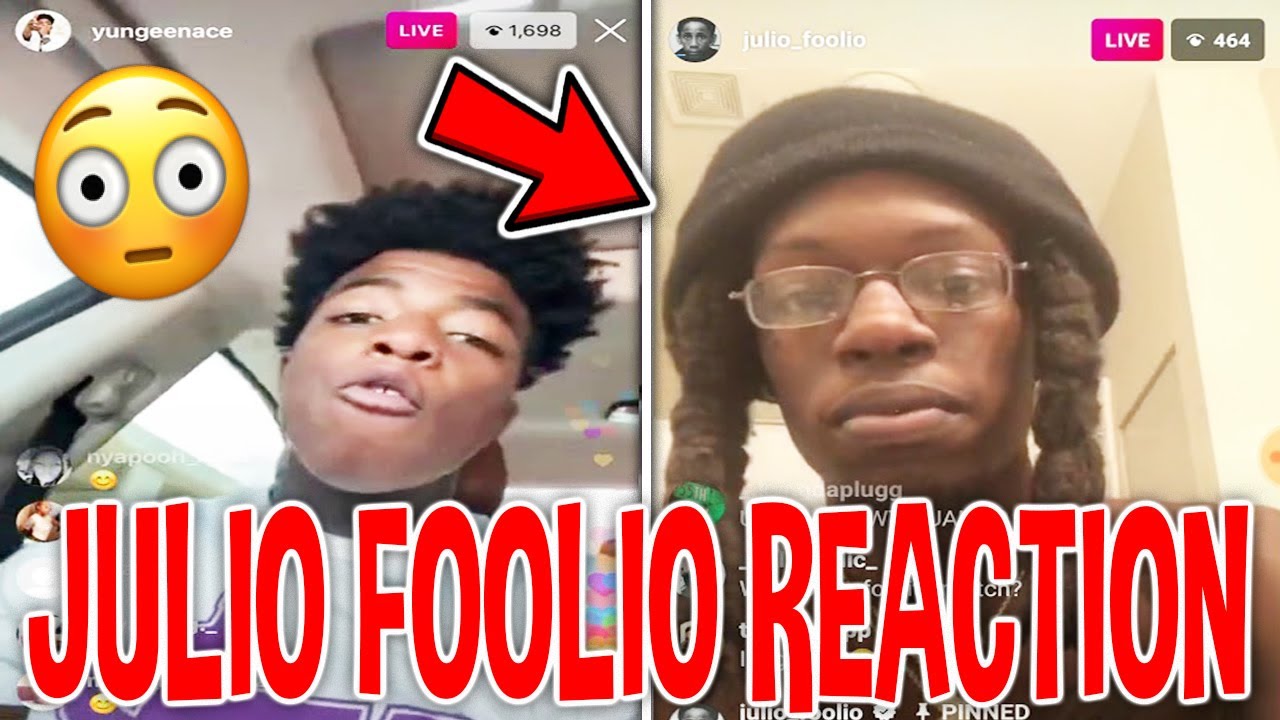
A heated confrontation erupted on Instagram Live late Tuesday night when rapper Yungeen Ace publicly called out fellow Jacksonville artist Julio Foolio, igniting a tense and emotional exchange that has sent shockwaves through the hip-hop community. The argument, which drew thousands of live viewers, stems from a deepening feud rooted in tragedy, viral fame, and a series of violent incidents that have plagued the Florida city’s rap scene for years. Yungeen Ace, whose real name is Kenyatta Bullard, appeared visibly agitated as he addressed Julio Foolio directly, accusing him of crossing a line by disrespecting the memory of his deceased brother. The live stream, which lasted nearly 20 minutes, captured the raw fury of a man still grieving while navigating the treacherous waters of street credibility and musical success.
The confrontation did not happen in a vacuum. Yungeen Ace has been riding a wave of unprecedented attention following the release of a viral single that samples Vanessa Carlton’s early 2000s hit “A Thousand Miles.” The track, which blends Carlton’s piano-driven melody with gritty, violent lyrics, has become a sensation on streaming platforms and social media, amassing millions of plays in just weeks. However, the song’s success has come at a cost, as many listeners and fellow artists have criticized its content for seemingly trivializing real-world violence and death. The sample’s upbeat, almost whimsical tone clashes jarringly with verses that boast about sending enemies to their graves, leaving audiences divided between amusement and outrage. For Julio Foolio, this apparent hypocrisy became the spark that lit the fuse.
Julio Foolio, whose real name is Charles Jones, responded to Yungeen Ace’s viral hit by releasing his own track, one that directly references the death of Yungeen Ace’s brother. The move was seen as a deliberate escalation in a feud that has already claimed multiple lives and left a trail of legal consequences. During the Instagram Live session, Yungeen Ace did not hold back, shouting that Julio Foolio does not know who he is messing with and warning that the disrespect would not go unanswered. The rapper’s voice cracked with emotion as he spoke about his brother, who was killed in a 2018 ambush that also left Yungeen Ace himself shot eight times. He survived that attack, but the scars, both physical and emotional, remain fresh.
The feud between these two artists is not an isolated incident but rather the latest chapter in a long and bloody conflict among Jacksonville rappers. The city has become a flashpoint for hip-hop violence, with multiple homicides linked to disputes over lyrics, territory, and personal grievances. The roots of this particular beef can be traced back to January 2019, when rapper Willie Addison, known as Boss Goon, was killed and five others wounded in a shooting at Spring Park. The victims had just left a rap music event at the Paradise Gentlemen’s Club on Bay Meadows Road, and the attack sent shockwaves through the local music community. Two weeks later, Damon Rothermel was shot and killed while riding his bicycle on Emerson Street, caught in the crossfire of a shootout between cars.
The violence continued into 2020, with the murder of 23-year-old rapper Charles McCormick, known as Little Buck, who was gunned down in a daytime ambush at a shopping plaza in Arlington. The case against the alleged perpetrators, including Hakeem Robinson, known as Cusum, has revealed a tangled web of retaliation and revenge. According to a warrant obtained by local news, a confidential informant inside a pre-trial detention facility recorded conversations with Dominique Barner, who allegedly discussed details of the McCormick murder. Barner claimed that he and others waited for McCormick to leave his house, followed him to a shopping center on Mural Road, and then opened fire. The reason for the killing, according to Barner, was a song that McCormick had made that disrespectfully talked about Willie Addison.
This cycle of violence and retaliation has become a defining feature of the Jacksonville rap scene, with artists using their music as both a platform for expression and a weapon for settling scores. Yungeen Ace’s rise to fame has been inextricably linked to this environment. After surviving the 2018 ambush that killed his brother and two others, he channeled his trauma into his music, building a following of over 2 million Instagram followers and releasing tracks with Robinson, who is now facing charges in connection with the McCormick murder. The irony of this connection is not lost on observers, as the same networks of loyalty and enmity that fuel the violence also drive the music’s popularity.
The viral single that has brought Yungeen Ace so much attention is a case in point. The song, which features verses from other Jacksonville artists, including Wapa and Young Guinea, is a jarring mix of cartoonish threats and real-world references. Wapa’s verse includes an extended riff on enemies he supposedly sent to meet their maker, while Young Guinea croons about the deaths of foes, naming names in a way that blurs the line between artistic bravado and genuine menace. The use of the Vanessa Carlton sample, with its innocent and nostalgic melody, only heightens the dissonance, leaving listeners unsure whether to laugh or cringe. One fan tweeted, “I feel terrible for all the people that got to hear their dead homies dissed over a Vanessa Carlton sample, but I’m sorry that the song is incredible.”

The public reaction to the feud has been mixed, with many expressing concern over the escalating rhetoric and its potential to incite further violence. Social media platforms have become battlegrounds, with fans and detractors alike weighing in on the dispute. Julio Foolio responded to Yungeen Ace’s Instagram Live outburst with a tweet that simply read, “Man what did you expect,” a statement that suggests he views his actions as a justified response to what he perceives as hypocrisy. The tweet has since been shared thousands of times, fueling further debate about the ethics of using tragedy for artistic gain.
The legal system has also become entangled in this feud. The arrest of Hakeem Robinson in connection with the McCormick murder has shed light on the role that rap lyrics play in these conflicts. Investigators have used the lyrics of songs as evidence in court, arguing that they reflect real intentions and actions. This has raised questions about free speech and the criminalization of artistic expression, with some arguing that rap music is unfairly targeted while others contend that artists must be held accountable for inciting violence. The case against Robinson, which relies heavily on testimony from a confidential informant and recorded conversations, is ongoing, and its outcome could set a precedent for how similar cases are handled in the future.
For Yungeen Ace, the current controversy represents a critical juncture in his career. He has managed to turn personal tragedy into commercial success, but the price of that success may be the continued escalation of a feud that has already cost lives. His Instagram Live call-out of Julio Foolio was not just a moment of anger but a strategic move to assert dominance and defend his legacy. However, it also risks drawing him deeper into a cycle of retaliation that has no clear end. The rapper’s survival of the 2018 ambush has made him a symbol of resilience in the Jacksonville community, but it has also placed him at the center of a conflict that shows no signs of abating.
The broader implications of this feud extend beyond the individuals involved. Jacksonville has become a case study in the intersection of hip-hop culture, gang violence, and social media. The city’s rap scene, once a source of local pride, is now synonymous with tragedy and legal turmoil. The deaths of Boss Goon, Little Buck, and others have left families grieving and communities on edge, while the artists who remain continue to push boundaries in ways that blur the line between art and reality. The viral success of Yungeen Ace’s single, with its sample of a beloved pop song, has brought national attention to this dynamic, forcing a conversation about the ethics of profiting from pain.
As the situation unfolds, both Yungeen Ace and Julio Foolio have become lightning rods for criticism and support. Fans have taken to social media to voice their opinions, with some calling for peace and others urging their favorite artists to stand their ground. The keyword “ace” has been trending on platforms like Twitter and Instagram, as followers participate in giveaways and discussions about the feud. The Lime Report, which first covered the story, has urged viewers to stay tuned for updates, promising to keep the public informed as new developments emerge.
The emotional toll of this feud is evident in Yungeen Ace’s demeanor during the Instagram Live session. His voice, at times breaking with grief, conveyed a depth of pain that transcended the typical bravado of rap beefs. He spoke of his brother not as a statistic but as a person, a loss that has shaped his entire worldview. For Julio Foolio, the motivation appears to be more calculated, a response to what he sees as a double standard in the way violence is glorified in music. The two artists represent opposing sides of a coin, both shaped by the same environment but reacting in different ways.

The role of social media in amplifying this conflict cannot be overstated. Instagram Live, Twitter, and other platforms have become arenas where these disputes play out in real time, reaching audiences far beyond Jacksonville. The immediacy of these platforms allows for rapid escalation, as comments and reactions fuel further animosity. The viral nature of Yungeen Ace’s single has only intensified the spotlight, turning a local feud into a national spectacle. This has both positive and negative implications, as increased attention can lead to greater accountability but also to more opportunities for provocation.
The legal ramifications of the feud are also coming into focus. The arrest of Hakeem Robinson and the details of the McCormick murder have highlighted the deadly consequences of lyrical disputes. Investigators have pieced together a timeline of events that shows how a song can lead to a shooting, with words on a track translating into bullets on the street. This has prompted calls for greater oversight of the music industry, though such measures remain controversial. The First Amendment protects artistic expression, but when that expression is linked to real-world violence, the line becomes blurred.
For the families of the victims, the feud between Yungeen Ace and Julio Foolio is a painful reminder of what has been lost. The mother of Little Buck, Charles McCormick, has spoken publicly about her grief, urging the rappers to stop the cycle of violence. Her pleas, however, have largely gone unheeded, as the feud continues to escalate. The community of Jacksonville, already weary from years of bloodshed, watches with a mixture of fear and resignation, knowing that the next viral moment could be the next tragedy.
The music itself has become a battleground. Yungeen Ace’s use of the Vanessa Carlton sample has been both praised and condemned, with some calling it a brilliant artistic choice and others decrying it as disrespectful. The juxtaposition of a gentle piano melody with lyrics about murder and revenge creates a cognitive dissonance that is hard to ignore. It forces listeners to confront the reality of the violence while also being entertained by it, a paradox that lies at the heart of the controversy. Julio Foolio’s response, targeting the death of Yungeen Ace’s brother, takes this dynamic to an even darker place, using personal tragedy as a weapon.
The future of this feud remains uncertain. Both artists have large followings and significant influence, and their actions will likely shape the trajectory of the Jacksonville rap scene for years to come. Yungeen Ace has shown a willingness to confront his rivals directly, while Julio Foolio has demonstrated a knack for provocation. The possibility of further violence is a constant concern, as past incidents have shown how quickly words can turn into actions. Law enforcement agencies in Jacksonville are monitoring the situation closely, but they face an uphill battle in a culture where loyalty and revenge are deeply ingrained.
The national conversation around this feud has also touched on broader issues of race, class, and the criminal justice system. Rap music has long been a scapegoat for societal problems, but the Jacksonville case presents a more nuanced picture. The artists involved are not just performers but products of their environment, shaped by poverty, trauma, and systemic inequality. Their music reflects this reality, even as it also perpetuates it. The challenge for society is to address the root causes of the violence without silencing the voices that emerge from it.
As the story continues to develop, the Lime Report and other outlets will provide ongoing coverage. The keyword “ace” remains a focal point for fans hoping to win giveaways, but it also serves as a reminder of the central figure in this drama. Yungeen Ace’s journey from shooting survivor to viral sensation is a testament to his resilience, but it also raises questions about the cost of fame. The Instagram Live call-out of Julio Foolio was a moment of raw emotion, but it was also a calculated move in a high-stakes game where the rules are written in blood.
The impact of this feud on the music industry is already being felt. Labels and streaming platforms are grappling with how to handle content that glorifies violence, especially when it leads to real-world consequences. Some have called for stricter guidelines, while others argue that censorship is not the answer. The debate is likely to intensify as more details emerge about the Jacksonville situation, and as other artists weigh in on the controversy. For now, the focus remains on Yungeen Ace and Julio Foolio, two rappers locked in a battle that shows no signs of ending.
The emotional weight of the Instagram Live session is still reverberating through social media. Clips of the argument have been shared widely, with many expressing shock at the intensity of the exchange. Yungeen Ace’s words, delivered through tears and anger, have resonated with fans who see him as a survivor fighting for respect. Julio Foolio’s response, by contrast, has been seen by some as cold and calculated, a deliberate attempt to provoke a reaction. The contrast between the two artists highlights the different ways in which trauma can manifest, one through vulnerability and the other through aggression.
The role of the audience in this feud is also significant. Fans have become active participants, choosing sides and amplifying the conflict through likes, shares, and comments. The giveaways promoted by the Lime Report and other channels have added a layer of gamification to the drama, turning tragedy into entertainment. This dynamic raises ethical questions about the consumption of content that is rooted in real pain, but it also reflects the reality of the digital age, where attention is currency and controversy drives engagement.
The legal system’s involvement in the feud adds another layer of complexity. The case against Hakeem Robinson, which includes evidence from recorded conversations and witness testimony, is a stark reminder of the stakes involved. If convicted, Robinson faces a lengthy prison sentence, and his case could serve as a deterrent to others who might consider using music as a tool for retaliation. However, the deep-seated nature of the feud suggests that legal consequences alone may not be enough to break the cycle. The underlying issues of poverty, lack of opportunity, and systemic violence require broader solutions.
For Yungeen Ace, the path forward is fraught with challenges. He must navigate the demands of his career while also dealing with the emotional fallout of the feud. His brother’s death remains a fresh wound, and Julio Foolio’s actions have reopened it in a public and painful way. The rapper’s decision to go live on Instagram was a way of taking control of the narrative, but it also exposed him to further criticism and scrutiny. Whether he can channel this energy into his music without escalating the conflict remains to be seen.
Julio Foolio, for his part, shows no signs of backing down. His tweet in response to the Instagram Live session was brief but pointed, suggesting that he views his actions as justified. He has positioned himself as a truth-teller, calling out what he sees as hypocrisy in the rap game. This stance has earned him both supporters and detractors, but it has also put him in the crosshairs of a feud that has already proven deadly. The question is whether he can maintain his position without becoming the next casualty of a conflict that has claimed too many lives already.
The broader context of the Jacksonville rap scene is essential to understanding this feud. The city has a long history of violence, but the recent spate of killings linked to rap music has drawn national attention. The deaths of Boss Goon, Little Buck, and others have been covered extensively by local and national media, painting a picture of a community in crisis. The music that emerges from this environment is both a reflection and a catalyst, a double-edged sword that can inspire change or perpetuate destruction. The feud between Yungeen Ace and Julio Foolio is just the latest chapter in this ongoing story.
The viral nature of Yungeen Ace’s single has brought a level of scrutiny that few local feuds ever receive. The use of the Vanessa Carlton sample, in particular, has sparked debates about cultural appropriation and the commodification of pain. Some have argued that the sample is a gimmick, a way to attract attention without addressing the underlying issues. Others see it as a bold artistic statement, a way of subverting expectations and forcing listeners to confront uncomfortable truths. Whatever the interpretation, the song has succeeded in starting a conversation, even if that conversation is often uncomfortable.
The response from the music industry has been mixed. Some artists have expressed support for Yungeen Ace, praising his resilience and creativity. Others have criticized him for glorifying violence and disrespecting the memory of the deceased. The debate has spilled over into mainstream media, with commentators weighing in on the ethics of the feud. The lack of consensus reflects the complexity of the issue, as there are no easy answers when it comes to art, trauma, and violence.
The role of social media algorithms in amplifying the feud cannot be ignored. Platforms like Instagram and Twitter are designed to promote content that generates engagement, and controversy is a powerful driver of interaction. The Instagram Live session between Yungeen Ace and Julio Foolio was a prime example of this dynamic, as the heated exchange drew thousands of viewers and sparked countless reactions. The algorithms that prioritize such content may be inadvertently fueling the conflict, creating a feedback loop that encourages further escalation.
The psychological impact of the feud on the artists involved is another important consideration. Yungeen Ace has spoken openly about his trauma, and the public nature of the conflict is likely taking a toll on his mental health. The pressure to maintain a tough exterior while dealing with grief and anger can be overwhelming, and the lack of a support system in the hyper-competitive world of rap only adds to the strain. Julio Foolio, too, is likely feeling the weight of the situation, even if he projects an image of confidence and defiance.
The community of Jacksonville is watching the feud with a mix of concern and resignation. Many residents have grown tired of the violence that has plagued their city, and they see the rap feud as a symptom of deeper problems. Local activists and community leaders have called for dialogue and reconciliation, but their efforts have been hampered by the deep-seated nature of the conflict. The cycle of retaliation is hard to break, especially when it is reinforced by the music that defines the culture.
The legal system’s response to the feud will be closely watched. The case against Hakeem Robinson is a test of whether prosecutors can successfully link lyrics to criminal behavior. If they succeed, it could set a precedent that changes the way rap music is treated in court. If they fail, it could embolden artists to push the boundaries even further. The outcome of this case will have implications far beyond Jacksonville, affecting the entire hip-hop industry.
The future of Yungeen Ace’s career hangs in the balance. He has achieved a level of fame that few local rappers ever reach, but that fame comes with risks. The feud with Julio Foolio could either solidify his status as a street legend or destroy everything he has built. The choices he makes in the coming days and weeks will determine which path he takes. For now, he remains defiant, using his platform to speak his truth and defend his legacy.
The feud between Yungeen Ace and Julio Foolio is a microcosm of the larger issues facing the hip-hop community. It is a story of trauma, ambition, and the search for meaning in a world that often seems indifferent to pain. The music that emerges from this environment is raw and unfiltered, a reflection of the realities that many people face every day. It is also a source of controversy, as the line between art and reality becomes increasingly blurred. As the story continues to unfold, the world will be watching to see what happens next.
Source: YouTube