STARKE, Fla. — After 35 years of legal battles and appeals, the state of Florida executed Chadwick Scott Willacy by lethal injection Wednesday evening for the 1990 murder of his 56-year-old neighbor, whom he bound, doused in gasoline, and burned alive in her own home.
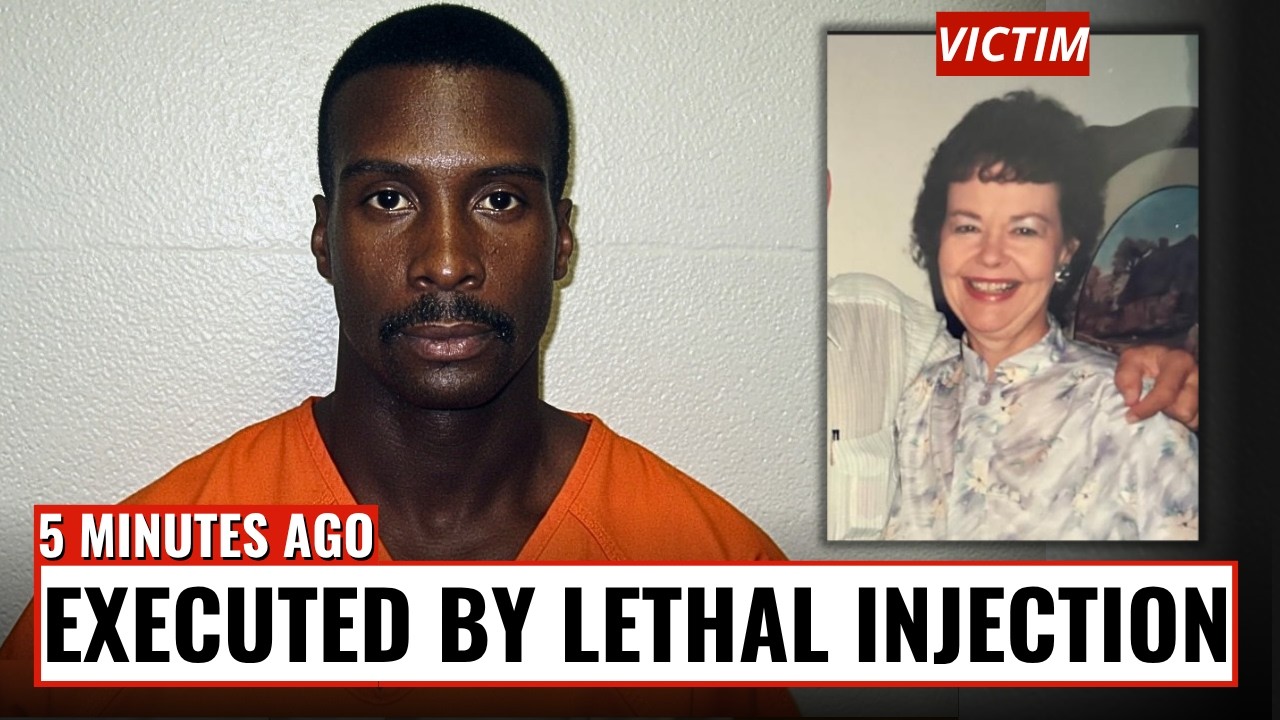
The execution at Florida State Prison was carried out at 6:00 p.m. Willacy, 64, was pronounced dead 15 minutes later. His death closes one of Brevard County’s most brutal and protracted capital cases, a crime that shattered a family and haunted a community for decades.
In his final statement, Willacy offered a cryptic mix of resignation and protest. “To all my friends on death row, stay strong,” he said from the gurney. He added, “I would never kill a friend,” referencing his neighbor, before concluding, “I hope this brings you peace. If it does, that’s okay. But this is not right.”
Witnesses reported Willacy appeared nervous and was lightly sedated to ensure compliance. After the lethal injection began, his body shook, and he groaned for approximately 30 seconds before falling still. A correctional officer shook him and called his name, with no response, before a doctor entered to declare his death.
The victim, Marus “Marley” May Sather, was a widowed office clerk and grandmother. Her husband had died of liver cancer just two months prior. On September 5, 1990, she returned to her Palm Bay home unexpectedly during a lunch break, interrupting Willacy in the midst of a burglary he had planned to fund his crack cocaine addiction.
Despite knowing Willacy since his youth, Sather was met with extreme violence. Willacy struck her repeatedly in the head with a blunt object, fracturing her skull. He then bound her hands and feet with wire and tape before his failed attempt to strangle her with a phone cord.
Determined to eliminate the witness, Willacy poured gasoline over Sather, disabled the home’s smoke detectors, and set the house ablaze. He placed a fan at her feet to accelerate the flames. An autopsy confirmed Sather died from smoke inhalation, conscious when the fire began.
Willacy fled in Sather’s stolen car with her valuables but was captured a day later. His own girlfriend alerted police after finding the victim’s checkbook in his trash. Evidence was overwhelming: his fingerprints were on the gasoline can and fan, and ATM surveillance showed him using Sather’s card.

A 1991 jury convicted him and recommended death by a 9-3 vote, but the Florida Supreme Court overturned the sentence in 1994 due to a procedural error in jury selection. A new penalty phase in 1995 featured graphic evidence of the crime and defense arguments of crack-induced psychosis.
The second jury recommended death by an 11-1 vote, and Willacy was formally sentenced in 1997. He spent the ensuing decades on death row, converting to Islam and adopting the name Khalil while pursuing numerous appeals, all ultimately rejected by state and federal courts.
His final appeals focused on the state’s lethal injection protocol, with his attorneys seeking records to verify drug integrity, citing concerns about potentially expired or improperly administered chemicals. These last-minute petitions were denied in the days preceding the execution.
Governor Ron DeSantis signed Willacy’s death warrant on March 13, 2026, setting the final process in motion. On his last day, Willacy was visited by his mother, sisters, and a cousin. He consumed a final meal of fried chicken, French fries, ice cream, and cake.
John Sather, the victim’s 68-year-old son, witnessed the execution. Speaking through tears afterward, he stated, “I wanted to make sure I saw the warden say he was dead. I wanted to make sure my mother got justice for someone who walked in and took her life in a matter of seconds.”
The execution marks Florida’s first of the year and underscores the state’s continued use of capital punishment. Two more executions are scheduled in the United States for April 30: one in Texas and another in Florida, indicating a sustained pace of judicial executions.

Legal experts note Willacy’s case reflects the lengthy and complex nature of death penalty litigation, where decades often pass between sentence and execution. His appeals invoked recent rulings like the Hurst decision, but courts found his sentence final prior to those changes.
Victim advocacy groups have expressed that while the execution brings a long-awaited conclusion, it cannot heal the profound loss endured by the Sather family. The brutality of the crime left an indelible mark on the Palm Bay community, where both victim and perpetrator resided.
As the curtain falls on this case, the debate over capital punishment continues, fueled by questions of justice, finality, and the moral implications of state-sanctioned death. For the Sather family, Wednesday night represented a grim endpoint to a 35-year journey for accountability.
The Florida Department of Corrections confirmed the execution was carried out without incident. Willacy’s body will be released to his family as per their instructions. The state prepares for its next scheduled execution, maintaining its position as one of the nation’s most active death penalty states.
Source: YouTube