A seismic shift is underway in our understanding of human history, as long-suppressed archaeological evidence challenges foundational timelines and forces a painful re-evaluation of accepted dogma. From the Americas to the Holy Land, artifacts once dismissed as hoaxes or heresies are now demanding recognition, revealing narratives that the academic establishment fought for decades to silence.
The cornerstone of New World archaeology has crumbled. For a century, the “Clovis First” model, placing humans in the Americas just 13,000 years ago, was an unassailable doctrine. This orthodoxy is now besieged by inconvenient truths emerging from the ground itself. In San Diego, mastodon bones bearing clear tool marks were dated to 130,000 years old, a finding so heretical it was blamed on backhoes rather than ancient humans.
Meanwhile, at South Carolina’s Topper Site, archaeologist Albert Goodyear faced professional ruin for digging deeper. Beneath the Clovis layer, in soil over 50,000 years old, he unearthed stone tools. Colleagues dismissed them as naturally broken rocks, warning Goodyear he was destroying his career. His persistence, however, highlights a pattern of institutional resistance to paradigm-shifting evidence.
A similar pattern of dismissal surrounds one of archaeology’s most tantalizing mysteries: the Copper Scroll. Discovered among the Dead Sea Scrolls in 1952, this corroded metal document lists 64 locations hiding vast treasures of gold and silver from Jerusalem’s Temple. Mainstream scholars long declared it a fantasy, citing implausible quantities. A compelling counter-theory suggests the “fake” label was deliberately propagated. If a genuine treasure map to the Second Temple’s wealth were acknowledged, it would trigger a destructive frenzy across the region’s sacred sites.
The vindication of forged artifacts now rewrites chapters of Roman history. For three centuries, gold coins bearing the name Sponsianus were textbook examples of counterfeits, as no such emperor was known. Locked in a museum drawer, they were ignored until 2022. Advanced microscopy revealed micro-wear patterns from circulation in leather pouches, and geochemical analysis proved ancient burial. Sponsianus was likely a military commander in an isolated province who minted his own currency, his brief reign erased from official records.

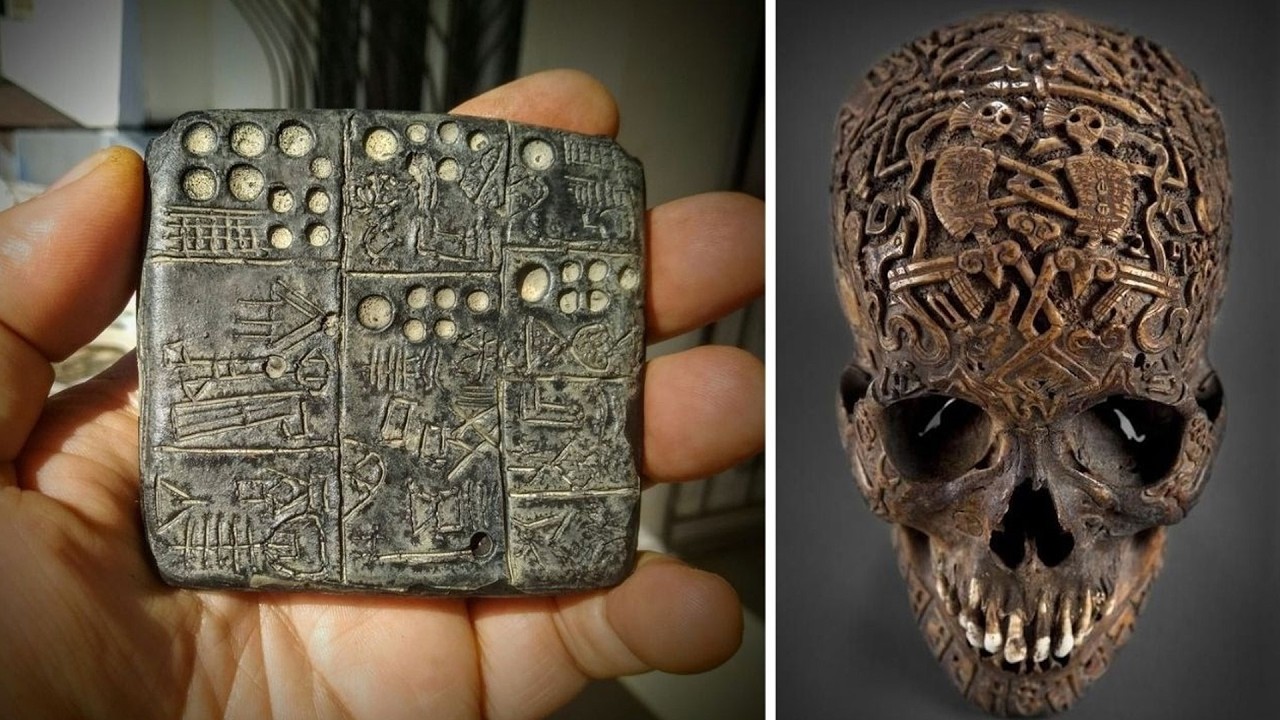
Europe’s own archaeological scandal, the Glozel affair, began in 1924 when a French teenager stumbled upon a pit filled with inscribed tablets and strange figurines. The site polarized experts, with some hailing it as the century’s greatest find and others decrying it as fraud. The controversy grew so toxic that police raided the farm, and “Glozel” became a forbidden word for any serious researcher. Carbon dating later revealed a simple truth: the site was not a hoax but a location used by different cultures across millennia.
A stone ossuary inscribed “James, son of Joseph, brother of Jesus” ignited a firestorm in the early 2000s. The Israel Antiquities Authority alleged forgery, leading to a five-year criminal trial. Their case hinged on claims that the patina within the letters was chemically faked. Expert testimony from the Geological Survey of Israel contradicted this, stating the patina was ancient and naturally formed. The owner’s acquittal left the artifact’s profound historical implication unresolved but legally unchallenged.
The academic reluctance to accept new evidence famously delayed the recognition of Norse presence in North America. Despite saga descriptions of Vinland, historians dismissed them as myth until Helge Ingstad’s 1960s excavations in Newfoundland. Even with Viking-style longhouses, skeptics insisted they were built by indigenous people or later settlers. The definitive proof was a mundane Norse spindle whorl, a domestic tool foreign to local indigenous cultures, which finally forced textbooks to rewrite the story of transatlantic contact.
Perhaps the most humbling discovery came not from a dig site but a uranium mine in Gabon, Africa. In 1972, French scientists found ore with an isotope ratio indicating it had already been used in a nuclear reactor. The impossible truth: a natural, self-sustaining nuclear fission reaction occurred there 1.8 billion years ago. This natural reactor, which operated for millennia and contained its own waste, challenges the very notion of nuclear technology as a purely human achievement.

The legendary city of Troy suffered from academic diminishment after its discovery. Scholars, viewing a modest hilltop citadel, declared Homer’s epic a gross exaggeration. From 1982, archaeologist Manfred Korfmann used geophysical surveys to reveal a vast lower city surrounding the citadel, complete with defensive trenches and housing for thousands. The backlash was immediate and vicious, sparking a scholarly “war over Troy” fueled by resistance to the idea that poetic tradition could hold historical truth.
High on an Andean volcano, the frozen remains of three Incan children, sacrificed over 500 years ago, present a different ethical frontier. Preserved with blood still in their veins and food in their stomachs, their 1999 discovery sparked urgent warnings. Scientists cautioned that preservation technology was inadequate, while ethicists decried their display as a violation, turning sacred ritual victims into museum spectacles. Their bodies remain at the center of a contentious debate over cultural patrimony and respect for the ancient dead.
These cases collectively reveal a discipline in tension with its own findings. The pattern is clear: evidence that contradicts established timelines or narratives faces intense scrutiny, professional marginalization, and accusations of fraud. This resistance often stems from a legitimate need for scientific rigor but can cross into dogma, protecting reputations and paradigms at the cost of historical truth. As technology provides new tools for authentication, from electron microscopes to advanced geochemistry, the walls around these forbidden discoveries are finally falling. The story of humanity is being rewritten in real time, not from new excavations alone, but from the re-examination of evidence we had all along but were warned not to see.
Source: YouTube