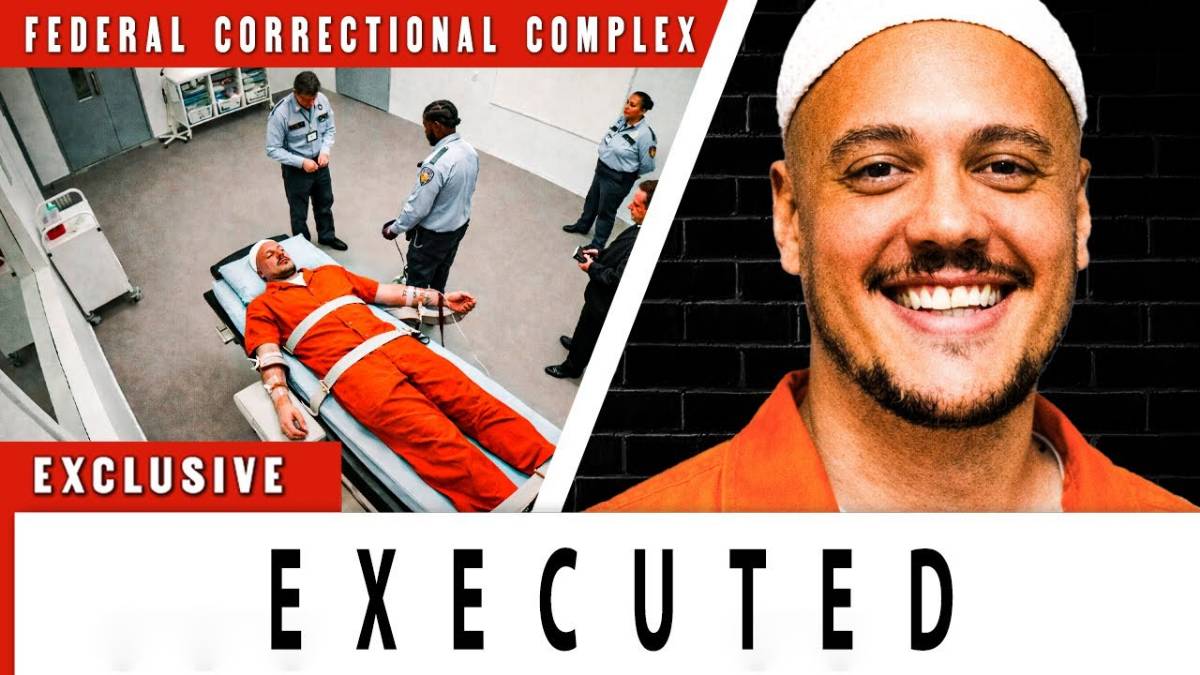
Christopher Andre Vialva, a federal inmate whose crime and punishment ignited fierce debate over race, brain science, and juvenile sentencing, was executed by lethal injection Thursday evening at the U.S. Penitentiary in Terre Haute, Indiana. The 40-year-old was pronounced dead at 6:46 p.m., two decades after he murdered a young missionary couple in a brutal carjacking that ended in gunfire and flames. His final words included an apology to the victims’ family.
 Vialva received the death penalty for the 1999 killings of Todd and Stacie Bagley near Fort Hood, Texas. The execution marks the seventh carried out by the federal government this year and makes Vialva the first Black man executed federally since the practice resumed. It also concludes one of the most contentious capital cases in recent memory, centered on a crime committed when the defendant was 19.
The crime unfolded on June 21, 1999, when Vialva, then a 19-year-old member of the 212 Piru Bloods, led a group of four other teenagers in flagging down the Bagleys’ car. The couple, in their late twenties and in Texas for missionary work, agreed to give the group a ride. Once inside, the teenagers produced guns, robbed the couple, and forced them into the trunk of their own Oldsmobile.
For hours, Vialva drove the car with the captive couple locked in the trunk, stopping to use their ATM cards. The ordeal ended on a secluded dirt road near Belton Lake. There, Vialva opened the trunk and shot Todd Bagley in the head, killing him instantly. He then shot Stacie Bagley, gravely wounding her. The group doused the car in gasoline and set it ablaze with Stacie still alive inside; she ultimately died from smoke inhalation.
 Arrests followed swiftly, with Vialva confessing to investigators. At his 2000 federal trial, prosecutors argued he was the clear leader who executed the couple to eliminate witnesses after a robbery meant to fund gang activities. The jury, composed of 11 white members and one Black member, found him guilty and sentenced him to death. Co-defendant Brandon Bernard, who poured the gasoline, also received a death sentence and remains on death row.
For twenty years, Vialva’s legal team pursued appeals, arguing his sentence was unjust. They cited his age at the time of the crime, presenting neuroscience on the immature adolescent brain. They highlighted his traumatic childhood, marked by racial rejection from stepfathers and organic brain damage potentially stemming from a severe newborn infection. Further appeals focused on racial bias in jury selection.
All appeals were ultimately denied. The Fifth Circuit Court of Appeals upheld the sentence in 2014, and the Supreme Court rejected a final emergency request hours before the execution. In recent years, Vialva had become a focal point for anti-death penalty advocates, who pointed to his conversion to Messianic Judaism and his mentorship of other inmates as signs of profound rehabilitation.

“He is the light in the dark,” one advocate said in a video statement prior to the execution. “If there’s anybody in this country deserving of clemency, it is him.” This view stood in stark contrast to the horrific nature of the crime, which prosecutors and the Bagley family maintained demanded the ultimate penalty under federal law.
The execution proceeded amid a controversial resumption of federal capital punishment by the Department of Justice after a 17-year hiatus. Critics have accused the administration of accelerating executions for political purposes ahead of the November election. Vialva’s case brought particular scrutiny due to the disparities in federal death row demographics and the rarity of executing someone for a crime committed as a teenager.
 In the execution chamber, Vialva was strapped to a gurney and administered pentobarbital. According to witnesses, his final statement was a prayer. “Father God, I thank you for the beautiful gift of life,” he said. He then addressed the Bagley family watching behind glass: “I ask for forgiveness.”
The execution has reignited a national conversation on several fronts: the constitutionality of executing individuals for crimes committed in their youth, the role of childhood trauma and brain development in sentencing, and the persistent question of racial equity in the application of the death penalty. Legal experts note his case encapsulates the most complex moral and legal challenges inherent in capital punishment.
Outside the prison, a small group of protesters gathered, holding vigils and signs calling for abolition. The case’s legacy is now cemented in legal annals, not only for its brutality but for the two decades of litigation that questioned whether the justice system failed to account for the broken path that led a teenager to a trunk on a dark Texas road. The debate over whether his execution represents justice or systemic failure continues, unresolved by the finality of the needle.
Source: YouTube