A Florida execution chamber has delivered finality in a 26-year-old case of domestic slaughter, as the state put to death a Gulf War veteran for the murders of his girlfriend and her three children. Jeffrey Glenn Hutchinson, 59, was pronounced dead by lethal injection at 8:15 p.m. on May 1st at Florida State Prison, closing a legal saga that transformed from a straightforward murder case into a complex debate on wartime trauma and capital punishment.
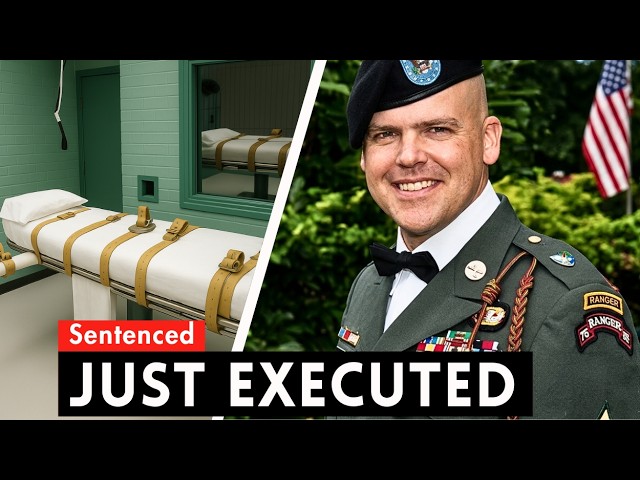
Hutchinson offered no final statement. Witnesses reported he mumbled to himself as the execution process began, which lasted approximately fifteen minutes. His death warrant was signed by Governor Ron DeSantis in late March, setting a rapid countdown to an execution that hinged not on claims of innocence, but on a last-minute fight over his mental competency.
The crimes date to the evening of September 11th, 1998, in Crestview, Florida. After a domestic argument, Hutchinson left the home he shared with Renee Flaherty, 32, and her children—Jeffrey, Amanda, and Logan. He returned armed with a Mossberg 12-gauge shotgun, broke down the front door, and shot all four victims inside.
Minutes later, a 911 call originated from the home. “I just shot my family,” the male caller stated, before quickly changing his story to claim masked intruders were responsible. Deputies arrived to find Hutchinson in the garage, phone in hand, the line still open to dispatchers.

The shotgun was on the kitchen counter. Forensic evidence solidified the case: gunshot residue on Hutchinson’s hands, tissue from one child on his clothing, and no defensive wounds on his body to support a struggle. Two friends identified his voice on the 911 recording.
At his 2001 trial, Hutchinson maintained that intruders committed the murders. The jury convicted him on four counts of first-degree murder. He later waived a jury sentencing recommendation, leading a judge to impose three death sentences for the children and life without parole for Flaherty’s murder.
For over two decades, appeals centered on claims of ineffective counsel and, most prominently, the impact of military service. His defense argued that Gulf War illness, PTSD, traumatic brain injury, and neurotoxin exposure—conditions poorly understood in the 1990s—fundamentally damaged him and were never properly weighed.
Florida’s courts repeatedly rejected those arguments. In his final days, the legal battle shifted entirely. His lawyers contended he was not competent for execution, citing a fixed delusion that the government was persecuting him for his advocacy on Gulf War illness, not punishing him for murder.

Governor DeSantis temporarily stayed the execution on April 17th, appointing a panel of psychiatrists to evaluate Hutchinson. The Florida Supreme Court, after reviewing their findings, ruled he was competent. The court found he rationally understood he was being executed for the murders, even if he held additional beliefs.
The U.S. Supreme Court declined to intervene without comment. The path to the execution chamber was cleared. The case’s conclusion leaves a stark, unresolved tension between an unforgiving physical record of guilt and persistent questions about the invisible wounds of war.
For the victims’ families, the execution ends a legal process but brings no restoration. A mother and three children were killed in the sanctuary of their own home, a loss no court ruling can ever mend. The debate over how justice accounts for a veteran’s broken psyche, however, continues beyond the prison walls tonight.
Source: YouTube