Astronauts, humanity’s most elite explorers, have returned from the void with unsettling accounts that challenge official narratives and hint at encounters beyond explanation. Their testimonies, spanning decades of spaceflight, describe unexplained phenomena, strange sounds in the vacuum, and sightings of objects that defy conventional understanding.
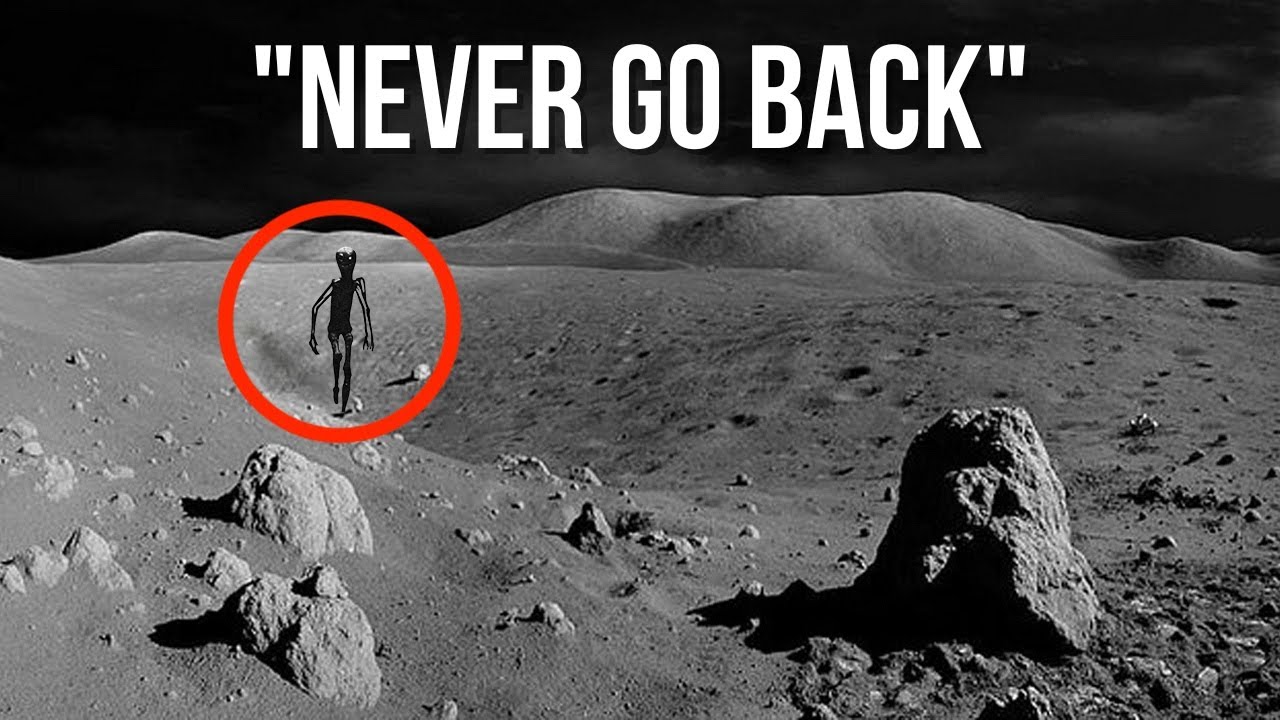
From the earliest days of space exploration, those who have ventured beyond our atmosphere have reported experiences that linger in the realm of the extraordinary. These are not casual observers but highly trained individuals operating at the peak of human capability, whose words carry significant weight.
One of the most controversial figures is Maurice Chatelain, a former NASA communications engineer. He asserted knowledge of numerous alien events and claimed censored footage existed of two UFOs hovering over the Apollo 11 lunar module. He alleged Neil Armstrong transmitted a message about other spacecraft watching them, a claim NASA has vehemently and consistently denied for decades.
The silence of space is a scientific fact, yet astronauts on the Apollo 10 mission reported hearing unexplained “space music,” described as eerie whistling. NASA officially attributed the sounds to radio interference, but Apollo 15 astronaut Al Worden publicly disagreed, insisting the noises originated from outside the spacecraft.
Dr. Story Musgrave, a six-time shuttle flyer with six advanced degrees, observed a mysterious white object, approximately three meters long, floating past the shuttle window. While NASA suggested it was mundane debris, Musgrave later stated his belief that it was evidence of extraterrestrial civilizations vastly older and more advanced than humanity.
Chinese taikonaut Yang Liwei, during his 2003 Shenzhou 5 mission, heard a persistent sound like someone knocking on an iron bucket with a wooden hammer. Intriguingly, six subsequent Chinese astronauts reported the same unexplained acoustic phenomenon, despite the vacuum of space rendering such direct sound transmission impossible.
During the Apollo 12 mission, astronaut Alan Bean reported seeing a peculiar shiny object on the lunar surface near the Ocean of Storms. While experts suggested optical illusions or reflective minerals, the incident remains an official but unexplained observation from the lunar surface.

The Gemini 4 mission in 1965 produced one of NASA’s own officially listed UFO sightings. Astronauts James McDivitt and Ed White observed a large, cylindrical, glowing object wobbling in space near Hawaii. McDivitt took photographs, but they were blurred, and NASA ultimately closed the case without a definitive explanation.
Former astronaut Leroy Chiao, a commander of the International Space Station, described a startling encounter during a spacewalk. He reported seeing a translucent, tentacled being inside a vehicle resembling an “inverted V” with strings of lights. This personal account was never officially confirmed or commented on by the agency.
Edgar Mitchell, the Apollo 14 lunar module pilot, was perhaps the most outspoken. He claimed a government cover-up of UFO evidence and stated his belief that extraterrestrials had intervened to prevent nuclear war, a conviction he said stemmed from his childhood in New Mexico near military testing sites.
Contrasting these views, former ISS Commander Chris Hadfield urges caution. Having seen “countless things in the sky” he doesn’t understand, he acknowledges the high probability of alien life but warns against immediate attribution to extraterrestrials, advocating for rigorous scientific investigation over speculation.
These collective statements form a compelling mosaic of high strangeness from the final frontier. They originate from credible sources operating in the most hostile environment known to man, where every anomaly is potentially catastrophic. The consistent theme across generations of spacefarers is the encounter with the unexplained.

NASA’s standard position attributes such events to known phenomena: space debris, instrument glitches, psychological effects of isolation, or optical illusions. This rational framework is essential for mission safety and scientific credibility, yet it often directly contradicts the visceral certainty expressed by the astronauts themselves.
The dichotomy creates a persistent tension. Are these experiences evidence of something monumental being withheld from the public, or are they the understandable misinterpretations of human perception pushed to its absolute limit? The astronauts, having stared into the profound darkness, are the only witnesses.
Their testimonies force us to confront fundamental questions about our place in the cosmos. If even our most technologically adept pioneers return with stories of the inexplicable, it suggests our understanding of the universe remains profoundly incomplete. The vacuum of space, it seems, is not empty of mystery.
The debate these accounts fuel is unlikely to be resolved without unprecedented transparency or a definitive, incontrovertible encounter. Until then, the chilling statements from those who have been there stand as a haunting reminder that the greatest discoveries, and perhaps the greatest threats, may still lie ahead.
Source: YouTube