The Commonwealth of Virginia executed John Allen Muhammad by lethal injection Tuesday night, closing a final chapter on the 2002 sniper attacks that held the Washington, D.C. region hostage for three weeks of terror. The mastermind of the shootings that killed ten people and wounded three others was pronounced dead at 9:11 p.m. at the Greensville Correctional Center in Jarratt.
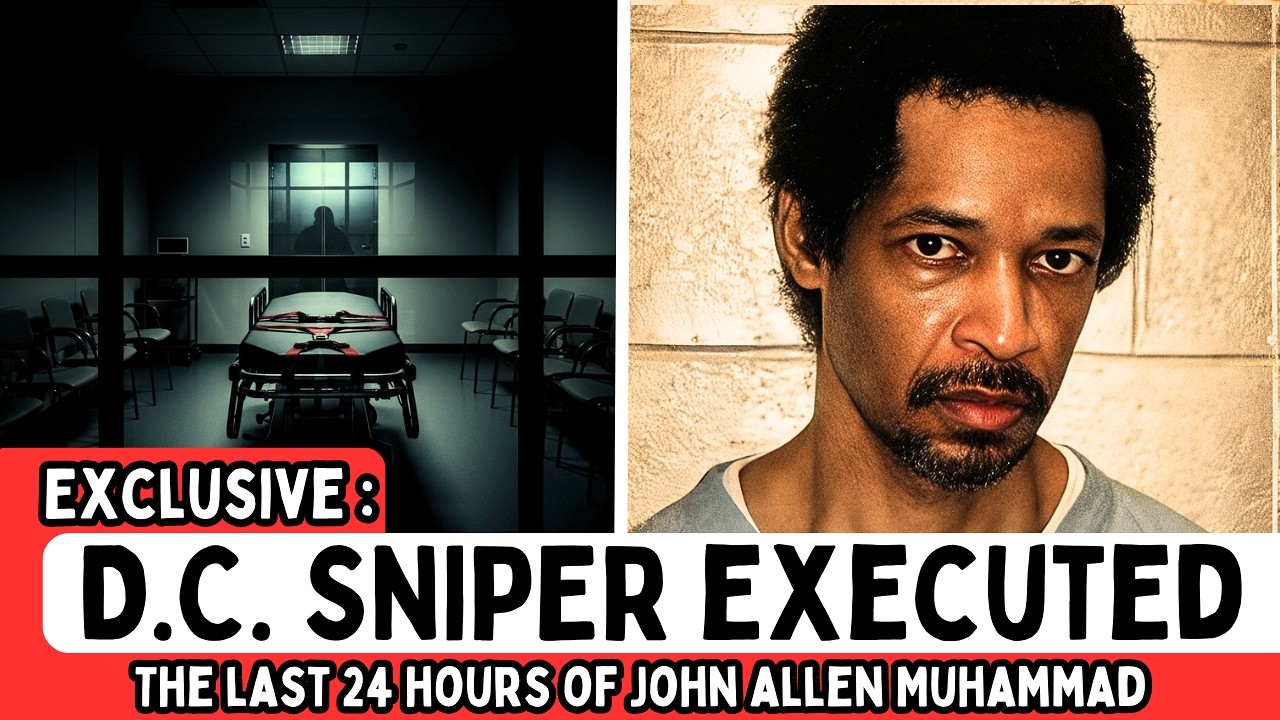
Muhammad, 48, offered no final statement and showed no reaction as the lethal drugs were administered. He was executed for the murder of Dean Harold Meyers, who was shot while pumping gas in Manassas, Virginia, on October 9, 2002. The execution proceeded after the U.S. Supreme Court declined a last-minute appeal and Virginia Governor Tim Kaine denied clemency.
Witnesses reported Muhammad took seven deep breaths before falling still. The time of death, 9:11, was noted for its grim irony by observers in the chamber. “He died very peacefully, much more so than most of his victims,” said Prince William County Commonwealth’s Attorney Paul Ebert, who prosecuted the case.
The execution ended a seven-year legal journey for the families of the victims, several of whom watched from behind a one-way mirror. Nelson Rivera, whose wife Lori was killed at a Kensington gas station, said afterward, “I feel better. I think I can breathe better and I’m happy he’s gone.”
Muhammad and his teenage accomplice, Lee Boyd Malvo, paralyzed the capital region in October 2002. Their random, precision shootings turned everyday activities—mowing a lawn, shopping, filling a gas tank—into acts of mortal danger. For 23 days, fear dictated daily life for millions, with schools locked down and gas stations hanging tarps for cover.
The spree, which also spanned shootings in several other states, was driven by a plot to extort $10 million from authorities. Malvo, who was 17 at the time, testified that Muhammad planned to use the money to establish a camp in Canada to train homeless children as soldiers for further attacks across the United States.

Malvo, now serving multiple life sentences, turned on his mentor during a 2006 trial. Staring at Muhammad in court, he declared, “You took me into your house and you made me a monster.” He detailed years of psychological conditioning and brutal training under Muhammad, who molded the vulnerable teenager into a weapon.
A decorated Army veteran and expert marksman, Muhammad used a Bushmaster .223-caliber rifle fired from a concealed port in the trunk of a modified Chevrolet Caprice. The car was stopped by police multiple times during the attacks, but was repeatedly waved through as the hunt focused erroneously on a white van.
The pair was captured on October 24, 2002, at a Maryland rest stop. Evidence inside their car included the rifle, a stolen laptop with digital maps of shooting sites marked with skulls, and a trove of ballistics evidence linking them to the killings.
At his 2003 trial, Muhammad acted as his own attorney, claiming a vast government conspiracy had framed him. The jury rejected his arguments, convicting him of capital murder, terrorism, and using a firearm in a felony. He was sentenced to death in March 2004.

In his final years, Muhammad maintained his innocence. In a 2008 letter from death row, he asked prosecutors to end his appeals, which he described as an effort to “murder this innocent black man.” He refused a final visit from a spiritual advisor and did not explain his crimes.
The motive remains partially obscured. While Malvo described the extortion plot, Muhammad’s ex-wife, Mildred Muhammad, has long asserted the rampage was a smokescreen for his ultimate goal: to kill her and regain custody of their three children.
With Muhammad’s death, the direct architect of the terror is gone. The case of Lee Boyd Malvo, however, remains active. His re-sentencing in Maryland, required after Supreme Court rulings on juvenile life sentences, has been indefinitely postponed due to logistical and legal hurdles.
The ten lives lost began with James D. Martin, 55, shot in a Wheaton parking lot on October 2, 2002. The final victim was bus driver Conrad Johnson, 35, killed on the steps of his bus in Aspen Hill on October 22. In between, victims ranged from a 13-year-old boy shot at school to a 72-year-old carpenter crossing the street.
Each was going about an ordinary day. Their deaths collectively shattered a region’s sense of security, creating a legacy of grief and resilience. The execution brings a measure of closure to a painful saga, but the haunting question of why—fully answered only by the silent man on the gurney—perishes with him.
Source: YouTube