A quiet prison chamber in Bonne Terre, Missouri, became the site of a grim and unprecedented moment in American history on the evening of January 3rd, 2023. At 6:51 p.m., Amber McLaughlin, 49, was pronounced dead by lethal injection, marking the first execution of an openly transgender person in the United States.
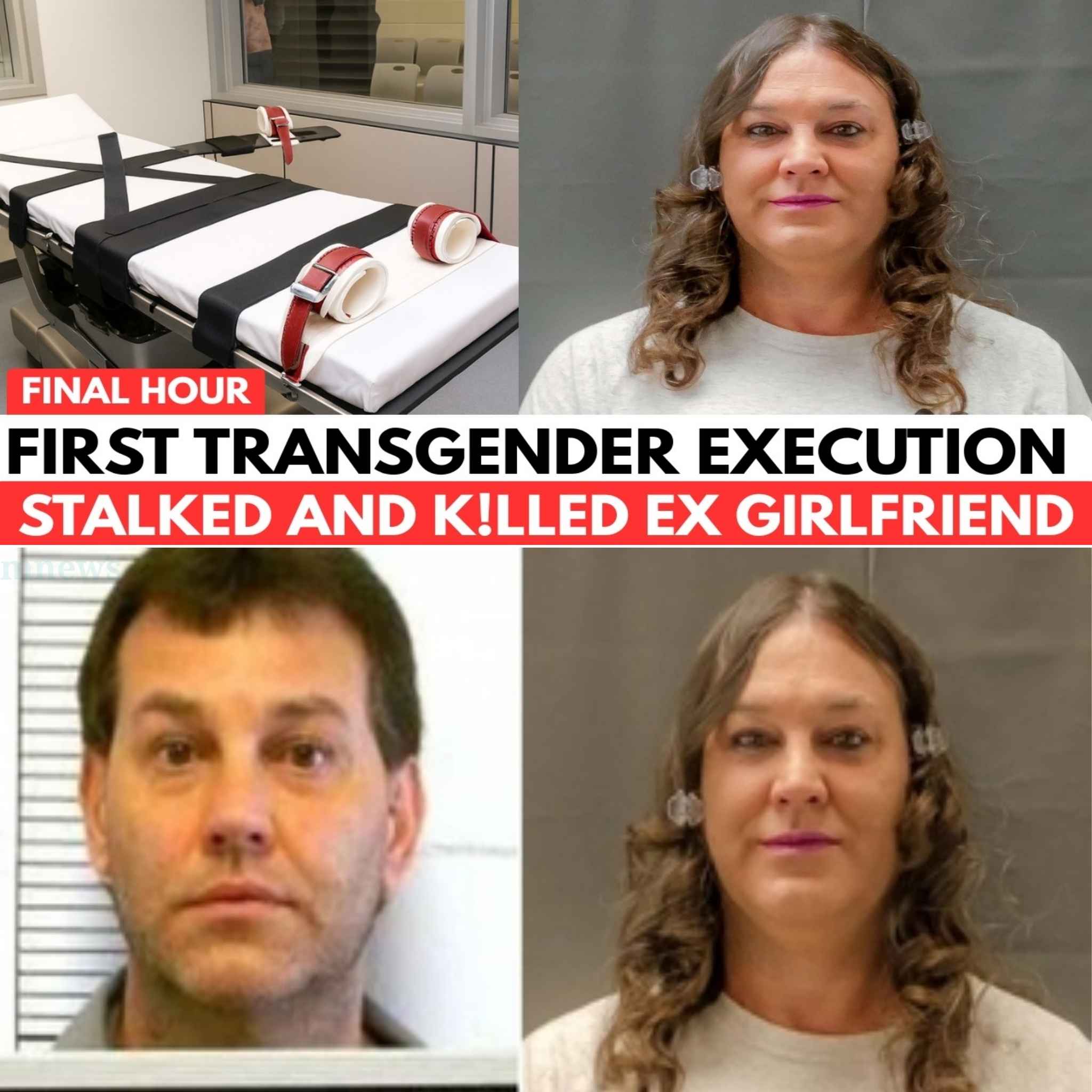
Her death followed nearly two decades on death row for the 2003 murder of her former girlfriend, Beverly Gunther. Yet the path to the execution gurney was defined not by a unanimous jury verdict for death, but by a rare and controversial legal provision. The jury in McLaughlin’s 2006 trial deadlocked during the sentencing phase.
In most capital punishment states, that deadlock would have mandated a sentence of life without parole. Missouri law, however, allows a judge to impose death when a jury cannot agree. Circuit Judge Steven H. Goldman, a former prosecutor, exercised that authority, sentencing McLaughlin to death.
This judicial override became the fulcrum of a 17-year legal battle. McLaughlin’s defense would later argue that the jury was deprived of critical mitigating evidence about her profoundly traumatic childhood and mental health. Her clemency petition detailed a life that began in almost unimaginable hardship.
Born to a prostitute mother and an alcoholic father, she was placed in foster care as a toddler. Adopted at five, she entered what she and her friends called “the house of horrors.” Her adoptive father, a police officer, beat the children with a paddle and a nightstick, used a taser on them, and locked food cabinets.
Diagnosed with ADHD and a borderline intellectual disability, she had an IQ of 82 and suffered from fetal alcohol syndrome and brain damage. Her legal team contended this history of abuse and impairment was never properly presented to the sentencing jury, a failure a federal judge later called “grievous error.”
Beneath this trauma lay a private struggle with gender identity. From around age 12, she knew she was a woman, wearing women’s clothing in secret for decades, fearing consequences. She lived publicly as Scott McLaughlin, a name that would remain on her official records until her death.

Her criminal history included a 1992 conviction for sexually assaulting a 14-year-old girl. In 2003, her brief relationship with Beverly Gunther, 45, ended. Gunther, rebuilding her life after a divorce, obtained a restraining order as McLaughlin harassed her at her workplace in Earth City, Missouri.
On November 20, 2003, Gunther did not come home. Police found a trail of blood and a broken knife handle in her office parking lot. McLaughlin led them to Gunther’s body, which had been dumped near the Mississippi River. Prosecutors said she had raped and repeatedly stabbed Gunther.
The legal journey after Judge Goldman’s override was protracted. In 2016, a federal court vacated the death sentence, citing ineffective assistance of counsel for failing to present the mitigating evidence. That ruling was reversed in 2021 by a federal appeals court, reinstating the execution.
During her final years at Potosi Correctional Center, McLaughlin began to transition, receiving hormone therapy after a 2018 lawsuit secured access to care for transgender inmates in Missouri. A fellow transgender prisoner, Jessica Hicklin, described her as a mentor who finally seemed comfortable.
As her execution date neared, a clemency campaign gained notable support. Seven former Missouri judges, including a retired chief justice, and two U.S. congressmembers argued the jury’s deadlock should have been respected. They emphasized her horrific upbringing and the withheld psychological testimony.
Governor Mike Parson denied clemency, stating, “justice is owed.” On her final morning, McLaughlin’s last meal was a cheeseburger, fries, a strawberry milkshake, and peanut M&M’s. In a written statement, she said, “I am sorry for what I did. I am a loving and caring person.” She signed it “Scott.”

The execution proceeded at the Eastern Reception, Diagnostic and Correctional Center. As the pentobarbital was administered, her spiritual advisor sang to her. She was declared dead 12 minutes later, becoming the 17th woman executed nationally since 1976 and Missouri’s first female execution since 1953.
In the aftermath, Beverly Gunther’s family expressed relief the execution was carried out. Her brother, Al Wedepohl, witnessed it to represent his sister, feeling her memory had been overshadowed. He described Gunther as a charismatic animal lover, finally finding her footing after a difficult divorce.
For her family, the two-decade absence has meant missed holidays, phone calls, and lifetimes. They believe McLaughlin needed to be held accountable for a brutal crime that left Gunther afraid and seeking protection. Their enduring grief forms the foundational tragedy of this complex case.
The execution of Amber McLaughlin forces a confrontation with intersecting, fraught questions: the ethics of judicial override, the standards for effective legal defense, the recognition of severe childhood trauma and mental capacity in sentencing, and the visibility of transgender individuals in the justice system.
It underscores a stark reality where legal technicalities and geographic jurisdiction can determine life or death as much as the facts of a crime. Missouri’s use of a rarely invoked power ensured an execution that a jury could not unanimously agree upon, setting a historic and somber precedent.
Ultimately, this case presents two irreconcilable narratives of profound loss. One is of a victim, Beverly Gunther, whose life was brutally cut short as she sought safety and renewal. The other is of a defendant, Amber McLaughlin, whose life was shaped by early horror and who, only in its final years, lived authentically.
The state of Missouri asserts it delivered justice. Whether this act served the interests of justice, or merely its letter, remains a question that will resonate far beyond the quiet chamber in Bonne Terre, challenging perceptions of punishment, mercy, and humanity in a system tasked with delivering all three.
Source: YouTube