A leading expert on the Shroud of Turin has declared the scientific evidence for its authenticity as the burial cloth of Jesus Christ is now conclusive and irrefutable. Dr. Jeremiah Johnston, a prominent biblical scholar and researcher, made the stunning assertion in an exclusive interview, citing decades of multidisciplinary scientific analysis that he says points to a single, miraculous origin.
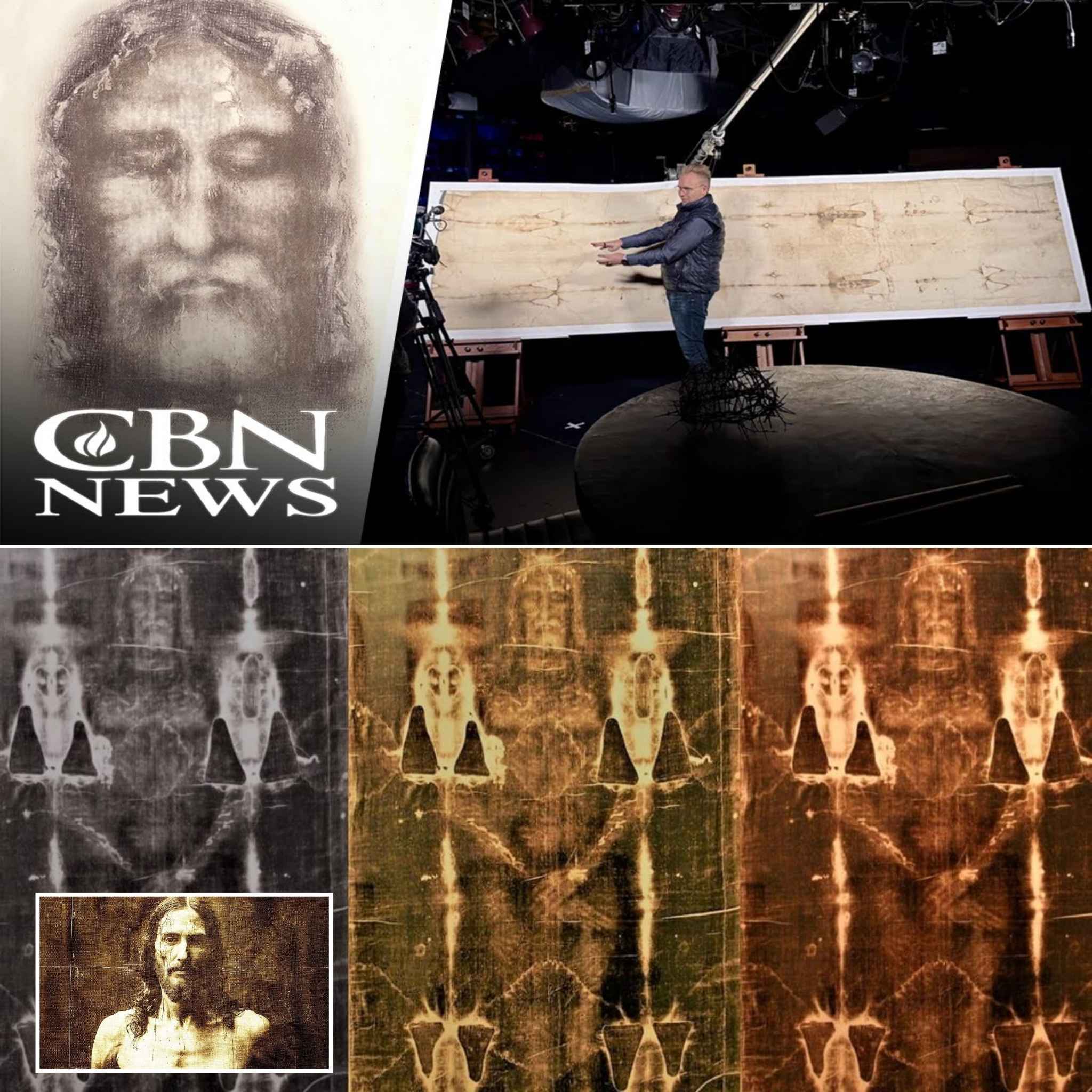
Speaking on CBN News, Johnston stated that over 600,000 hours of study across 102 scientific disciplines have been devoted to the enigmatic linen cloth. The overwhelming consensus from this research, he claims, is that the shroud is approximately 2,000 years old, directly placing it in the historical context of the crucifixion. This dating was recently bolstered by new findings from Italy’s Institute of Crystallography.
The institute employed advanced wide-angle X-ray scattering technology to analyze the cloth’s fibers. Their independent results reportedly confirm the earlier dating, challenging the controversial 1988 carbon-14 tests that suggested a medieval origin. Johnston presented this as breaking news, a critical piece of evidence shifting the paradigm.
“We believe it to be the very burial cloth of Jesus of Nazareth,” Johnston stated emphatically. He anchored this claim not only in science but in scriptural and historical record, noting that all four Gospels describe Joseph of Arimathea wrapping Jesus’s body in a linen shroud. The uniqueness of the Shroud of Turin, however, lies in the mysterious image it bears.
The 14-foot cloth contains a faint, full-length imprint of the front and back of a 5’11” bearded man bearing signs of brutal trauma. Johnston detailed how these wounds—from scourge marks to a pierced side and nail wounds in the wrists—precisely correspond to the specific Roman crucifixion methods described in the accounts of Jesus’s death. No other known burial shroud from antiquity contains such an image.

The mechanism behind this image’s creation remains one of history’s greatest scientific puzzles. Johnston highlighted research from the ENEA laboratories in Rome, where scientist Paolo Di Lazzaro led a five-year study. Their findings were staggering. To create the superficial, two-micron-thin image without pigments or dyes would require a burst of light energy measuring 34,000 trillion watts.
Crucially, this immense energy would need to be discharged in an unimaginably brief pulse of one forty-billionth of a second. Any longer duration would have scorched and destroyed the linen. Scientists have conclusively ruled out the image being a painting or any known artistic forgery technique, admitting they cannot explain or replicate its creation.
“The best rocket scientists of our day cannot explain how the image is embedded in the linen cloth,” Johnston said. He described the phenomenon as akin to a “first-century selfie,” a flash of light permanently etching the figure into the fibers. This, he posits, aligns with the moment of resurrection, capturing the instant of a transformative, radiant event.
Addressing skepticism, particularly from some Christian circles wary of relic veneration, Johnston argued for the harmony of faith and evidence. He invoked the biblical figure of Thomas, who demanded physical proof of the resurrection, noting that Jesus met him in that doubt. The New Testament authors themselves, Johnston stressed, relied on eyewitness testimony and tangible encounters.

“We’re not talking about myths or fairy tales or fables,” he asserted. “We’re talking about real people, real places, real events.” The implication of the shroud’s authenticity, therefore, is monumental. It would stand as a direct physical artifact from the central event of Christianity, offering a tangible link to the historical death and resurrection of Jesus.
Johnston further suggested the timing of this evidence coming to light is significant, describing a “controlled revelation” tied to modern technology that allows for its verification. He is currently traveling to Turin, Italy, to participate in the Feast of the Holy Shroud, documenting the journey with a film crew to share these findings with a global audience.
The shroud, long a source of intense debate between believers and skeptics, now faces a renewed claim of definitive proof. Dr. Johnston’s declaration, backed by cited scientific studies, challenges the world to re-examine the cloth not as a medieval curiosity, but as a potentially world-historical document written in light and blood. The conversation between science and faith has entered a new, urgent phase.
Source: YouTube