RAYFORD, Fla. — Loran Kenstley Cole, whose three-decade journey through Florida’s death row became a grim testament to a horrific crime, a disputed sentence, and a profoundly damaged life, was executed by lethal injection Thursday evening at Florida State Prison.
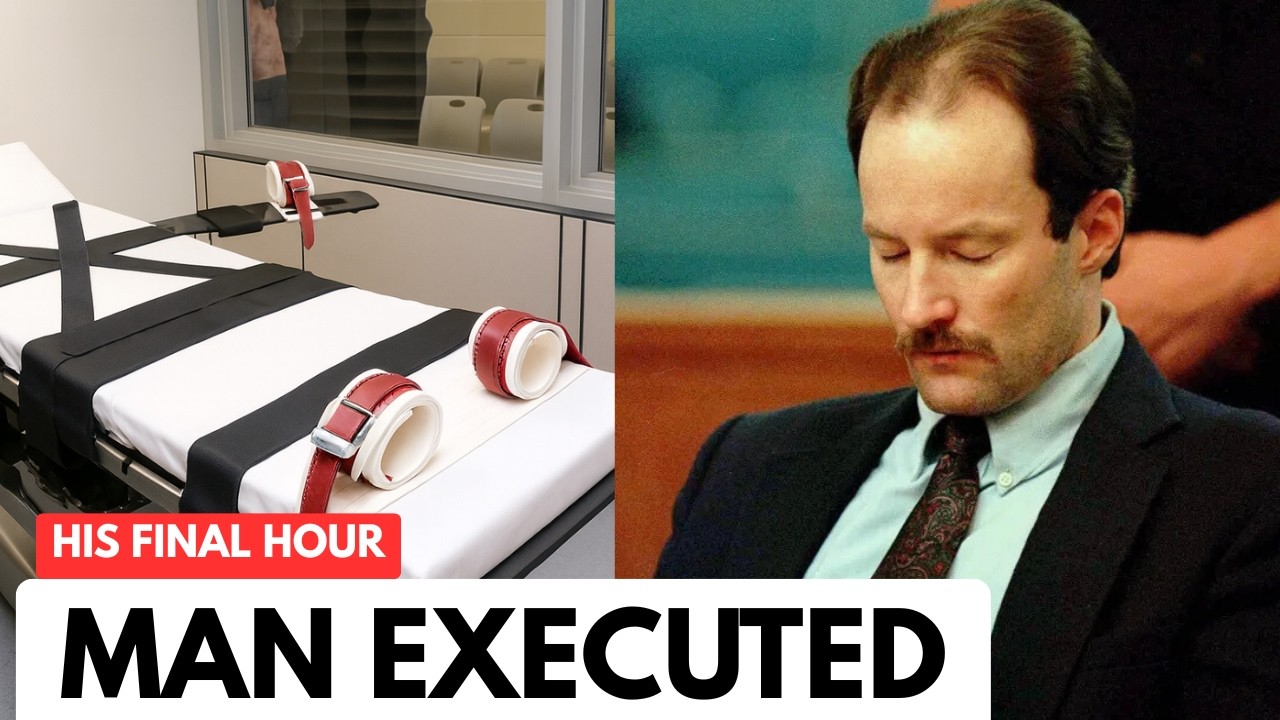
He was 57. The execution, carried out at 6:15 p.m., concluded a legal saga that began with a brutal murder in the Ocala National Forest in 1994 and spanned endless appeals centered on trauma, disparity, and final claims of innocence.
Cole offered only two final words. Asked by the warden if he had any last statement, he replied, “No, sir.” He was pronounced dead minutes later, the first person executed in Florida in 2024.
The case always hinged on a single, devastating weekend. On February 18, 1994, John Edwards, an 18-year-old Florida State University freshman, camped with his 21-year-old sister, Pam, in the forest. Two men approached, posing as friendly fellow campers.
What began as a shared campfire escalated into violence on a secluded trail. Cole attacked Pam, handcuffing and beating her. His codefendant, William Paul, struggled with John. John Edwards never survived the encounter.
His body was later found hidden under pine needles and palm fronds, his throat slashed, and his skull fractured. Pam Edwards was raped, gagged, and tied between two trees. She chewed through her bindings and escaped at dawn.
Her detailed description led to the arrests of Cole and Paul within 72 hours. Their legal fates, however, diverged starkly and permanently. Paul pleaded guilty in 1995, receiving five concurrent life sentences.
Cole went to trial. A jury convicted him of first-degree murder, kidnapping, robbery, and sexual battery. He was sentenced to death. This asymmetry—life for one, death for the other—haunted all subsequent appeals.

Cole’s defense maintained he was not the killer, arguing forensic evidence pointed to Paul. Courts consistently rejected this. For 30 years, his attorneys fought the sentence, weaving a narrative of a life broken long before the crime.
That narrative began at the Arthur G. Dozier School for Boys, a notorious Florida reform school. Cole was sent there at 17. He claimed six months of beatings, rape, and broken legs during an escape attempt.
State investigations later confirmed systemic abuse at Dozier, with unmarked graves found on its grounds. Cole’s team argued that this childhood trauma, never fully presented to his original jury, should mitigate his sentence.
The courts remained unmoved. In his final days, a new argument emerged: Cole’s Parkinson’s disease diagnosis. His lawyers contended his tremors would make inserting the lethal injection IV inhumane and risky.
The state countered he had raised the issue too late. The U.S. Supreme Court declined to intervene, not explaining in a one-paragraph order. The execution proceeded as scheduled.
For the Edwards family, Thursday ended a 30-year wait. John Edwards, whose adult life was just beginning, remains forever 18. His parents endured every appeal, each hearing a reopening of their loss.

Pam Edwards rebuilt her life, becoming a teacher, professor, and wife. Her survival stands in stark contrast to the finality meted out to her brother’s killer. The family attended the execution, witnessing its conclusion.
Before the procedure, Cole consumed his final meal: pizza, ice cream, M&M’s, and a soda. In the chamber, witnesses reported deep, labored breaths as the three-drug cocktail was administered.
His cheeks puffed. His body trembled—from Parkinson’s, the drugs, or both. Within five minutes, the warden checked for consciousness. There was no response. The official time of death was 6:15 p.m.
Cole becomes the 106th person executed in Florida since 1976 and the 13th nationwide this year. His death closes a case that forced a relentless examination of justice, punishment, and the origins of violence.
The Ocala National Forest today shows no visible scar from the tragedy. Campers still fill its trails. But for one family, and for a system that spent 30 years fulfilling a promise, the echoes of that February night are now permanent.
Source: YouTube