A series of extraordinary personal testimonies and a mysterious natural phenomenon are fueling profound discussions about faith, miracles, and the divine, with individuals across the globe reporting direct encounters they attribute to Jesus Christ. These accounts, ranging from a toddler’s rescue to near-death visions, are being presented by believers as modern-day evidence of spiritual reality. The claims are emerging alongside a reexamination of a centuries-old legend explaining a unique marking found on every donkey, creating a confluence of narratives that is captivating religious communities online.
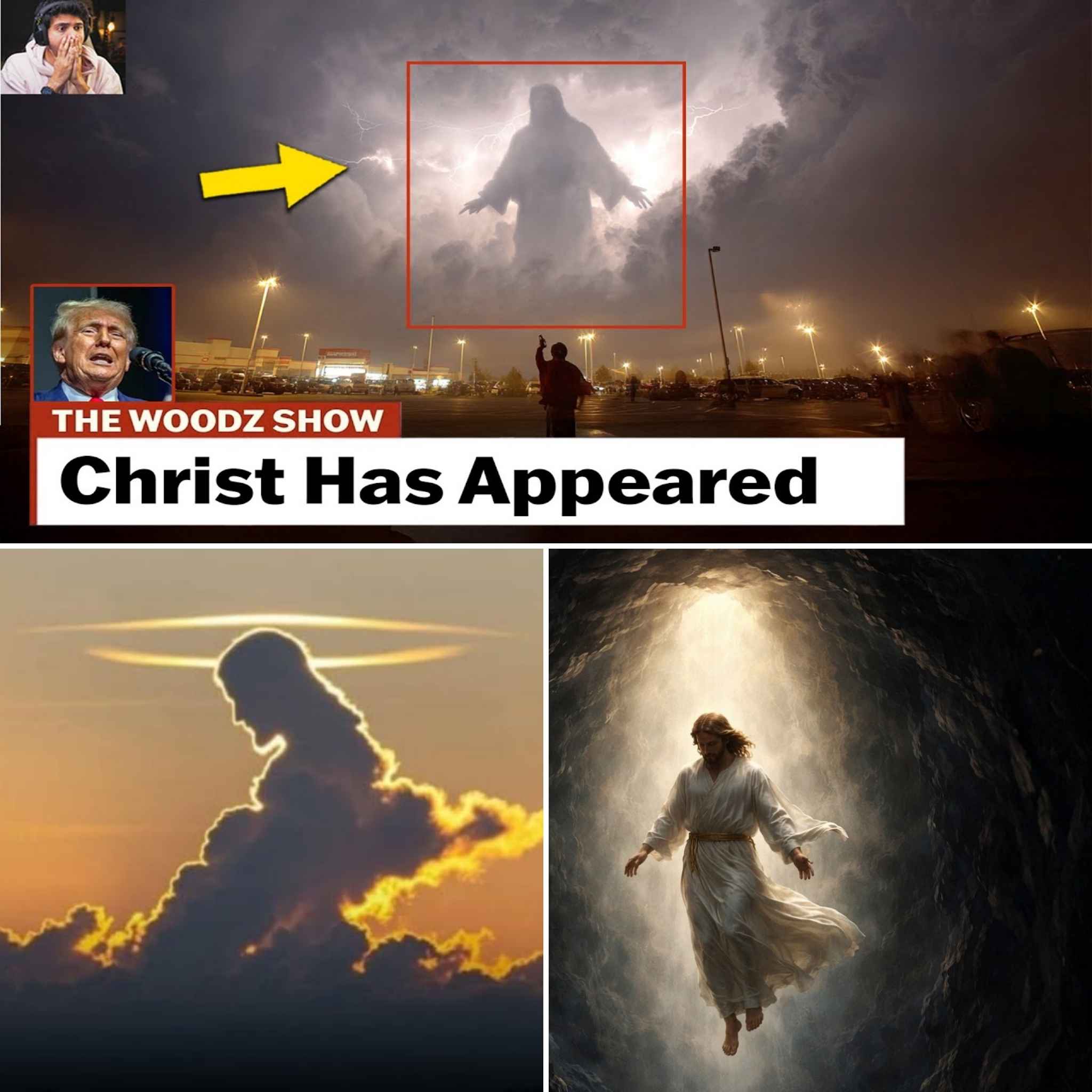
The most immediate account comes from a family whose two-year-old daughter survived a drowning incident after being submerged for two minutes and thirty-eight seconds. Home security footage confirmed the timeline, a duration medical professionals would consider catastrophic for a child so young. The mother pulled the unresponsive, blue-hued child from the pool’s bottom, but before resuscitation could begin, the girl spontaneously began crying, and her color returned.
In the weeks that followed, the toddler repeatedly uttered a word her parents struggled to understand. A recorded clip appears to capture the child saying “Yeshua,” the Hebrew name for Jesus. The father, in a video testimony, expresses stunned disbelief, noting his daughter’s limited vocabulary. The family interprets this as the child identifying her divine rescuer, a claim they say is supported by the inexplicable recovery and the subsequent verbal identification.
Separately, a viral video shows a young boy under anesthesia following a skateboarding accident. He is heard speaking to his deceased father and then describing a vision of God. What has drawn significant attention is his specific description, stating, “God is so pretty. He has fire eyes.” This phrasing has led many to note its direct correlation to biblical descriptions of Christ in the Book of Revelation, which describes his eyes as “like blazing fire.”
The boy, whose age suggests limited theological study, provides details that align closely with apocalyptic scripture. He further describes a beautiful heaven filled with flowers and butterflies. Proponents argue the anesthesia-induced state precludes fabrication, presenting this as a genuine supernatural revelation of a divine form the child could not have knowingly described with such accuracy.

Adding to these narratives is the testimony of Dale Black, a pilot who survived a catastrophic plane crash. He recounts a near-death experience where his spirit left his body and he was drawn toward a heavenly realm. He describes seeing a pearl-covered book containing his name alongside two dates: his conception date and the date he accepted Jesus Christ.
Black states he was brought before the Son of God, whose overwhelming presence caused him to fall. He claims Jesus asked him, “Dale, do you love me?” and, “What will you do with the life I give you now?” before he was returned to his body. His detailed account of the judgment hall and interaction with Christ is cited by many as a corroborating adult testimony of the afterlife described in Christian doctrine.
Beyond human testimony, attention is being directed to the natural world, specifically to donkeys. A viral explanation from a homesteader is recirculating, pointing to a unique physical trait: a distinct cross-shaped marking of darker hair found on the back and shoulders of virtually all donkeys. This characteristic is being linked by believers to a Christian legend surrounding the animal’s role in biblical history.

The legend holds that the donkey was blessed for its faithful service, most notably for carrying Mary to Bethlehem and Jesus into Jerusalem. The story concludes that when Christ was crucified, every donkey in the world was marked with the cross as a permanent sign of honor and a reminder of the crucifixion. The widespread presence of this marking is being presented not as a coincidence, but as a divine signature etched into creation itself.
Collectively, these disparate stories—a toddler’s survival, a boy’s vision under sedation, a pilot’s return from death, and an animal’s universal marking—are being woven into a compelling narrative for believers. They are interpreted as modern signs pointing to an active, intervening deity and the tangible reality of the spiritual realm. Skeptics, however, urge caution, attributing the events to neurological phenomena under trauma, the power of suggestion, and pareidolia in nature.
The discourse underscores a deep human yearning for proof of the transcendent. For those sharing these accounts, they are not isolated anecdotes but interconnected miracles, a divine tapestry revealing itself in the contemporary world. The fervent discussion continues across social media and platforms, challenging boundaries between faith and empirical evidence, and asking the ultimate question of what constitutes proof of the divine in an age of recording devices and viral media.