COLUMBIA, S.C. – Freddie Eugene Owens, whose decades-long path through the justice system was defined by a gas station murder, a brutal prison killing, and a late-stage religious conversion, was executed by lethal injection Friday evening at the Broad River Correctional Institution.
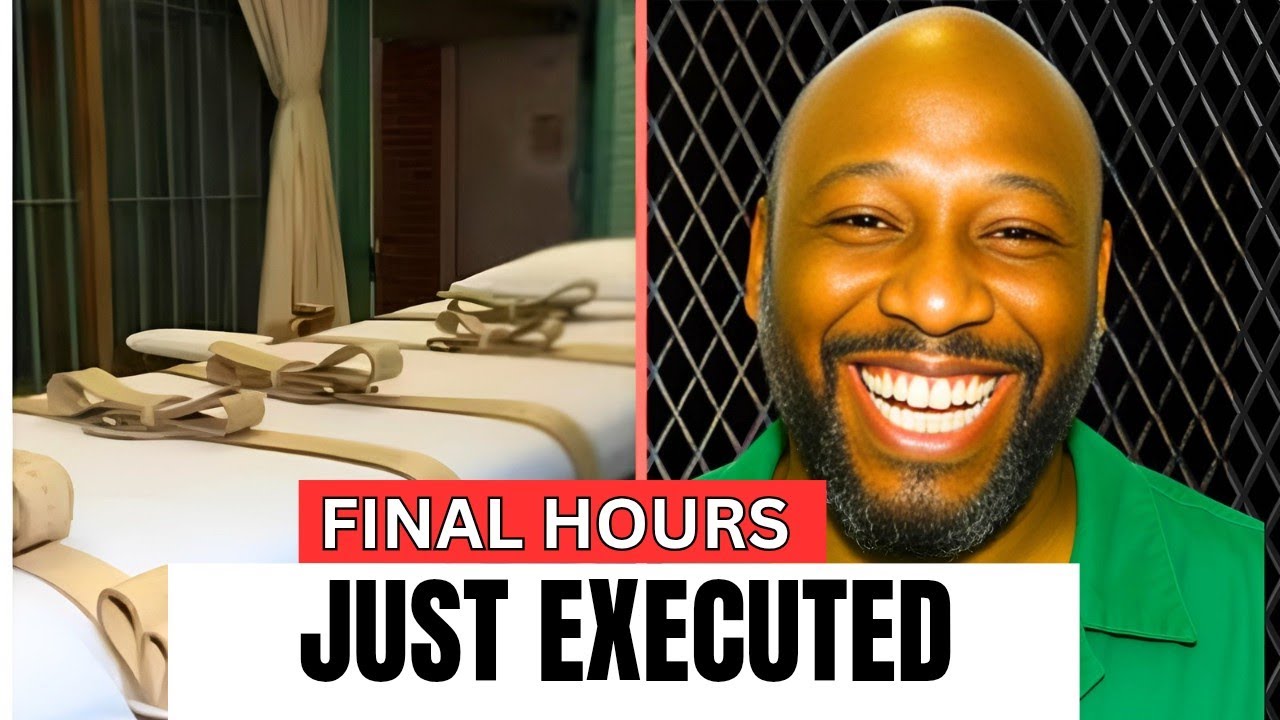
The execution, South Carolina’s first in 13 years, proceeded after the state Supreme Court rejected an emergency motion based on a recantation from his co-defendant. Owens, 46, was pronounced dead at 6:55 p.m. for the 1997 murder of Greenville clerk Irene Graves.
His final moments were marked by quiet resignation. Strapped to the gurney, he turned to his attorney, softly said “Bye,” and closed his eyes as the single dose of pentobarbital was administered. He took several deep breaths before his breathing shallowed and ceased.
The execution capped a legal saga that stretched over 27 years, surviving numerous appeals and a last-minute attempt to halt it. Just 48 hours prior, his legal team filed an emergency motion after Steven Andrew Golden, the accomplice whose testimony was pivotal in Owens’s conviction, swore he lied to investigators.
Golden’s new statement claimed Owens was not present during the robbery and shooting of Irene Graves, directly contradicting sworn testimony he gave in exchange for a plea deal decades ago. The Supreme Court denied the motion, citing Golden’s contradictory statements and a lack of corroborating evidence.
“The Court finds Golden’s latest assertion not credible,” the order stated, noting Owens had confessed to the crime multiple times, including to police, family members, and in open court. The ruling cleared the final obstacle for the state to proceed.
Owens’s journey to the execution chamber began on a cold November night in 1997. Then 19, he and Golden entered a convenience store, their faces masked. They demanded the safe from clerk Irene Graves, a 41-year-old single mother.

When she could not open it, Owens shot her once in the head. The pair fled with $137.29 from the register. Graves’s three children were left without their mother.
Arrested ten days later, Owens maintained his innocence. His conviction in February 1999 relied heavily on Golden’s testimony and Owens’s own confessions to others. Hours after that guilty verdict, his violence erupted again inside the Greenville County Jail.
Cellmate Christopher Brian Lee, 28, serving a 90-day sentence for a traffic offense, allegedly taunted Owens about the trial. In a sustained and savage attack, Owens beat Lee, stabbed him in the eye and throat with a pen, strangled him with a sheet, and burned him with a lighter.
He then forced a pen into Lee’s nostril to suffocate him. The next day, Owens confessed to the murder in open court, showing no remorse. He was sentenced to death later that same day.
For over two decades on death row, Owens underwent a profound personal transformation. In 2015, he converted to Islam, adopting the name Khalil Divine Black Son, Allah. He immersed himself in study, writing poetry and essays, and learning Arabic.
This faith presented a final dilemma when the state, per its law, required him to choose his method of execution: lethal injection, electric chair, or firing squad. Owens refused, believing that choosing his own manner of death would constitute suicide, forbidden in his faith.

He entrusted the decision to his attorney, who selected lethal injection. “This was an act of religious conviction, not a legal tactic,” a member of his legal team confirmed.
On his final day, Owens was served a last meal at midday: two cheeseburgers, French fries, a well-done ribeye steak, six chicken wings, two strawberry sodas, and a slice of apple pie. He ate in solitude.
He spent his remaining hours in prayer with a Muslim spiritual adviser and did not request visits from family. Family members of both Irene Graves and Christopher Lee were present as witnesses to the execution.
The procedural administration of the lethal drug began at 6:36 p.m. Witnesses reported slight facial twitches before his breathing stopped. A medical professional pronounced him dead 18 minutes later.
The case leaves behind a complex legacy, intertwining a heinous crime, a disputed conviction, a prison murder of shocking brutality, and a defendant who sought redemption within the confines of his cell. For the victims’ families, it marked the end of a nearly three-decade wait for a sentence to be fulfilled.
South Carolina officials have indicated more executions will be scheduled in the coming months, ending the long de facto moratorium in the state. The execution of Freddie Eugene Owens now stands as a stark precedent.